
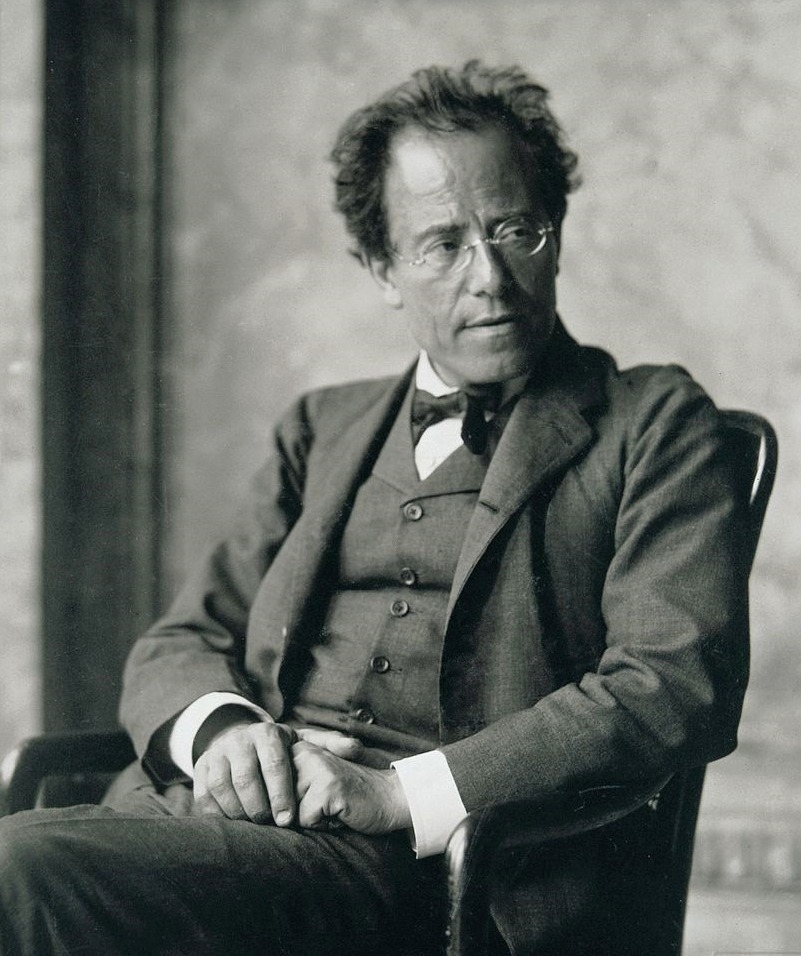
Gustav Mahler, born on July 7, 1860, in Kalischt, Bohemia (now in the Czech Republic), is celebrated as one of the most influential composers and conductors of the late Romantic period. His life was marked by artistic brilliance, personal tragedy, and profound contributions to the world of classical music. Mahler’s work, characterized by its emotional depth and complexity, continues to resonate with audiences worldwide, cementing his legacy as one of the greats in Western music history.
Early Life and Influences
Mahler was born into a Jewish family in a small village in Bohemia. His early life was shadowed by tragedy, including the deaths of several siblings, which left a lasting impact on him. The Mahler family eventually moved to the nearby town of Iglau (now Jihlava), where young Gustav was exposed to a vibrant musical environment. His father, Bernhard Mahler, was a former violinist who recognized and nurtured Gustav’s early talent.
At the age of 15, Mahler enrolled in the prestigious Vienna Conservatory, where he studied composition and piano. His time at the conservatory was both formative and challenging. Mahler quickly distinguished himself as a gifted musician, but his assertive personality and perfectionism often led to conflicts with peers and professors. Despite these challenges, Mahler formed important friendships with fellow students, including Hugo Wolf, Hans Rott, and the Rosé brothers, who would remain significant figures in his life.
Early Compositions and Career Beginnings
Mahler’s first known composition, a Klavierquartett in A minor, dates back to 1876, during his time at the conservatory. However, much of his early work has been lost or remained unfinished. One of his earliest surviving works, Das klagende Lied (The Song of Lament), completed in 1880, reflects the youthful composer’s interest in storytelling through music, a theme that would persist throughout his career.
After leaving the conservatory, Mahler embarked on a career as a conductor, a path that would take him across Europe. He began by working in smaller theaters, including stints in Ljubljana, Olomouc, and Kassel. Despite the modest beginnings, Mahler’s reputation as a conductor grew steadily, thanks to his exacting standards and deep understanding of the music he performed.
In 1884, Mahler composed Lieder eines fahrenden Gesellen (Songs of a Wayfarer), his first song cycle, which marked the beginning of his exploration into orchestral song. This work was inspired by his own personal experiences and a failed romantic relationship, showcasing Mahler’s ability to weave his life’s emotional tapestry into his music.
The Rise to Prominence
Mahler’s career took a significant turn in 1887 when he was appointed to replace Arthur Nikisch in conducting Wagner’s Der Ring des Nibelungen in Leipzig. This opportunity was a major milestone, marking his entry into the upper echelons of European conductors. His success with Wagner’s complex cycle not only solidified his reputation but also paved the way for future high-profile appointments.
However, while his conducting career flourished, Mahler’s ambitions as a composer faced more obstacles. His early symphonies, particularly the Symphony No. 1 in D Major (The Titan), were met with mixed reactions. The premiere of this work in Budapest in 1889 was a near disaster, leading Mahler to revise the symphony multiple times. Initially, it was a five-movement work, but Mahler later reduced it to four movements, removing the Blumine movement to create a more cohesive structure.
Despite these setbacks, Mahler’s determination and belief in his work never wavered. Between 1893 and 1896, during his summers in Steinbach am Attersee, Mahler composed his Symphony No. 2 in C minor (Resurrection). This monumental work, which incorporated a choir and soloists, was his first major success as a composer. The symphony’s themes of life, death, and resurrection resonated deeply with audiences, establishing Mahler as a composer of profound emotional and philosophical depth.
The Vienna Years and Conversion to Catholicism
In 1897, at the age of 37, Mahler was appointed as the director of the Vienna Court Opera, the most prestigious musical position in the Austro-Hungarian Empire. This role marked the pinnacle of his conducting career and brought him immense influence within the classical music world. However, to secure this position, Mahler converted from Judaism to Catholicism, a decision driven by the anti-Semitic policies of the time that barred Jews from holding imperial appointments.
Mahler’s conversion was largely pragmatic, as he had never been a practicing Jew, but it still represented a significant personal compromise. Despite his conversion, Mahler continued to face anti-Semitic sentiments throughout his career in Vienna, which made his successes even more remarkable.
As director of the Vienna Court Opera, Mahler implemented significant reforms that elevated the artistic standards of the institution. He focused on the works of Wolfgang Amadeus Mozart and Christoph Willibald Gluck, striving for greater musical and dramatic integrity in performances. His collaboration with the painter Alfred Roller on productions of Wagner’s Tristan und Isolde and Beethoven’s Fidelio set new standards for operatic staging.
The Composer at Work: Major Symphonies and Songs
While Mahler’s position at the Vienna Court Opera demanded much of his time, he remained dedicated to his work as a composer. His summers, spent at his retreat by the lake Woerthersee, were devoted to composition. It was during these summer months that Mahler composed some of his most significant works, including the Symphony No. 5 in C-sharp minor, the Symphony No. 6 in A minor (Tragic), and the Symphony No. 7 in E minor.
In addition to his symphonies, Mahler composed several important song cycles during this period. The Kindertotenlieder (Songs on the Death of Children), composed between 1901 and 1904, were based on poems by Friedrich Rückert and reflected Mahler’s deep contemplation of mortality, a theme that pervaded much of his work. These songs, coupled with the Rückert-Lieder and the final songs for Des Knaben Wunderhorn (The Youth’s Magic Horn), are some of the most poignant expressions of grief and loss in the Western musical canon.
In 1902, Mahler married Alma Schindler, a composer and musician in her own right and the stepdaughter of the painter Carl Moll. Alma was 20 years younger than Mahler, and their marriage, though productive, was fraught with difficulties. The couple had two daughters, Maria Anna, who tragically died of diphtheria at the age of four, and Anna, who later became a sculptor. The loss of their daughter Maria was a devastating blow to both Gustav and Alma, and this tragedy further deepened the themes of loss and mourning in Mahler’s music.
Later Years and the Move to America
In 1907, Mahler’s health began to decline due to a serious heart condition, diagnosed as malignant endocarditis. Despite his illness, Mahler continued to compose and conduct, driven by an unrelenting passion for music. In 1908, he accepted an invitation to conduct at the Metropolitan Opera in New York, marking the beginning of his American chapter.
Mahler’s time in the United States was marked by both professional success and personal turmoil. He achieved significant acclaim as a conductor, particularly with the New York Philharmonic, where he introduced audiences to works by contemporary composers such as Debussy and Schoenberg. However, his marriage to Alma suffered due to the strain of his illness and his obsessive work habits. In 1910, Mahler discovered Alma’s affair with the architect Walter Gropius, which led him to seek the counsel of Sigmund Freud. Freud famously diagnosed Mahler with a “Madonna complex,” attributing his psychological turmoil to unresolved issues stemming from his relationship with his mother.
During his final years, Mahler composed Das Lied von der Erde (The Song of the Earth), a symphonic song cycle that reflects his deep existential concerns and acceptance of mortality. This work, along with his Symphony No. 9, is often regarded as his farewell to life. The Ninth Symphony, with its themes of farewell and resignation, is one of Mahler’s most poignant and introspective works.
Death and Legacy
Gustav Mahler’s health continued to deteriorate, and on May 18, 1911, he passed away in Vienna at the age of 50. He left behind an unfinished Symphony No. 10, which he had begun composing the previous year. The surviving sketches of the Tenth Symphony, particularly the completed Adagio, offer a glimpse into what might have been another monumental work in Mahler’s oeuvre.
Mahler’s influence on the world of music cannot be overstated. His symphonies and songs expanded the boundaries of orchestral and vocal music, blending traditional forms with innovative structures and profound emotional content. Mahler’s work paved the way for later composers, including Arnold Schoenberg, Dmitri Shostakovich, and Benjamin Britten, who admired his ability to convey the complexities of the human experience through music.
Today, Gustav Mahler is celebrated not only for his contributions to the symphonic and vocal repertoire but also for his role in bridging the Romantic and Modern eras of classical music. His work continues to be performed and recorded by leading orchestras and artists worldwide, ensuring that his legacy endures for future generations.
Conclusion
Gustav Mahler’s life was a journey of artistic triumph and personal struggle. From his humble beginnings in Bohemia to his rise as one of the most respected conductors and composers of his time, Mahler’s story is one of passion, resilience, and a relentless pursuit of artistic truth. His music, characterized by its emotional depth, complexity, and innovation, remains a cornerstone of the classical music repertoire, offering listeners a profound exploration of the human condition.
As we reflect on Mahler’s life and legacy, we are reminded of the power of music to express the inexpressible, to capture the full range of human emotions, and to connect us across time and space. Gustav Mahler’s contributions to music are timeless, and his influence will continue to be felt as long as his works are performed and cherished by those who seek meaning and beauty in the art of sound.


