
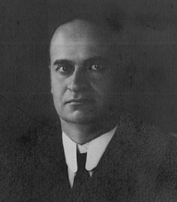
Olindo Malagodi, born on January 28, 1870, in Cento, a small town in the province of Ferrara, Italy, was a man of remarkable intellectual versatility and moral courage. As a journalist, poet, and political figure, Malagodi’s life and work were deeply intertwined with the turbulent history of early 20th-century Italy. His contributions to journalism, his advocacy for liberalism, and his resistance to the rise of fascism make him a significant figure in Italian history. In this article, we will explore the life, career, and legacy of Olindo Malagodi, offering detailed insights into his achievements and the historical context in which he lived.
Early Life and Education
Olindo Malagodi was born into a society undergoing rapid transformation. The late 19th century in Italy was marked by social and political upheaval, as the country was still in the process of unification and modernization. Malagodi’s early life reflected these broader societal changes. He developed a passion for literature and politics at a young age, leading him to pursue a degree in letters at the University of Milan. Even before completing his studies, Malagodi was drawn to the world of journalism, contributing to various socialist-leaning publications such as Lotta di Classe and Critica Sociale. These early experiences shaped his worldview, though his political alignment would evolve over time.
A Shift Towards Liberalism
While Malagodi began his career in socialist circles, his views gradually shifted towards liberalism, influenced by his growing friendship with Giovanni Giolitti, one of Italy’s most prominent liberal politicians. Giolitti’s pragmatic approach to politics and his emphasis on the role of the state in balancing economic and social interests resonated with Malagodi. By the mid-1890s, Malagodi had distanced himself from socialism and embraced liberal ideals, advocating for a more balanced and moderate approach to governance.
In 1895, Malagodi moved to London to work as a correspondent for La Tribuna, one of Italy’s leading newspapers. This experience broadened his perspective, exposing him to the political and social dynamics of a different country. Malagodi’s reporting from London was marked by keen observations and a deep understanding of international affairs, qualities that would define his journalistic career. His work in London also solidified his reputation as a thoughtful and incisive commentator on political issues.
Leadership at La Tribuna
In 1910, Malagodi was appointed as the director of La Tribuna, a position he held for thirteen years. His leadership came at a time when the newspaper was facing significant challenges, both financially and editorially. Malagodi’s tenure as director was marked by his efforts to steer the paper through these difficulties, restoring its reputation and financial stability. Under his guidance, La Tribuna became a voice for liberal thought in Italy, advocating for democratic principles and providing a platform for intellectual debate.
Malagodi’s editorial stance during his time at La Tribuna was characterized by his commitment to liberalism and his opposition to authoritarianism. He used the newspaper as a tool to promote political and social reforms, often clashing with the more conservative elements of Italian society. His writings during this period reflect a deep concern for the state of Italian democracy and a belief in the importance of preserving individual liberties in the face of growing political extremism.
Political Career and Opposition to Fascism
Malagodi’s reputation as a journalist and his close association with Giolitti led to his appointment as a senator in 1921, representing the liberal-democratic group. His entry into politics coincided with a tumultuous period in Italian history, as the country was grappling with the aftermath of World War I and the rise of fascism. Malagodi was an outspoken critic of Benito Mussolini and the fascist movement, warning of the dangers that authoritarianism posed to Italian democracy.
Malagodi’s opposition to fascism was not without consequences. On October 31, 1922, shortly after Mussolini’s March on Rome, Malagodi was attacked and beaten by fascist thugs. Although he managed to escape the worst of the violence, the incident underscored the growing danger for those who opposed Mussolini’s regime. Despite these threats, Malagodi continued to speak out against fascism, using his platform as a senator and a journalist to rally support for the preservation of democratic institutions.
As the fascist regime consolidated power, Malagodi found it increasingly difficult to continue his work in Italy. In 1923, recognizing the growing peril, he made the difficult decision to leave Italy and seek refuge in France. This move marked the end of his active political and journalistic career in Italy, but it also allowed him to continue his resistance to fascism from abroad.
Exile in France and Final Years
Malagodi’s exile in France was a period of reflection and continued intellectual activity. Settling in Paris with his wife, Gabriella Levi, and their two children, Giovanni and Marcella, Malagodi remained engaged with the political and cultural life of Italy through his writings and correspondence. He was part of a circle of Italian exiles that included prominent figures such as Giovanni Gentile, Benedetto Croce, and Guglielmo Ferrero. This group of intellectuals continued to debate the future of Italy and the broader implications of fascism for Europe.
During his time in Paris, Malagodi also turned his attention to his literary work. He was a prolific writer, known for his refined prose and imaginative poetry. His literary output during these years included essays, poems, and political commentary. Among his most notable works from this period is Poesie vecchie e nuove (1929), a collection that reflects his deep engagement with the cultural and political issues of his time.
Despite his forced exile, Malagodi’s influence continued to be felt in Italy. His writings were smuggled into the country, and his ideas circulated among those who opposed the fascist regime. He remained a symbol of resistance, a testament to the enduring power of intellectual and moral courage in the face of tyranny.
In the final years of his life, Malagodi’s health began to deteriorate. He suffered a stroke and passed away on January 30, 1934, in Paris, at the age of 64. His death marked the end of a life dedicated to the pursuit of truth and justice, but his legacy would continue through his writings and the impact he had on those who knew him.
Legacy and Historical Significance
Olindo Malagodi’s legacy is one of intellectual rigor and unwavering commitment to democratic principles. As a journalist, he was a voice of reason and moderation in a time of great political turmoil. His leadership at La Tribuna helped shape public discourse in Italy, promoting liberal values and resisting the tide of authoritarianism.
Malagodi’s political career, though cut short by the rise of fascism, was marked by his dedication to the preservation of democracy. His opposition to Mussolini and his willingness to speak out against the fascist regime, even at great personal risk, stand as a testament to his courage and integrity. In a time when many were swayed by the allure of fascism, Malagodi remained steadfast in his commitment to liberalism and the rule of law.
In the years following his death, Malagodi’s contributions to Italian culture and politics have been increasingly recognized. His son, Giovanni Malagodi, would go on to become a prominent political leader in post-war Italy, serving as the head of the Italian Liberal Party and holding various government positions, including Minister of the Treasury and President of the Senate. Giovanni Malagodi’s career was in many ways a continuation of his father’s legacy, reflecting the same commitment to liberalism and democratic principles.
Olindo Malagodi’s writings continue to be studied and appreciated for their literary and historical significance. His works offer valuable insights into the intellectual and political currents of early 20th-century Italy, as well as the broader European context. His poetry and prose are characterized by a deep sense of humanity and a concern for the moral and ethical dimensions of political life.
Conclusion
Olindo Malagodi’s life and work offer a powerful reminder of the importance of intellectual and moral integrity in times of political crisis. His commitment to liberalism, his opposition to fascism, and his contributions to Italian journalism and literature have left an enduring legacy. In an era when authoritarianism threatened to overwhelm democratic institutions, Malagodi stood as a beacon of resistance and a champion of the values that underpin a free and just society.
Today, Olindo Malagodi’s story is more relevant than ever. As we face new challenges to democracy and the rule of law, his life serves as an example of the courage and determination required to defend these principles. His legacy is a testament to the power of ideas and the enduring importance of standing up for what is right, even in the face of overwhelming odds.


