
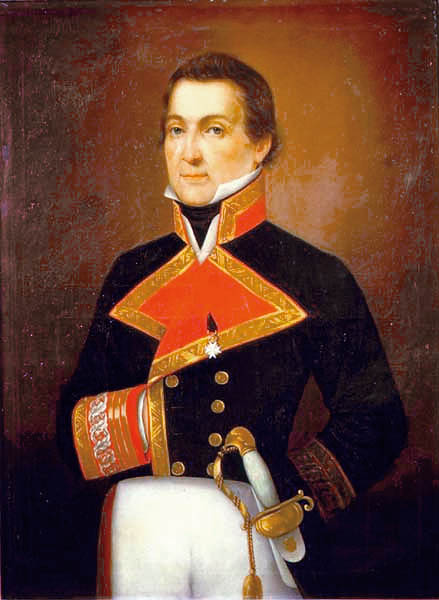
Alessandro Malaspina, born on November 5, 1754, in Mulazzo, Tuscany, was a multifaceted figure who made significant contributions as an explorer, navigator, scientist, and thinker during the Age of Enlightenment. Though he served the Spanish Crown and is often remembered as Alejandro Malaspina in Spanish history, his legacy spans across continents, cultures, and disciplines. This article delves into the life, achievements, and lasting impact of this remarkable figure, providing detailed insights into his journey from a small Tuscan town to the vast oceans of the world.
Early Life and Background
Alessandro Malaspina was born into the noble Malaspina family, which had deep roots in the Lunigiana region of Italy. The Malaspinas were a powerful feudal family, and their legacy stretched back to the medieval period. Alessandro was the third son in the family, which traditionally meant a career in the clergy was expected. However, Alessandro was drawn to the sea, a passion that would define his life and career.
His early education took place in Palermo, where he attended the Jesuit school, a reflection of his family’s initial intent to steer him toward a religious vocation. However, Alessandro’s interests diverged, leading him to pursue a career in navigation and exploration, fields that would allow him to explore the world and its many wonders.
Rejecting a life in the church, Malaspina embarked on a naval career, initially serving with the Knights of the Order of Malta, a military order with a storied history of naval warfare. His true calling, however, was in exploration and science, and he soon joined the Spanish Navy, where he received rigorous training at the prestigious Naval Academy in Cádiz.
It was during his early naval career that Malaspina began to distinguish himself. His first significant missions took him to the Philippines, where he participated in three expeditions, the last of which involved the circumnavigation of the globe. This achievement marked him as the first Italian to command a ship on a global voyage, a feat that not only demonstrated his seafaring skills but also his growing interest in the scientific study of the world.
The Malaspina Expedition: A Five-Year Scientific Endeavor
Malaspina’s experiences in the Spanish colonies in the Americas and Asia deeply influenced his thinking. Observing the complexities and challenges of colonial administration, he proposed to the Spanish Crown a grand scientific expedition aimed at enhancing the understanding of Spain’s vast overseas territories. This proposal, crafted in collaboration with his colleague José Bustamante, was well-received by King Charles III of Spain, who was eager to advance the scientific and geopolitical interests of his empire.
Thus, in 1789, Malaspina set sail from Cádiz aboard the corvettes Descubierta and Atrevida, leading what would become one of the most ambitious scientific expeditions of the 18th century. The expedition lasted five years and covered an extensive range of territories, from the coasts of South America to Alaska, and from the Philippines to New Zealand and Australia.
The expedition’s contributions to science were monumental. It collected an immense amount of data on flora, fauna, geology, and indigenous cultures. The crew included some of the finest scientists of the time, who conducted astronomical observations, topographical surveys, and natural history studies. The cartographic work alone, mapping the coastlines of the Americas and parts of the Pacific, was invaluable to future navigators and remains a testament to Malaspina’s meticulous planning and leadership.
Scientific and Political Observations
Beyond the scientific achievements, Malaspina’s expedition had a profound impact on the political landscape of the Spanish Empire. His observations on the colonial system were sharp and forward-thinking. He critically assessed the governance of the Spanish colonies, advocating for reforms that included greater autonomy for the viceroyalties, the liberalization of trade, and the protection of indigenous cultures and natural environments.
Malaspina’s political ideas were ahead of his time, envisioning a more enlightened and just colonial administration. He believed that the sustainability of the Spanish Empire depended on these reforms, which would ensure the well-being of both the colonizers and the colonized. Unfortunately, these progressive ideas would also lead to his downfall.
The Downfall: Political Intrigue and Imprisonment
Upon returning to Spain in 1794, Malaspina was initially celebrated for his achievements. However, the political landscape had changed drastically. King Charles IV had ascended the throne, and his reign was heavily influenced by Manuel Godoy, the ambitious and powerful Prime Minister. Godoy, who viewed Malaspina’s popularity and reformist ideas as a threat to his power, orchestrated a conspiracy against him.
Malaspina, who had been critical of Godoy’s policies and the corrupt state of the Spanish government, was accused of conspiring against the Crown. In 1795, he was arrested on charges of conspiracy and treason, and after a sham trial, he was sentenced to ten years in prison. Stripped of his naval rank and income, Malaspina was imprisoned in the fortress of San Antón in La Coruña.
The Final Years and Legacy
Malaspina’s imprisonment was harsh, but he continued to engage in intellectual pursuits. Despite the cold Galician winters and the isolation, he remained a figure of respect, even among his captors. His release came in 1802, largely due to the intervention of Napoleon Bonaparte, who recognized Malaspina’s talents and sought to use them for his own ends. However, by this time, Malaspina’s health had deteriorated, and he retired to his family estate in Pontremoli, where he spent his remaining years.
Alessandro Malaspina died on April 9, 1810, in Pontremoli, suffering from intestinal cancer. His death marked the end of a life filled with exploration, scientific inquiry, and a deep commitment to the ideals of the Enlightenment. However, his legacy would be suppressed for nearly a century, largely due to the efforts of Godoy and the political fallout from his imprisonment.
It wasn’t until the late 19th century that Malaspina’s contributions began to be recognized. Historians and scholars unearthed his writings and the reports from his expedition, which had been hidden away by the Spanish government. The maps and scientific data collected during his voyage were finally published, providing invaluable insights into the geography and natural history of the regions he explored.
Historical Context and Impact
Malaspina’s life and work must be understood within the broader context of the Age of Enlightenment, a period characterized by a profound emphasis on reason, science, and the pursuit of knowledge. As an Enlightenment thinker, Malaspina was deeply influenced by the intellectual currents of his time. His belief in the power of science to improve society and his advocacy for humane and just governance reflect the ideals of this era.
The Malaspina Expedition, in particular, stands as a testament to the spirit of discovery and inquiry that defined the 18th century. It was one of the last great scientific voyages of the Enlightenment, comparable to the expeditions of James Cook or the later journeys of Alexander von Humboldt. The expedition not only expanded the geographical knowledge of the time but also contributed to a more nuanced understanding of the cultures and environments encountered.
In Spain, however, Malaspina’s ideas were too radical for the conservative forces that dominated the court of Charles IV. His call for colonial reforms and his critique of the existing order threatened the status quo, leading to his political persecution. This reactionary response highlights the tensions between Enlightenment ideals and the realities of political power in late 18th-century Europe.
Modern Recognition and Continued Influence
Today, Alessandro Malaspina is recognized as one of the most important explorers of his time, though his name remains less well-known than some of his contemporaries. His contributions to science, navigation, and political thought have gained greater appreciation in recent years, particularly as historians have re-evaluated the importance of his work.
Several institutions and projects have been named in his honor, including the Malaspina Research Centre in Spain and the Malaspina Expedition of 2010, which retraced the routes of his original voyage. These modern efforts reflect a growing recognition of Malaspina’s enduring impact on the fields of exploration and science.
Conclusion: Alessandro Malaspina’s Enduring Legacy
Alessandro Malaspina’s life is a compelling story of exploration, intellectual curiosity, and the pursuit of reform. His achievements as a navigator and scientist are remarkable, but his legacy is equally defined by his commitment to the principles of the Enlightenment. Despite facing political persecution and personal hardship, Malaspina’s contributions have stood the test of time, offering insights that remain relevant to this day.
As we continue to explore the world and seek to understand our place within it, the lessons from Malaspina’s life and work serve as a reminder of the importance of curiosity, critical thinking, and the pursuit of knowledge. His story is a testament to the power of ideas and the enduring impact of those who dare to challenge the status quo in the name of progress and enlightenment.


