
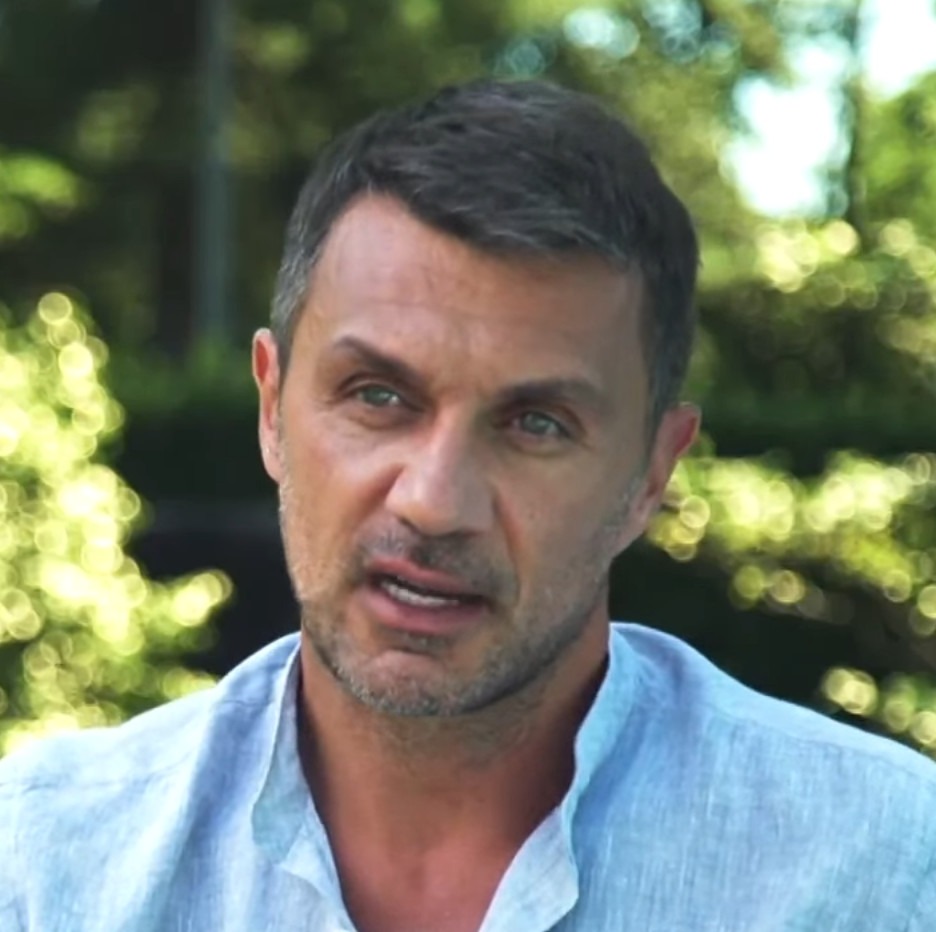
Paolo Maldini is a name synonymous with excellence in the world of football. Born on June 26, 1968, in Milan, Italy, Maldini has not only left an indelible mark on AC Milan, one of Europe’s most storied football clubs, but also on the global football stage. As a defender, Maldini redefined what it meant to play in the backline, combining elegance, power, and tactical intelligence with an unyielding commitment to his team. This article delves into Maldini’s life, career, and lasting impact on football, exploring the key moments that have made him an icon in the sport.
Early Life and Football Heritage
Paolo Maldini was born into a footballing family, with his father, Cesare Maldini, being a respected footballer and coach. Cesare was a central figure in AC Milan’s history, having won four Serie A titles and a European Cup with the club during the 1950s and 1960s. His legacy was not only on the pitch but also as a manager, including a stint as the head coach of the Italian national team. For young Paolo, football was in his blood, and his father’s achievements provided both inspiration and a benchmark.
Growing up in Milan, Paolo was immersed in the world of football from an early age. He joined AC Milan’s youth academy, where he quickly distinguished himself with his natural talent, work ethic, and leadership qualities. By the age of 16, Maldini was already knocking on the door of the first team, a rare feat for someone so young, especially in a club as prestigious as Milan.
Early Career: A Star is Born
Paolo Maldini made his Serie A debut for AC Milan on January 20, 1985, against Udinese. It was a moment that would herald the beginning of an extraordinary career. Although the match ended in a 1-1 draw, Maldini’s performance caught the eye of then-coach Nils Liedholm, who recognized the young defender’s potential. Despite his youth, Maldini displayed remarkable composure, tactical awareness, and a level of maturity far beyond his years.
As Maldini began to cement his place in the Milan first team, he quickly dispelled any notions that he was merely a “son of” a famous footballer. His performances were marked by a blend of technical skill and physical prowess that made him stand out even in a team filled with stars. His ability to read the game, combined with his speed, strength, and precise tackling, made him a formidable defender.
Rise to Prominence: The Milan Dynasty
The late 1980s and 1990s were a golden era for AC Milan, and Paolo Maldini was at the heart of it. Under the management of Arrigo Sacchi and later Fabio Capello, Milan became one of the most dominant teams in Europe. Maldini, initially playing as a left-back before transitioning to central defense, was integral to the team’s success.
Maldini’s career at Milan is adorned with an array of titles that reflect both his individual brilliance and the team’s dominance. He won seven Serie A titles, five European Cups/Champions League titles, and numerous other domestic and international trophies. His influence extended beyond the pitch as well; Maldini was Milan’s captain for many years, a role in which he led by example, embodying the values of dedication, professionalism, and sportsmanship.
International Career: A Pillar for Italy
Paolo Maldini’s excellence was not confined to club football. He also had a distinguished international career with the Italian national team, earning 126 caps and representing Italy in four World Cups and three European Championships. Maldini made his debut for Italy at just 19 years old, and over the next 14 years, he became the backbone of the Azzurri defense.
Despite his stellar performances, a major international trophy eluded Maldini. He came close on several occasions, most notably at the 1994 World Cup in the United States, where Italy reached the final but lost to Brazil in a penalty shootout. Nevertheless, Maldini’s contributions to the national team were immense, and he is remembered as one of Italy’s greatest ever defenders.
The Art of Defending: Maldini’s Style and Legacy
Paolo Maldini was often described as the perfect defender, and for good reason. Standing at 6 feet 2 inches, he was tall and athletic, which gave him an edge in aerial duels and physical battles. However, what truly set Maldini apart was his footballing intelligence. He had an uncanny ability to anticipate opponents’ moves, positioning himself perfectly to intercept passes or make crucial tackles.
Maldini was also known for his clean style of play. Despite being a defender, he was rarely booked, a testament to his ability to time his tackles to perfection. His versatility was another hallmark of his game; Maldini was equally comfortable playing as a left-back or center-back, and his ambidexterity allowed him to perform with precision on either flank.
Fabio Capello, one of Maldini’s coaches at Milan, famously said, “Maldini? He is simply the best defender in the world.” This sentiment was echoed by many of his peers and football pundits, who admired Maldini’s consistency, leadership, and commitment to the game.
The Twilight Years: Transition from Player to Ambassador
Paolo Maldini’s longevity in football is remarkable. He played for AC Milan for an incredible 25 seasons, a feat that speaks volumes about his fitness, dedication, and passion for the sport. Even as he aged, Maldini remained a key player for Milan, adapting his game to compensate for the loss of pace with even greater positional awareness and leadership.
Maldini retired from professional football in 2009, at the age of 41, after a record 647 Serie A appearances. His final match at the San Siro was a poignant moment, marking the end of an era for both Milan and Italian football. The club retired his iconic number 3 jersey, ensuring that no other Milan player would wear it, except potentially one of his sons, should they follow in their father’s footsteps.
After retiring, Maldini was offered several roles within football, including a position at Chelsea under Carlo Ancelotti. However, he chose to step away from the limelight, focusing on his family and business ventures. In 2015, he co-founded Miami FC, a professional football club in the United States, demonstrating his continued passion for the sport.
Return to Milan: A New Chapter
In August 2018, Paolo Maldini returned to AC Milan, this time in a strategic role off the pitch. He was appointed as the Director of Strategic Development in the Sports Area, a position that involved overseeing the club’s sporting activities and contributing to the long-term vision of Milan’s football strategy. His return was met with great enthusiasm by fans and pundits alike, as Maldini’s knowledge and experience were seen as invaluable assets in Milan’s quest to regain its former glory.
Maldini’s influence at Milan has grown steadily since his return, and he has been instrumental in the club’s recent successes. His leadership has helped Milan rebuild its squad, blending young talents with experienced players, and his presence has been a stabilizing force in the club’s management.
Legacy: Beyond the Numbers
Paolo Maldini’s legacy is one that transcends statistics and trophies. While his achievements on the pitch are extraordinary, it is his character, professionalism, and approach to the game that have left an indelible mark on football. Maldini is often cited as the epitome of the modern defender, a player who combined technical skill with tactical intelligence, and who played the game with an unwavering commitment to fairness and respect.
Maldini’s influence extends beyond the football field. He is a role model for young players, not only for his footballing abilities but also for his humility, work ethic, and loyalty. Throughout his career, Maldini remained a one-club man, a rarity in modern football, and his dedication to AC Milan has earned him a special place in the hearts of fans worldwide.
Moreover, Maldini’s impact on the sport continues through his work in football management and his efforts to promote the game globally. His involvement with Miami FC and his role at AC Milan demonstrate his ongoing commitment to football and his desire to contribute to the sport’s development at all levels.
Conclusion
Paolo Maldini is more than just a football legend; he is an icon whose influence on the game will be felt for generations to come. From his early days as a promising young talent at AC Milan to his later years as a revered veteran and football ambassador, Maldini’s career is a testament to excellence, dedication, and integrity. His legacy is not only defined by the numerous titles and records he amassed but also by the way he played the game—with grace, intelligence, and an unyielding commitment to his team.
As one of the greatest defenders in the history of football, Paolo Maldini’s name will forever be associated with the highest standards of the sport. His life and career serve as an inspiration to aspiring footballers and a reminder of what can be achieved through hard work, perseverance, and a deep love for the game.


