
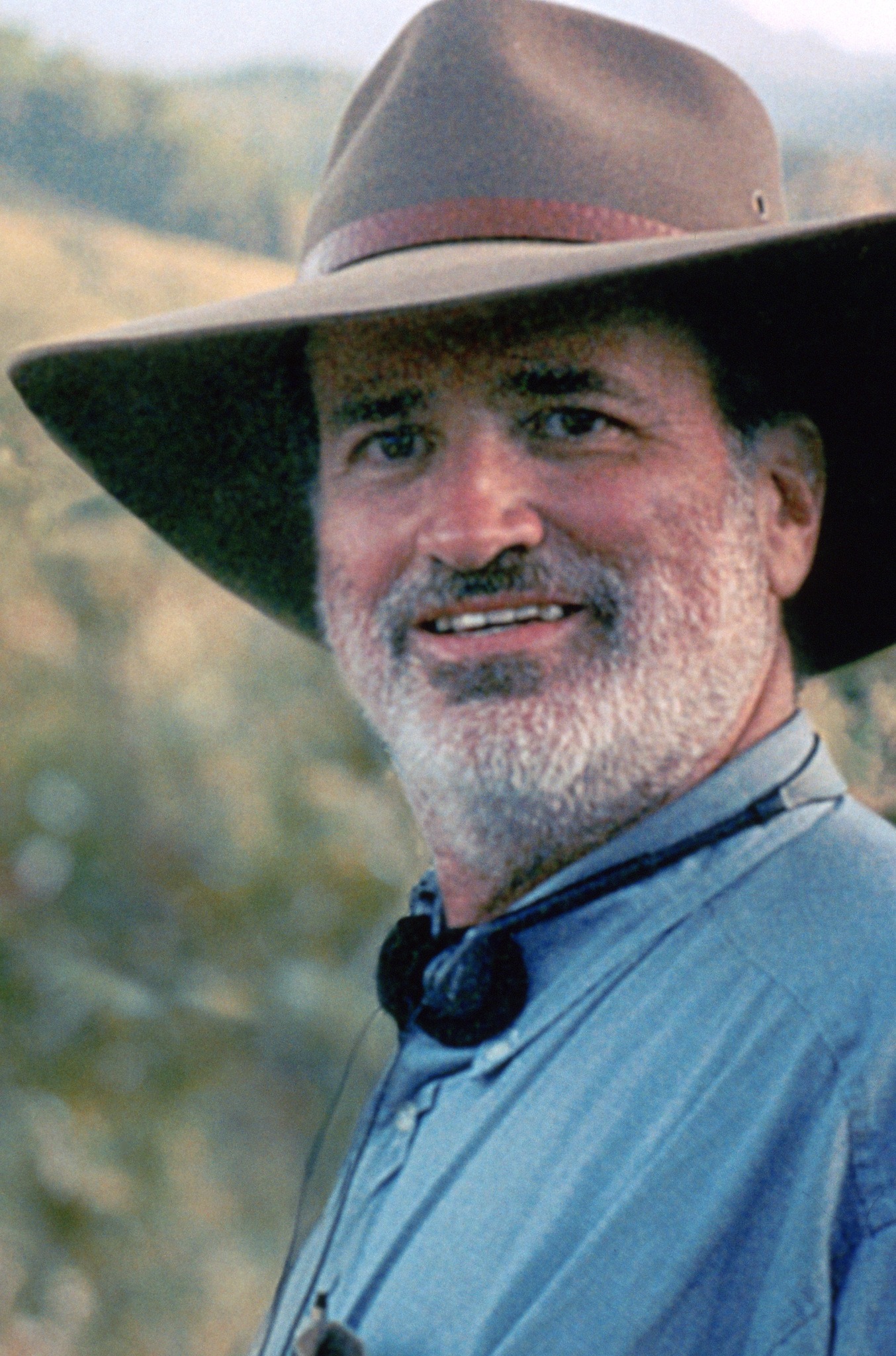
Terrence Malick, born on November 30, 1943, in Ottawa, Illinois, is one of the most enigmatic and revered filmmakers of his generation. Known for his distinct style, philosophical themes, and meticulous approach to filmmaking, Malick’s work has garnered critical acclaim and inspired countless filmmakers. His career spans several decades, with a body of work that is as notable for its depth as it is for its scarcity.
Early Life and Education
Terrence Frederick Malick was born into a family with Syrian roots; his father was a geologist, which perhaps laid the foundation for Malick’s later fascination with nature and the natural world, themes that would permeate his films. Malick’s early life was marked by academic brilliance. He attended St. Stephen’s Episcopal School in Austin, Texas, before moving on to Harvard University, where he graduated summa cum laude with a degree in philosophy in 1965.
During his time at Harvard, Malick was heavily influenced by the works of existential philosophers, particularly Martin Heidegger. This philosophical background would later become a hallmark of his filmmaking, where deep existential questions are explored through poetic imagery and narrative.
After Harvard, Malick briefly attended Oxford University as a Rhodes Scholar but left after a disagreement with his tutor, the philosopher Gilbert Ryle. This incident marked the beginning of Malick’s complex relationship with academia and the intellectual world. He returned to the United States and translated Heidegger’s work “Vom Wesen des Grundes” into English, titled “The Essence of Reason,” which further showcases his deep engagement with philosophical thought.
Early Career: Journalism and the Shift to Filmmaking
Before venturing into filmmaking, Malick explored various professions, including working as a journalist for magazines like “Newsweek,” “Life,” and “The New Yorker.” His journalistic work demonstrated his keen eye for detail and narrative, qualities that would later define his directorial style.
However, Malick’s true passion lay in filmmaking. In 1969, he directed his first short film, “Lanton Mills,” which earned him a Master of Fine Arts from the American Film Institute (AFI) Conservatory. This marked the beginning of his journey as a filmmaker, one that would be characterized by his distinctive approach to storytelling and visual aesthetics.
The 1970s: Breakthrough with “Badlands” and “Days of Heaven”
Malick’s feature film debut came in 1973 with “Badlands,” a film loosely based on the real-life crime spree of Charles Starkweather and Caril Ann Fugate. The film, starring Martin Sheen and Sissy Spacek, was a critical success, establishing Malick as a new voice in American cinema. “Badlands” was noted for its lyrical quality, its exploration of violence and innocence, and its use of natural landscapes as a backdrop to human drama.
In 1978, Malick released his second feature, “Days of Heaven.” Set in the Texas Panhandle during the early 20th century, the film tells the story of a love triangle set against the backdrop of a vast, idyllic landscape. The film was praised for its stunning cinematography, which won an Academy Award, and for Malick’s use of natural light, particularly during the “golden hour,” a time of day that produces a soft, warm light that became a visual signature in his work.
“Days of Heaven” solidified Malick’s reputation as a director with a unique vision, but it also marked the beginning of a long hiatus from filmmaking. The production of the film was notoriously difficult, with Malick’s perfectionism leading to an extended editing process that took over two years.
The 1980s: A Two-Decade Hiatus
Following the release of “Days of Heaven,” Malick retreated from the public eye, moving to Paris and disappearing from the filmmaking world for nearly two decades. During this time, he worked on various uncompleted projects, including a film titled “Q,” which was intended to explore the origins of life on Earth. This period of withdrawal added to the mystique surrounding Malick, who was already known for his reclusive nature and reluctance to engage with the media.
Despite his absence from the public eye, Malick’s influence continued to grow. Filmmakers and critics alike revered his work, and his first two films became cult classics, studied in film schools and admired for their innovative use of visuals and sound.
The 1990s: Return with “The Thin Red Line”
In 1998, Malick made a triumphant return to filmmaking with “The Thin Red Line,” an adaptation of James Jones’ novel about the Battle of Guadalcanal during World War II. The film featured an ensemble cast, including Sean Penn, Adrien Brody, George Clooney, John Cusack, and Nick Nolte. “The Thin Red Line” was a commercial and critical success, earning seven Academy Award nominations, including Best Director for Malick.
The film is notable for its meditative tone and its exploration of the conflict between nature and war, themes that had been present in Malick’s earlier work but were here expanded upon with greater depth and complexity. “The Thin Red Line” is often seen as one of the most profound war films ever made, not because of its depiction of battle but because of its philosophical reflections on the human condition and the natural world.
The 2000s: Continued Exploration with “The New World” and “The Tree of Life”
Malick’s next project, “The New World” (2005), was a retelling of the story of Pocahontas and the founding of Jamestown, Virginia. The film, like his earlier works, was visually stunning, with a focus on the natural world and the clash between cultures. It received mixed reviews from critics but has since been re-evaluated as one of Malick’s more ambitious and important works.
In 2011, Malick released what is perhaps his most personal and ambitious film, “The Tree of Life.” Starring Brad Pitt, Jessica Chastain, and Sean Penn, the film is an epic exploration of life, death, and the universe. It juxtaposes the story of a 1950s Texas family with cosmic and prehistoric sequences, reflecting Malick’s long-standing interest in the origins of life.
“The Tree of Life” was a critical success, winning the Palme d’Or at the Cannes Film Festival and earning three Academy Award nominations, including Best Picture and Best Director. The film’s unconventional narrative structure and philosophical themes polarized audiences, but it solidified Malick’s reputation as one of the most innovative and daring filmmakers of his time.
The 2010s: Expanding Horizons with “To the Wonder,” “Knight of Cups,” and “Voyage of Time”
The 2010s saw Malick continue to push the boundaries of conventional filmmaking. In 2012, he released “To the Wonder,” a deeply personal exploration of love and spirituality. The film starred Ben Affleck, Olga Kurylenko, Rachel McAdams, and Javier Bardem. While the film divided critics, it was praised for its poetic visuals and emotional depth.
Malick followed this with “Knight of Cups” (2015) and “Song to Song” (2017), both of which were experimental in nature, using fragmented narratives and a dreamlike visual style. These films, starring actors like Christian Bale, Natalie Portman, and Ryan Gosling, further showcased Malick’s commitment to exploring the human experience in innovative ways.
During this period, Malick also worked on “Voyage of Time” (2016), an IMAX documentary that explores the history of the universe. The film, which includes footage originally shot for “The Tree of Life,” reflects Malick’s ongoing fascination with the cosmos and the place of humanity within it.
The 2020s: Recent Work and Legacy
In 2019, Malick released “A Hidden Life,” a historical drama based on the true story of Franz Jägerstätter, an Austrian farmer who refused to fight for the Nazis during World War II. The film was praised for its moral and philosophical depth, as well as its stunning cinematography. “A Hidden Life” was seen as a return to form for Malick, combining the philosophical inquiry of his earlier work with a powerful historical narrative.
As of the early 2020s, Malick continues to work on new projects, though details remain characteristically sparse. His influence on the film industry, however, is undeniable. Malick’s films have inspired a generation of filmmakers, and his unique approach to cinema—combining philosophical depth with visual poetry—has left a lasting impact on the art of filmmaking.
Conclusion: The Enigmatic Genius of Terrence Malick
Terrence Malick’s career is one of the most fascinating in the history of cinema. His films are not merely stories but meditations on existence, nature, and the human condition. Malick’s work is characterized by its philosophical depth, stunning visuals, and a narrative style that defies conventional filmmaking norms.
Malick’s legacy is one of a filmmaker who is unafraid to explore the big questions of life, who sees cinema not just as entertainment but as a vehicle for exploring the profound mysteries of existence. His influence on the art of filmmaking is profound, and his films continue to be studied, analyzed, and admired by audiences and filmmakers alike.
As Malick continues to create, one thing is certain: his work will remain a touchstone for future generations of filmmakers and cinephiles, a testament to the power of cinema to explore the deepest questions of the human soul.


