
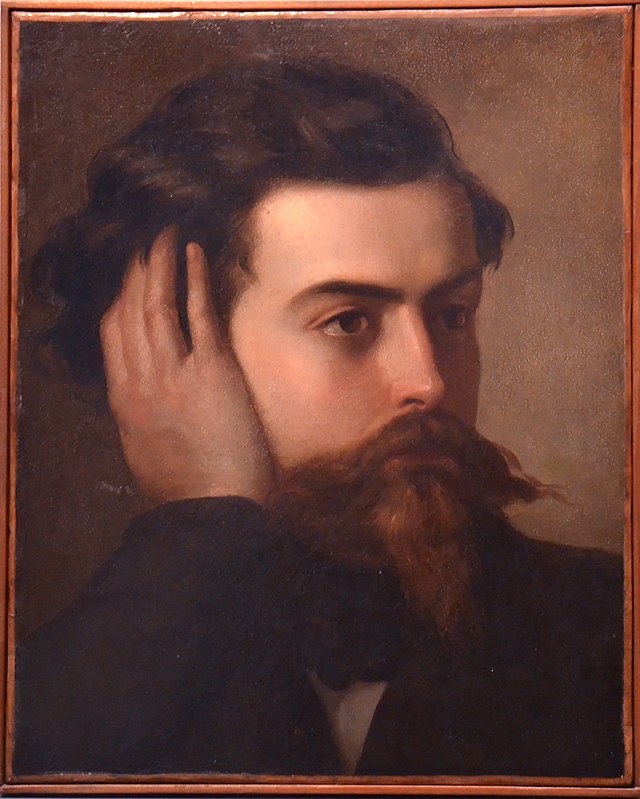
Goffredo Mameli is a name that resonates deeply within Italian history, not just as a poet, but as a symbol of patriotism and the fight for national unification. Born on September 5, 1827, in Genoa, Italy, Mameli lived a brief yet impactful life, passing away at the young age of 21. Despite his short life, Mameli’s contributions to Italian culture and history are monumental, particularly his creation of the lyrics for what would become Italy’s national anthem, “Il Canto degli Italiani,” commonly known as the “Inno di Mameli.” This article explores the life, legacy, and historical context of Goffredo Mameli, shedding light on his enduring influence on Italian nationalism and culture.
Early Life and Influences
Goffredo Mameli was born into a family that was deeply connected to both the military and the aristocracy. His father, an admiral in the Sardinian Navy, and his mother, the Marchioness Adelaide Zoagli Lomellini, provided him with a culturally rich and intellectually stimulating environment. From a young age, Mameli was exposed to the ideas of the Risorgimento, the movement aimed at unifying Italy, which undoubtedly shaped his worldview.
His early education was conducted under the guidance of his mother, due to his fragile health. The family’s residence in Genoa was frequented by prominent intellectuals of the time, such as Jacopo Sanvitale and Teresa Doria, which further fueled Mameli’s passion for literature and politics. At the age of 13, Mameli attended a public school managed by the Church, where he studied rhetoric under the tutelage of Father Agostino Muraglia, a member of the Scolopi religious order. Unlike other ecclesiastical orders, the Scolopi were known for their liberal teachings, which aligned with the revolutionary ideas that were beginning to take root in young Mameli’s mind.
The Poet-Patriot: Mameli’s Early Literary Work
Goffredo Mameli’s literary talents emerged early in his life. His poetry was characterized by a passionate love for Italy and a deep commitment to the cause of national unification. His work was heavily influenced by the political climate of the time, as well as by his mentor, Giuseppe Canale, a polymath and political activist. Canale’s influence was instrumental in nurturing Mameli’s patriotism and his desire for Italy to achieve autonomy and unity.
Mameli enrolled in the University of Genoa, initially studying philosophy. However, his exuberant temperament often led him to clashes with university authorities, reflecting his growing dissatisfaction with the status quo. His academic pursuits were interrupted as he became increasingly involved in political activities, leading him to abandon his studies and join the Società Entelema, a group of young intellectuals in Genoa who discussed historical, literary, and eventually, political issues.
Political Awakening and Revolutionary Involvement
Mameli’s involvement with the Società Entelema marked the beginning of his active participation in the Italian revolutionary movement. The society, which started as a literary group, quickly evolved into a hub for young democratic thinkers who were committed to the cause of Italian unification. Through this group, Mameli came into contact with prominent figures of the Risorgimento, including Giuseppe Mazzini and Nino Bixio, who were pivotal in shaping his revolutionary ideals.
By 1847, Mameli had become a leading figure in Genoa’s intellectual and political circles. He joined the Comitato dell’Ordine, a group formed by intellectuals, bourgeoisie, and progressive nobles to advocate for liberal reforms in the Kingdom of Sardinia. The Comitato sought to push for moderate reforms while maintaining a controlled influence over popular uprisings. However, the increasing radicalization of the movement led to internal conflicts, particularly between those who supported Mazzini’s radical approach and those who favored a more gradual political and social change.
“Il Canto degli Italiani”: The Birth of Italy’s National Anthem
One of Goffredo Mameli’s most significant contributions to Italian history is undoubtedly the creation of “Il Canto degli Italiani,” the song that would later become Italy’s national anthem. Written in the fall of 1847, the anthem was composed during a time of great political upheaval. The lyrics, which begin with the iconic line “Fratelli d’Italia” (“Brothers of Italy”), were written by Mameli, while the music was composed by Michele Novaro.
The anthem quickly gained popularity and became a rallying cry for the Italian unification movement. Its powerful and emotive lyrics captured the spirit of the Risorgimento, calling for unity and resistance against foreign oppression. The song’s impact was immediate, and it was sung in the streets of Genoa and beyond as a symbol of the growing desire for a unified and independent Italy.
Revolutionary Activities and the First Italian War of Independence
As the political situation in Italy grew more volatile, Mameli’s involvement in the revolutionary activities intensified. In March 1848, the Kingdom of Sardinia, under King Charles Albert, declared war on the Austrian Empire, marking the beginning of the First Italian War of Independence. Mameli, driven by his patriotic fervor, joined the fight for Italian unification. He became a captain in the Genoese volunteers and was deeply involved in the military and political strategies of the Risorgimento.
Mameli’s commitment to the cause led him to participate in several key events of the Italian unification. In April 1848, he marched to Milan with a group of volunteers to support the city’s uprising against Austrian rule. It was during this time that he met Giuseppe Mazzini, the leader of the Young Italy movement, who became a mentor and close ally. Mazzini’s radical ideas greatly influenced Mameli, and the two worked together to advance the cause of a united and republican Italy.
The Roman Republic and Mameli’s Final Days
The year 1849 was a critical one for Goffredo Mameli and the Italian unification movement. In February, after the flight of Pope Pius IX from Rome, the Roman Republic was declared, a short-lived but significant experiment in republican governance. Mameli played a crucial role in the defense of the Republic, serving as an aide-de-camp to Giuseppe Garibaldi, one of Italy’s most revered military leaders.
Mameli’s dedication to the cause was unwavering, even as the situation in Rome became increasingly desperate. On June 3, 1849, during the defense of the Roman Republic against French forces sent to restore the Pope, Mameli was wounded in battle. A comrade accidentally stabbed him in the leg during a chaotic skirmish at Porta San Pancrazio. Despite the seemingly minor nature of the wound, it quickly became infected, leading to complications that ultimately required the amputation of his leg.
The amputation, however, could not save Mameli. His condition deteriorated rapidly, and on July 6, 1849, Goffredo Mameli succumbed to the infection, dying at the age of 21. His death was a significant loss to the Italian unification movement, and he was mourned as a martyr for the cause of Italian independence.
Legacy: The Eternal Symbol of Italian Nationalism
Although Goffredo Mameli’s life was tragically short, his legacy has endured for more than a century and a half. He is remembered not only as the author of Italy’s national anthem but also as a symbol of the youthful idealism and sacrifice that characterized the Risorgimento. Mameli’s anthem, “Il Canto degli Italiani,” remains one of the most potent symbols of Italian unity and pride.
Mameli’s poetry and political writings continue to be studied and celebrated in Italy, where he is revered as a national hero. His life and work are a reminder of the power of words and ideas to inspire change and to mobilize people towards a common cause. In many ways, Mameli embodies the spirit of the Risorgimento: passionate, idealistic, and unwavering in his commitment to the dream of a united Italy.
Historical Context: The Risorgimento and Italian Unification
To fully appreciate Goffredo Mameli’s contributions, it is essential to understand the broader historical context of the Risorgimento, the period of Italian history that saw the unification of Italy. The Risorgimento was not just a political and military movement; it was also a cultural and intellectual revolution that sought to awaken a sense of national identity among the diverse states and regions of the Italian peninsula.
Throughout the 19th century, Italy was a patchwork of independent kingdoms, duchies, and territories controlled by foreign powers such as Austria and France. The Risorgimento aimed to unify these disparate regions into a single, independent nation-state. Figures like Giuseppe Mazzini, Giuseppe Garibaldi, and Count Camillo di Cavour played crucial roles in this process, advocating for independence, republicanism, and constitutional governance.
Mameli’s work, particularly his anthem, was a key element in fostering a sense of Italian nationalism. His poetry and writings gave voice to the aspirations of a generation that yearned for freedom and unity. The anthem itself became a unifying force, sung by soldiers and citizens alike as they fought for the dream of a united Italy.
The Cultural Impact of Mameli’s Work
Beyond its political significance, Mameli’s work has had a lasting cultural impact in Italy. “Il Canto degli Italiani” is more than just a national anthem; it is a cultural artifact that reflects the values and struggles of a nation. The anthem’s enduring popularity speaks to its ability to resonate with Italians across generations, reminding them of their shared history and the sacrifices made to achieve national unity.
Mameli’s influence extends beyond the anthem. His life and work have inspired countless artists, writers, and musicians who have drawn on his legacy to explore themes of patriotism, sacrifice, and the quest for freedom. In Italian literature and culture, Mameli is often depicted as a tragic hero, a figure whose youthful idealism and untimely death symbolize the high cost of the struggle for independence.
Conclusion: Goffredo Mameli’s Enduring Legacy
Goffredo Mameli’s life, though brief, left an indelible mark on Italian history and culture. As the author of Italy’s national anthem and a passionate advocate for unification, Mameli’s contributions to the Risorgimento were profound. His work continues to inspire and resonate with Italians today, serving as a reminder of the ideals that shaped the nation.
Mameli’s legacy is one of passion, dedication, and a deep love for his country. His life story is a testament to the power of youth and idealism in shaping the course of history. As Italy continues to navigate the challenges of the modern world, the memory of Goffredo Mameli remains a source of inspiration, reminding Italians of the sacrifices made to build a united and free nation.


