
Introduction
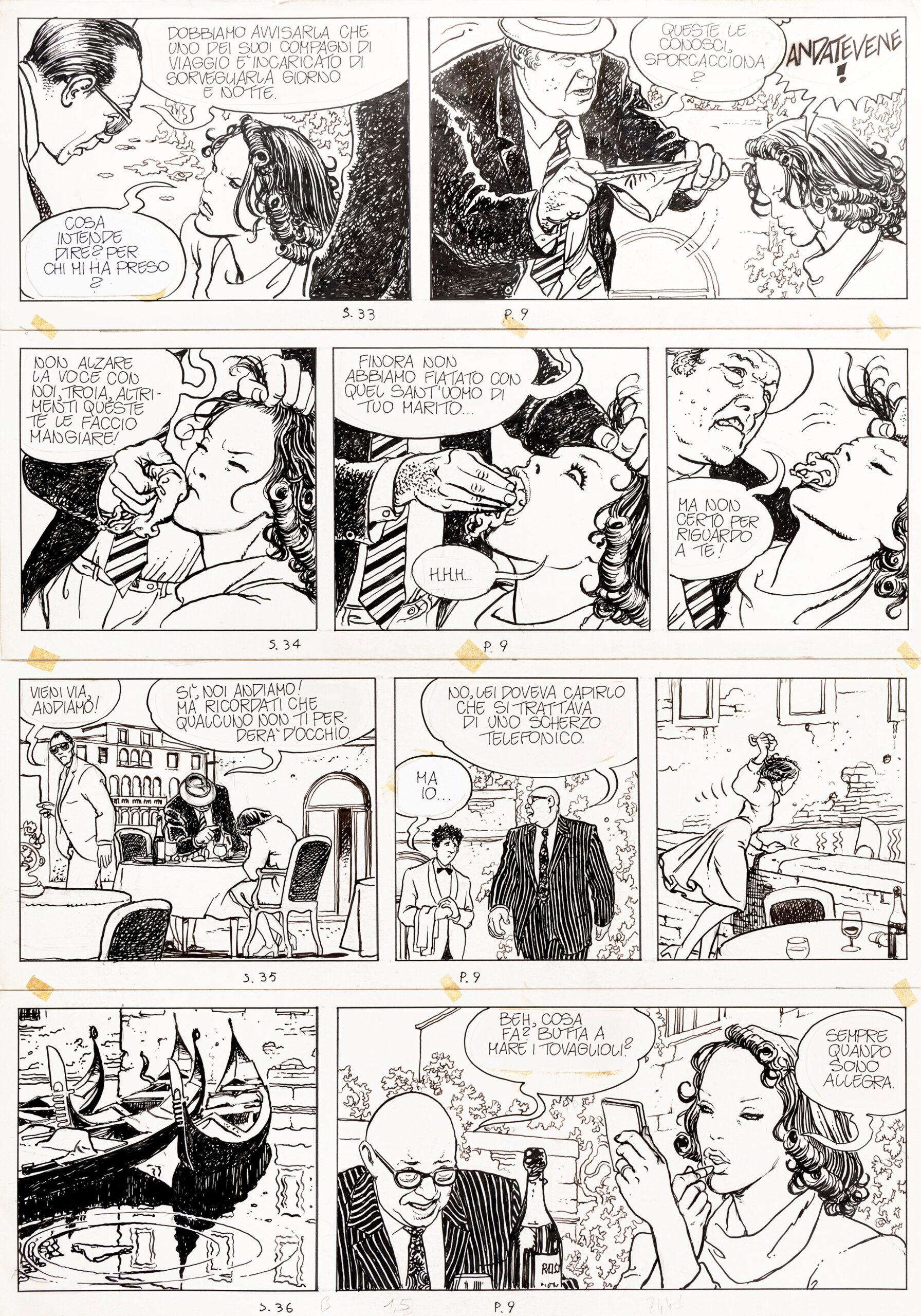
Milo Manara, born Maurilio Manara on September 12, 1945, in Luson, a small village in the South Tyrol region of Italy, is one of the most influential and celebrated comic book artists of the post-war era. Renowned for his distinctive style, which blends exquisite line work with erotic and fantastical themes, Manara has carved out a unique niche in the world of graphic novels and comic art. His work, often described as a bridge between high art and popular culture, has garnered international acclaim and made him a household name among comic enthusiasts. Over the decades, Manara’s art has not only entertained but also provoked, challenging societal norms and pushing the boundaries of what comic art can represent.
Early Life and Education
Manara’s early years were spent in Luson, a picturesque village in the Bolzano province, known for its natural beauty and alpine landscapes. Growing up in this serene environment, Manara developed a love for art at a young age. However, his artistic journey did not begin with comics. Initially, Manara pursued a career in painting and advertising, two fields that provided him with the foundational skills he would later apply to his comic book work.
After completing his secondary education, Manara enrolled at the University of Venice, where he studied architecture. However, his passion for visual art soon led him away from architecture and towards the world of comic illustration, a medium he saw as offering greater creative freedom and the potential for more direct engagement with an audience.
Early Career in Comics
Milo Manara made his debut in the comic book world in 1969, working on the erotic-police series “Genius,” published by Furio Viano. His early work was heavily influenced by the popular genres of the time, blending elements of noir, crime, and erotica. Despite the limited exposure of his initial projects, Manara quickly gained attention for his refined and detailed drawing style, which stood out in an industry dominated by more simplistic and commercialized artwork.
In the early 1970s, Manara continued to develop his craft, contributing to various publications. He drew for “Terror” (1970) and the “Jolanda de Almaviva” series (1971-1973), a sexy adventure comic that began to reveal Manara’s growing ability to capture the desires and fantasies of his audience. These works, while still formative, displayed the artist’s emerging signature style: a blend of sensuality, sophistication, and a touch of the surreal.
Breakthrough and Collaboration with Hugo Pratt
The mid-1970s marked a significant turning point in Manara’s career. In 1976, his work “Lo Scimmiotto,” a violent and erotic tale inspired by a Japanese story, was published in the Italian magazine Alterlinus. This work further solidified his reputation as an artist unafraid to explore controversial and provocative themes.
Manara’s career reached new heights when he met Hugo Pratt, the legendary creator of “Corto Maltese.” Pratt became a mentor to Manara, and their collaboration produced some of the most acclaimed works in the comic book world. In 1983, they co-created “Tutto ricominciò con un’estate indiana” (Indian Summer), a historical comic set in colonial America. The story, rich in atmosphere and emotional depth, showcased Manara’s ability to combine historical narrative with sensual artistry, and it is still regarded as one of his masterpieces.
Manara and Pratt continued to collaborate, creating “El Gaucho” in 1991, another historical epic that further demonstrated their synergy. These collaborations not only elevated Manara’s status within the comic book industry but also introduced his work to a broader, more international audience.
The Erotic Fantasies and International Fame
Milo Manara is perhaps best known for his exploration of eroticism in his art, a theme that has both defined and sometimes overshadowed his career. In 1983, Manara published “Il Gioco” (The Game), which became one of his most famous works. “Il Gioco” is a sexually charged narrative that tells the story of a woman who becomes the unwitting participant in a game of control and desire, manipulated through a device that removes her inhibitions. The comic was an immediate success and solidified Manara’s reputation as the master of erotic comics.
Following the success of “Il Gioco,” Manara continued to explore erotic themes in works like “Il Profumo dell’invisibile” (1986) and “Candid Camera” (1988). These stories, while explicit, are known for their artistic elegance and the way they play with themes of voyeurism, fantasy, and the subconscious mind. Manara’s women, often described as impossibly beautiful and ethereal, became iconic figures in the world of comic art, embodying both the allure and the mystery of the feminine form.
Manara’s ability to blend eroticism with high art earned him international acclaim. His works were not just popular in Italy but also across Europe and beyond. In France, a country with a rich tradition of comic book art, Manara became a celebrated figure, with his work frequently published and discussed in both artistic and literary circles.
Collaboration with Federico Fellini and Other Filmmakers
In the late 1980s, Manara’s fame caught the attention of the legendary Italian filmmaker Federico Fellini. The two artists, both known for their fascination with dreams, fantasies, and the surreal, found a kindred spirit in each other. Their collaboration resulted in “Viaggio a Tulum” (1989) and “Il viaggio di G. Mastorna detto Fernet” (1992). These works were based on unproduced scripts by Fellini and showcased Manara’s ability to translate cinematic visions into the comic book format.
The partnership with Fellini was a significant milestone in Manara’s career, blending the worlds of cinema and comics in a way that was unprecedented at the time. It also introduced Manara to a new audience—those familiar with Fellini’s work but perhaps less acquainted with the world of comics.
In the 1990s, Manara continued to collaborate with other filmmakers, including Spanish director Pedro Almodóvar. Together, they worked on “La feu aux entrailles” (1993), a project that further demonstrated Manara’s versatility and his ability to adapt his style to different narrative forms.
Expanding into New Media and the Digital Age
As the digital age dawned in the late 20th and early 21st centuries, Manara embraced new technologies to expand his reach and explore new creative possibilities. In 1996, he launched his own website, milomanara.it, which quickly became a hub for fans and collectors. The site featured galleries of his work, news updates, and interactive elements that allowed users to engage with his art in novel ways. The success of the website demonstrated Manara’s willingness to adapt to the changing landscape of media and his understanding of the importance of digital platforms in reaching a global audience.
Manara also ventured into the world of CD-ROMs with the release of “Gulliveriana” (1996) and “Il gioco del Kamasutra” (1997). These projects were designed specifically for the digital format, combining his signature art style with interactive storytelling. This move into digital media showcased Manara’s innovative spirit and his desire to push the boundaries of how comic art could be experienced.
Legacy and Influence in the Comic Book World
Milo Manara’s influence on the comic book industry is profound and far-reaching. His work has inspired countless artists, not only in the realm of erotic comics but also in the broader fields of illustration and graphic novels. Manara’s meticulous attention to detail, his mastery of the human form, and his ability to infuse his work with a sense of fantasy and allure have set a standard that many aspire to but few achieve.
Manara’s legacy is also marked by his ability to elevate the status of comic books as an art form. While comics were often dismissed as lowbrow entertainment, Manara’s work demonstrated that the medium could be both artistically sophisticated and thematically rich. His collaborations with figures like Hugo Pratt and Federico Fellini further cemented this notion, bridging the gap between popular culture and high art.
Controversies and Criticism
Despite his widespread acclaim, Manara’s work has not been without controversy. The erotic nature of his art has drawn criticism from some quarters, with accusations of objectifying women and perpetuating unrealistic beauty standards. Critics argue that Manara’s portrayal of women, while artistically stunning, reinforces certain stereotypes that can be seen as problematic.
Manara has defended his work by arguing that his art is a form of fantasy, not intended to reflect reality but to explore the imagination and the boundaries of desire. He sees his characters as part of a long tradition of erotic art, from ancient sculptures to Renaissance paintings, that celebrates the beauty of the human form.
Conclusion
Milo Manara’s career is a testament to the power of art to transcend boundaries, whether they be cultural, linguistic, or even those of the medium itself. His work has not only entertained but also challenged and provoked, making him one of the most significant comic book artists of the 20th and 21st centuries. Through his collaborations, innovations, and undeniable talent, Manara has left an indelible mark on the world of comics and popular culture.
As the world of comic art continues to evolve, Milo Manara’s influence will undoubtedly persist, inspiring new generations of artists to explore the limits of their creativity and to embrace the power of visual storytelling. His work remains a beacon for those who believe in the fusion of art and narrative, and his legacy will continue to shape the comic book industry for years to come.


