
Introduction
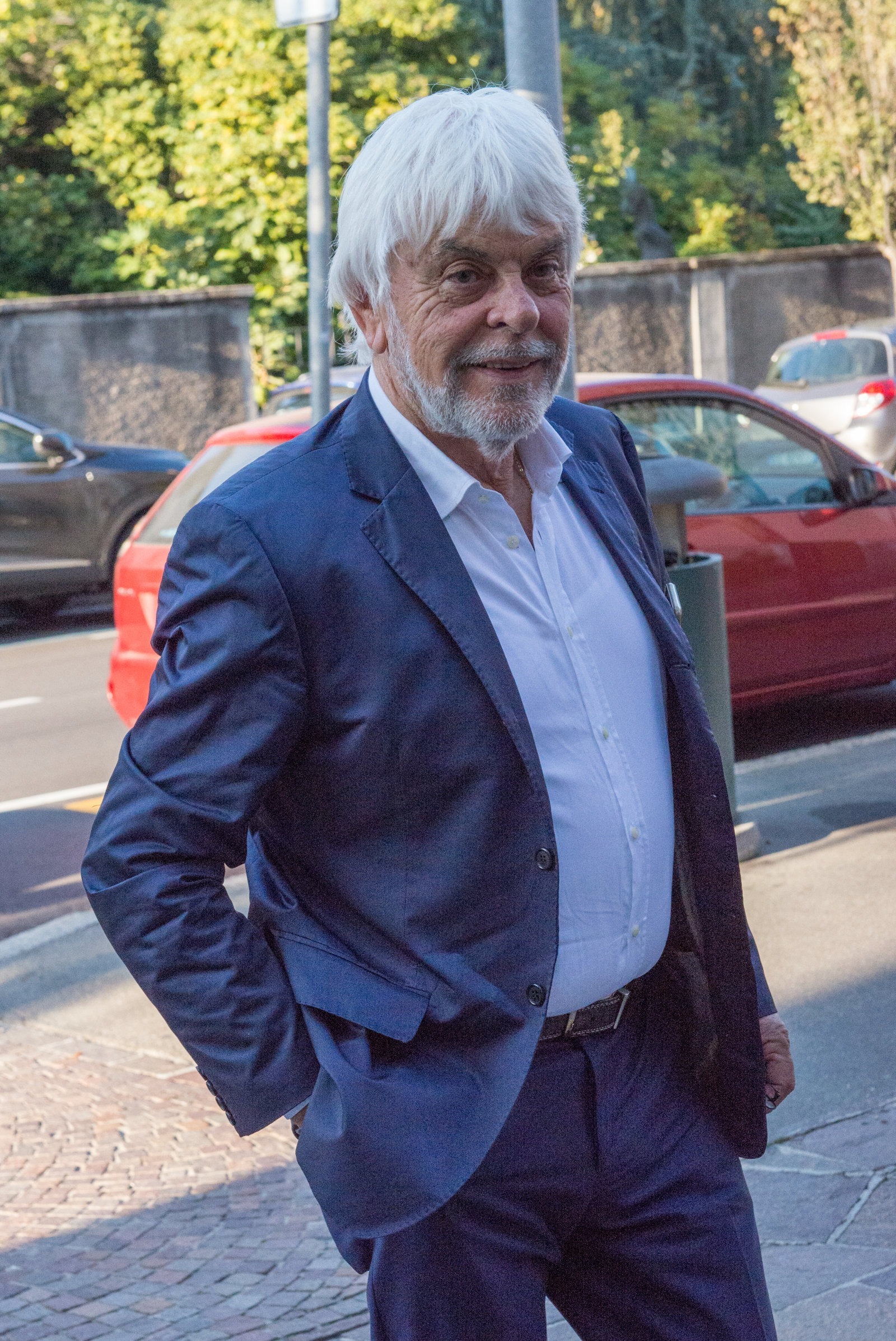
Valerio Massimo Manfredi, born on March 8, 1943, in Piumazzo, a small town in the province of Modena, Italy, is a renowned Italian historian, writer, archaeologist, and academic. His work spans across various disciplines, but he is best known for his historical novels, which have captivated readers around the world. Manfredi’s ability to blend rigorous historical research with compelling storytelling has earned him a place among the most respected contemporary writers of historical fiction. His books have been translated into multiple languages, and several have been adapted for film and television. Beyond his literary achievements, Manfredi’s contributions to academia and archaeology further highlight his diverse talents and deep passion for history.
Early Life and Education
Valerio Massimo Manfredi was born into a modest family in Piumazzo, a small village that lies within the municipality of Castelfranco Emilia in the Emilia-Romagna region of Italy. From a young age, Manfredi displayed a keen interest in history and the ancient world, a passion that was nurtured by his early education and reading. This fascination with the past led him to pursue a degree in Classical Literature at the University of Bologna, one of Italy’s oldest and most prestigious universities.
After earning his degree, Manfredi furthered his studies in Topography, a branch of archaeology focused on the study of ancient landscapes and geographical features, at the Catholic University of the Sacred Heart in Milan. This specialized training equipped him with the tools necessary to undertake archaeological fieldwork and academic research, laying the groundwork for his future career as both an archaeologist and a historian.
Academic and Archaeological Career
Manfredi’s academic career is as impressive as his literary one. He returned to the Catholic University of Milan as a lecturer, sharing his knowledge of classical history and archaeology with a new generation of students. His expertise in ancient topography led him to teaching positions at other prestigious institutions, including Ca’ Foscari University of Venice, Loyola University in Chicago, and the École Pratique des Hautes Études at the Sorbonne in Paris.
In addition to his teaching roles, Manfredi conducted seminars and lectures at numerous universities worldwide, including the University of Oxford, the University of California, Los Angeles (UCLA), and the University of Canberra in Australia. His international academic engagements reflect his status as a leading scholar in his field, respected not only in Italy but across the globe.
Manfredi’s work as an archaeologist has taken him to various significant sites around the world. He has participated in and led excavations in Italy, such as at Lavinium and Forum Gallorum, as well as at important sites abroad, including Tucum in Peru, the Negev Desert in Israel, and Eastern Anatolia in Turkey. These experiences not only deepened his understanding of ancient civilizations but also enriched the authenticity of the historical contexts in his novels.
Literary Career: Historical Novels and Major Works
Valerio Massimo Manfredi’s literary career began in the 1980s, but it was not until the publication of his novel “Palladion” in 1985 that he started gaining recognition as a novelist. However, his major breakthrough came with the “Alexandros” trilogy, published in 1998. This trilogy, which chronicles the life and conquests of Alexander the Great, consists of three volumes: “Il figlio del sogno” (The Child of a Dream), “Le sabbie di Amon” (The Sands of Ammon), and “Il confine del mondo” (The Ends of the Earth).
The “Alexandros” trilogy was a commercial success and established Manfredi as a master of historical fiction. His portrayal of Alexander the Great was praised for its historical accuracy, vivid characterizations, and the seamless integration of historical facts with imaginative storytelling. The trilogy has been translated into multiple languages and has sold millions of copies worldwide.
Following the success of “Alexandros,” Manfredi continued to explore themes from ancient history in his novels. Another notable trilogy, “Il mio nome è Nessuno” (My Name is Nobody), published between 2012 and 2013, focuses on the legendary figure of Odysseus, also known as Ulysses in Roman mythology. This trilogy, comprising “Il giuramento” (The Oath), “Il ritorno” (The Return), and “L’oracolo” (The Oracle), delves into the epic journey of Odysseus as he returns home from the Trojan War. Manfredi’s skill in reinterpreting these timeless stories for modern readers further cemented his reputation as a leading figure in historical fiction.
In addition to these trilogies, Manfredi has authored numerous standalone novels, each deeply rooted in historical research. His works often focus on ancient Greece, classical Rome, and other ancient civilizations, exploring themes of heroism, power, and the human condition. Among his most celebrated works are “L’ultima legione” (The Last Legion), which was adapted into a film by Dino De Laurentiis, and “L’armata perduta” (The Lost Army), which won the prestigious Premio Bancarella in 2005.
Contributions to Cinema and Television
Valerio Massimo Manfredi’s influence extends beyond literature into the realms of cinema and television. Several of his works have been adapted for the screen, bringing his vivid portrayals of ancient history to a broader audience. The “Alexandros” trilogy was acquired by Universal Pictures for a film adaptation, although the project has yet to materialize. However, his novel “L’ultima legione” was successfully adapted into a feature film in 2007, directed by Doug Lefler and starring Colin Firth and Ben Kingsley.
Manfredi has also contributed to the adaptation of other historical works for television and film. His expertise in ancient history has made him a sought-after consultant for projects requiring accurate historical representation. Additionally, he has appeared as an actor in several films, including “Vajont” (2001), “Piazza delle cinque lune” (2003), and “Il mistero di Dante” (2014), showcasing his versatility and passion for storytelling in various mediums.
As a television presenter, Manfredi has brought history to life for viewers through a series of documentaries and historical programs. Notably, he hosted “Stargate – Linea di confine” on La7 from 2003 to 2005, and “Impero” on the same network in 2008. These programs explored various historical themes and events, furthering Manfredi’s mission to make history accessible and engaging for the general public.
Journalistic Contributions and Publications
In addition to his novels and academic work, Valerio Massimo Manfredi has made significant contributions as a journalist and columnist. He has written for numerous prestigious publications, including Il Messaggero, Panorama, Focus, Il Giornale, and La Voce. His articles often explore historical themes, contemporary issues, and the intersections between history and modern life.
Manfredi’s extensive bibliography includes over 24 published works, seven short stories, eight anthologies, and 18 critical essays. His writings span a wide range of topics, from the history of ancient Greece and Rome to more contemporary subjects. His ability to connect with readers through both fiction and non-fiction has made him a respected voice in the literary and academic communities.
Awards and Recognition
Over the course of his career, Valerio Massimo Manfredi has received numerous accolades and honors for his contributions to literature, history, and archaeology. In 1999, he was named “Man of the Year” by the American Biographical Institute, a testament to his international impact and influence. In 2003, he was awarded the title of Commendatore della Repubblica by the Italian President Carlo Azeglio Ciampi, one of Italy’s highest civilian honors.
Manfredi’s literary achievements have also been recognized with prestigious awards. He won the Premio Hemingway in 2004 and the Premio Bancarella in 2005 for “L’armata perduta”. In 2010, he received the Premio Scanno “Archanes” for his outstanding contributions to historical literature.
Personal Life and Legacy
Valerio Massimo Manfredi is married to Christine Feddersen, an English translator, and together they have two children. Their daughter, Diana Manfredi, followed in her father’s creative footsteps and illustrated the graphic novel “Bagradas”, based on one of Manfredi’s stories.
Manfredi’s legacy is multifaceted. He is not only a best-selling author but also a respected historian, archaeologist, and academic. His works have inspired countless readers to explore the ancient world and appreciate the complexities of history. Through his novels, essays, and television programs, Manfredi has made history accessible and engaging, demonstrating the enduring relevance of ancient stories in the modern world.
Conclusion
Valerio Massimo Manfredi’s life and career are a testament to his passion for history, storytelling, and education. As an author, historian, and archaeologist, he has made significant contributions to our understanding of the ancient world while captivating audiences with his rich, imaginative narratives. His ability to bring history to life through various mediums has solidified his place as one of Italy’s most influential cultural figures. As readers continue to discover and rediscover his works, Manfredi’s legacy will undoubtedly endure, inspiring future generations to explore the past with curiosity and wonder.


