
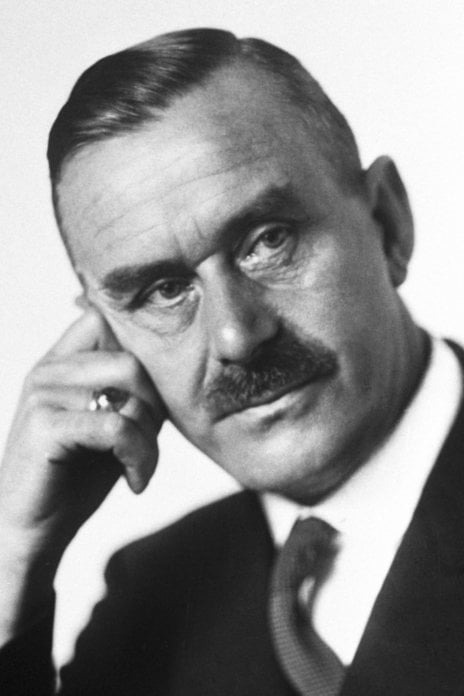
Thomas Mann, born on June 6, 1875, in Lübeck, Germany, is one of the most significant literary figures of the 20th century. His work spans various genres, including novels, short stories, essays, and political commentary. Mann’s writing reflects the complexities of modernity, the decay of European bourgeois culture, and the tensions between tradition and change. Awarded the Nobel Prize in Literature in 1929, his influence extends far beyond the borders of Germany, making him a global literary giant. This article explores the life, fame, and significant milestones of Thomas Mann, shedding light on how he became one of the most revered authors of his time.
Early Life and Education
Thomas Mann was born into a prominent merchant family in Lübeck, a city in northern Germany known for its medieval architecture and trade legacy. His father, Thomas Johann Heinrich Mann, was a successful grain merchant and a senator, while his mother, Julia da Silva Bruhns, came from a Brazilian-German background. This multicultural heritage would later influence Mann’s worldview and his literary work.
Mann’s early education took place in Lübeck, where he attended the prestigious Katharineum Gymnasium. However, his academic performance was not particularly remarkable, and he often struggled with the rigid structure of traditional schooling. Despite this, Mann developed a deep interest in literature and philosophy, which he pursued independently. His early exposure to the works of Goethe, Schopenhauer, and Nietzsche would significantly shape his intellectual development and literary style.
In 1894, Mann moved to Munich, a cultural hub in Germany, where he briefly attended the University of Munich. Although he never completed a degree, his time in Munich was crucial for his literary career. The city’s vibrant intellectual scene provided Mann with the inspiration and connections he needed to begin his journey as a writer.
Literary Beginnings and Early Success
Thomas Mann’s literary career began with short stories and essays, but it was his first novel, Buddenbrooks, published in 1901, that established him as a major literary talent. The novel, a detailed portrayal of a wealthy bourgeois family’s decline over four generations, is often seen as a reflection of Mann’s own family history. Buddenbrooks is notable for its rich character development, exploration of societal norms, and intricate narrative structure. The novel’s success was immediate, and it was later recognized as one of the greatest achievements in German literature, earning Mann the Nobel Prize in Literature in 1929.
Following the success of Buddenbrooks, Mann continued to write prolifically. His early works, such as the novella Tonio Kröger (1903) and the collection Tristan (1903), delve into themes of artistic identity, the conflict between the individual and society, and the pursuit of personal fulfillment. These works are characterized by their psychological depth and Mann’s ability to capture the existential dilemmas of his characters.
In 1905, Mann married Katia Pringsheim, the daughter of a wealthy and intellectual family from Munich. The marriage provided Mann with financial stability and the opportunity to focus entirely on his writing. Together, Thomas and Katia had six children, several of whom, including Klaus and Erika Mann, would go on to become writers and intellectuals in their own right.
The Impact of World War I and Political Engagement
The outbreak of World War I in 1914 had a profound impact on Thomas Mann, both personally and professionally. Initially, Mann supported the German war effort, believing that the conflict represented a necessary struggle for cultural preservation. This position is evident in his 1914 essay, Thoughts in War, where he defended Germany’s role in the war and criticized the pacifism of his brother, Heinrich Mann, who was also a renowned writer.
However, as the war dragged on and its devastating consequences became apparent, Mann’s views began to shift. His disillusionment with the war and its aftermath is reflected in his later works, such as the essay collection Reflections of a Nonpolitical Man (1918). In this collection, Mann grapples with the complexities of nationalism, culture, and individual responsibility, ultimately adopting a more critical stance towards the war and its ideological underpinnings.
The post-war period was a time of significant personal and intellectual growth for Mann. The collapse of the German Empire and the subsequent political turmoil of the Weimar Republic forced him to reconsider his earlier beliefs. Mann became increasingly involved in political and social issues, advocating for democracy and cultural renewal in Germany. His evolving political views would later lead him to oppose the rise of Nazism and to become a vocal critic of totalitarianism.
Major Works and International Fame
The 1920s and 1930s were the most productive and successful years of Thomas Mann’s career. During this period, he produced some of his most acclaimed works, including The Magic Mountain (1924) and Joseph and His Brothers (1933-1943).
The Magic Mountain, widely regarded as Mann’s masterpiece, is a complex and layered novel set in a sanatorium in the Swiss Alps. The novel explores themes of time, illness, and the nature of modernity, while also serving as a critique of European society in the years leading up to World War I. Through the protagonist, Hans Castorp, Mann examines the psychological and philosophical currents of the time, offering a profound meditation on the human condition.
Joseph and His Brothers, a tetralogy based on the biblical story of Joseph, is another monumental work that showcases Mann’s literary genius. The series blends myth, history, and psychology to create a richly textured narrative that explores the origins of Western civilization. Mann spent over a decade working on this ambitious project, which remains one of the most significant achievements in 20th-century literature.
In addition to these major works, Mann continued to write essays, speeches, and shorter fiction throughout the 1930s. His growing fame and influence extended beyond Germany, and he became a respected voice in international literary and intellectual circles.
Exile and Anti-Nazi Activism
The rise of Adolf Hitler and the Nazi Party in 1933 marked a turning point in Thomas Mann’s life and career. As a vocal opponent of the Nazis, Mann was forced into exile, first in Switzerland and later in the United States. The Nazis revoked his German citizenship, and his works were banned in Germany. Despite these challenges, Mann continued to write and speak out against the Nazi regime, using his platform to raise awareness of the dangers of totalitarianism.
In exile, Mann became an influential figure in the intellectual resistance against Nazism. He delivered numerous lectures and radio broadcasts, particularly for the BBC, where he spoke directly to the German people, urging them to resist Hitler’s tyranny. His commitment to democratic principles and human rights made him a prominent symbol of cultural and moral resistance during World War II.
During his time in the United States, Mann also held a position as a professor at Princeton University, where he continued to write and mentor young writers. His novel Doktor Faustus (1947), written during this period, is a profound exploration of the relationship between art, politics, and morality. The novel, which tells the story of a composer who makes a Faustian pact with the devil, is often interpreted as an allegory for the moral collapse of Germany under Nazism.
Later Years and Legacy
After the war, Thomas Mann returned to Europe, settling in Switzerland, where he spent the final years of his life. Despite the personal tragedies he faced, including the suicides of his son Klaus and his brother Heinrich, Mann continued to write and publish. His later works include the novel The Holy Sinner (1951) and the novella The Black Swan (1954), both of which explore themes of guilt, redemption, and the complexities of human nature.
Mann’s final major work, The Confessions of Felix Krull (1954), is a picaresque novel that reflects his lifelong fascination with the interplay between art and life. The novel, which remained unfinished at the time of his death, is a testament to Mann’s enduring creativity and intellectual curiosity.
Thomas Mann died on August 12, 1955, in Kilchberg, Switzerland, at the age of 80. His death marked the end of an era in German literature, but his influence continues to be felt today. Mann’s works have been translated into numerous languages and remain widely read and studied around the world.
Historical Context and Influence
To fully appreciate the significance of Thomas Mann’s work, it is essential to understand the historical context in which he lived and wrote. The late 19th and early 20th centuries were a period of rapid social, political, and cultural change in Europe. The decline of the old aristocratic order, the rise of industrial capitalism, and the emergence of new political ideologies created a complex and often tumultuous environment in which Mann’s literary imagination thrived.
Mann’s works reflect the tensions and contradictions of this era, exploring the conflicts between tradition and modernity, individualism and collectivism, and reason and emotion. His ability to capture the essence of these conflicts and to present them in a nuanced and compelling narrative has made him one of the most important writers of the modern age.
In addition to his literary achievements, Mann’s political and cultural engagement had a profound impact on the intellectual landscape of the 20th century. His outspoken opposition to totalitarianism and his advocacy for democracy and human rights have inspired generations of writers, thinkers, and activists.
Conclusion
Thomas Mann was not only a literary genius but also a cultural icon whose work transcended the boundaries of time and place. His novels, essays, and stories offer a deep and insightful exploration of the human condition, reflecting the complexities of the modern world and the enduring struggles of individuals and societies. Mann’s life and career were marked by both extraordinary success and profound personal challenges, yet his commitment to artistic and intellectual integrity remained unwavering.
Today, Thomas Mann is remembered as one of the greatest writers of the 20th century, a Nobel laureate whose work continues to resonate with readers and scholars alike. His legacy is a testament to the power of literature to illuminate the human experience and to inspire reflection, understanding, and change.


