
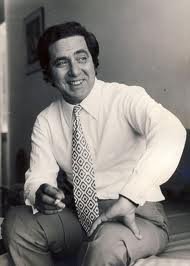
Corrado Mantoni, often simply known as Corrado, is a name that resonates deeply within the annals of Italian television history. Born on August 2, 1924, in Rome, Corrado Mantoni became one of the most beloved and influential figures in the Italian entertainment industry. His career, spanning over five decades, was marked by innovation, charisma, and an unparalleled connection with his audience. This article explores the life, career, and legacy of Corrado Mantoni, highlighting the milestones that solidified his place as a television icon.
Early Life and Background
Corrado Mantoni was born into a family of Marchegian descent, and he grew up in Rome during a time of significant political and social upheaval in Italy. His early education was rooted in classical studies, and he initially pursued a degree in law. However, the allure of the entertainment world proved irresistible, leading him to abandon his legal studies and embark on a career that would forever change the landscape of Italian media.
Corrado’s deep, resonant voice, combined with his impeccable diction, made him a natural fit for radio, which was the dominant medium of the time. He began his career as a radio announcer during World War II, a period when radio was a crucial source of news and entertainment for the Italian public. His ability to convey the gravity of news during such turbulent times, while also providing a voice of comfort, earned him widespread recognition and respect.
The Transition to Television: A New Era in Italian Broadcasting
As television began to emerge as a powerful medium in the post-war period, Corrado was among the first radio personalities to make the transition. His early television work was initially met with resistance from radio executives who viewed TV as a competitor. Nevertheless, Corrado’s charisma and talent soon made him a household name in the new medium.
Corrado’s television debut came in 1961, marking the beginning of a series of groundbreaking shows that would establish him as a pioneer of Italian television. He brought with him the experience and innovation he had honed in radio, which translated into a new way of engaging with the television audience. One of his early successes was the show “Rosso e Nero,” which combined elements of entertainment and social commentary, setting the stage for the evolution of Italian variety shows.
The 1960s: A Decade of Innovation and Stardom
The 1960s were a pivotal decade for Corrado Mantoni, as he became one of the leading figures in Italian television. During this period, he hosted several popular shows that are still remembered today. Among these was “La Prova del Nove,” a game show that showcased his ability to connect with contestants and viewers alike. His style was characterized by a blend of wit, charm, and a deep respect for his audience, qualities that endeared him to millions of Italians.
In 1968, Corrado introduced “La Corrida,” initially a radio program before transitioning to television. “La Corrida” was a talent show that allowed ordinary people to showcase their talents, often with humorous results. The show was a massive hit and became a cultural phenomenon, running for several decades and influencing the format of talent shows across Europe.
Corrado’s collaboration with iconic Italian figures, such as Raffaella Carrà, further solidified his status as a television giant. In 1970, he hosted “Canzonissima,” a variety show linked to the Italian national lottery, which became one of the most-watched programs of the era. His partnership with Carrà on the show was particularly memorable, as it showcased their chemistry and Corrado’s ability to elevate the performances of his co-hosts.
The 1970s: Reinventing Television and Expanding His Influence
The 1970s saw Corrado Mantoni continuing to push the boundaries of Italian television. One of his most significant contributions during this decade was the creation of “Domenica In,” a Sunday afternoon variety show that became an institution in Italian television. Premiering in 1976, “Domenica In” was a five-hour-long show that featured a mix of interviews, music, games, and cultural segments. It was one of the first programs to provide a platform for a wide range of entertainment genres within a single show.
“Domenica In” was more than just a television program; it was a reflection of Italian society. Corrado’s approach to the show was to create an inclusive space where viewers from all walks of life could find something of interest. He introduced segments that focused on science, theater, and regional Italian traditions, showcasing the rich cultural diversity of the country. His ability to balance entertainment with cultural education made “Domenica In” a must-watch for millions of Italians.
In 1975, Corrado also played a pivotal role in the restructuring of Italian television with the creation of TG1 and TG2, the first two distinct news programs on RAI (Radiotelevisione Italiana). This reform was part of a broader effort to diversify programming and cater to different audience segments, a move that would have a lasting impact on Italian media.
The 1980s: A Shift to Commercial Television and New Ventures
By the 1980s, Corrado Mantoni was not just a television host; he was an institution. His success on RAI was unparalleled, but the changing landscape of Italian media presented new opportunities. In 1982, Corrado made a significant career move by joining Canale 5, the first private television network in Italy, owned by media mogul Silvio Berlusconi.
On Canale 5, Corrado continued to innovate, creating and hosting “Il Pranzo è Servito,” a midday game show that quickly became a staple of Italian television. The show’s format, which combined elements of quiz shows with a light-hearted, family-friendly atmosphere, was a departure from the more formal style of his earlier work. “Il Pranzo è Servito” was emblematic of the shift in Italian television during the 1980s towards more commercially driven programming, designed to attract broad audiences in the increasingly competitive media landscape.
In 1983, Corrado launched another successful program, “Ciao Gente,” a show that put the spotlight on ordinary people, allowing them to share their stories and talents. This show further demonstrated Corrado’s unique ability to connect with his audience, making them feel like they were part of the television experience rather than just passive viewers.
The Legacy of “La Corrida” and the Evolution of Italian Entertainment
Perhaps Corrado Mantoni’s most enduring legacy is “La Corrida,” which he brought to television in the mid-1980s. Originally a radio program, “La Corrida” was reimagined for television with great success. The show became a Saturday night staple, known for its light-hearted, sometimes chaotic, presentation of amateur talent acts. The program’s appeal lay in its celebration of the ordinary, often flawed, talents of everyday people, creating a sense of shared national entertainment that was both humorous and endearing.
“La Corrida” was more than just a talent show; it was a cultural phenomenon that reflected the Italian spirit of self-deprecation and humor. Corrado’s role as the host was crucial to its success; his gentle teasing and warm demeanor made participants feel at ease, even when their performances did not go as planned. The show’s format has since been replicated in various forms around the world, but it is Corrado’s original vision that remains the benchmark.
Personal Life and Later Years
Despite his immense fame, Corrado Mantoni was known for his humility and private nature. He married Luciana Guerra, with whom he had a son, Roberto. After their divorce in 1972, Corrado continued to focus on his career while maintaining a close bond with his family. In his later years, he married Marina Donato, who remained by his side until his death.
Corrado’s health began to decline in the late 1980s, and he underwent several operations, including surgeries for a pulmonary edema. Despite these challenges, he continued to work, showing remarkable resilience and dedication to his craft. In 1990, he hosted the Gran Premio Internazionale della TV, a prestigious television award ceremony, further cementing his status as a titan of the industry.
In 1997, Corrado achieved a significant milestone when “La Corrida” surpassed RAI’s flagship Saturday night program in ratings, marking a moment of triumph for the veteran host. However, by 1998, his health had deteriorated significantly, and he was forced to step back from his television duties. Corrado Mantoni passed away on June 8, 1999, in Rome, leaving behind a legacy that continues to influence Italian television to this day.
Legacy and Influence on Italian Media
Corrado Mantoni’s impact on Italian television is immeasurable. He was a pioneer who helped shape the medium during its formative years and continued to innovate throughout his career. His ability to connect with the audience, combined with his talent for creating engaging and memorable programs, set him apart as one of the greats of Italian entertainment.
Corrado’s influence extends beyond the programs he created and hosted. He played a key role in the development of television as a medium that could entertain, educate, and reflect the cultural diversity of Italy. His work laid the foundation for future generations of television hosts and producers, many of whom cite him as an inspiration.
Today, Corrado Mantoni is remembered not only for his contributions to television but also for his unique ability to bring people together through the shared experience of entertainment. His legacy lives on in the countless shows he inspired, the careers he helped launch, and the millions of viewers who grew up watching his programs.
In recognition of his contributions, a street in the Casale Nei neighborhood of Rome, where he lived for many years, has been named in his honor—a fitting tribute to a man who spent his life bringing joy to the Italian people.


