
Introduction
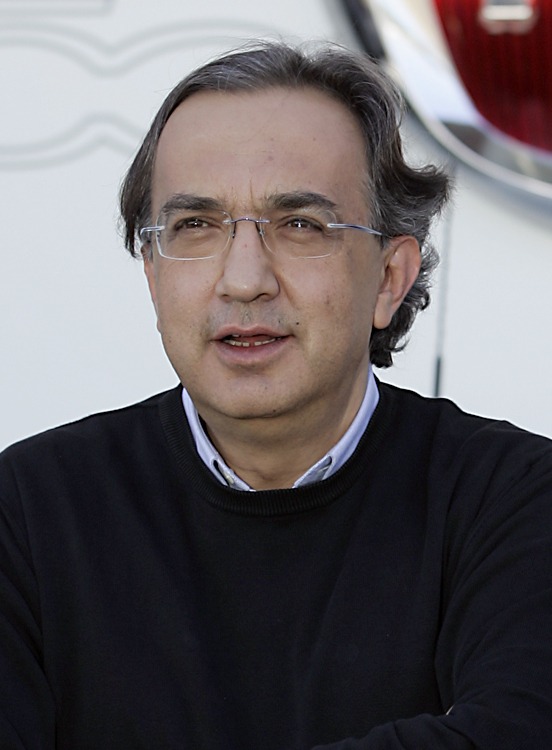
Sergio Marchionne, a name synonymous with transformative leadership in the automotive industry, remains a significant figure in business history. Known for his strategic acumen and bold decisions, Marchionne’s career spanned continents and industries, leaving an indelible mark on companies like Fiat and Ferrari. This detailed exploration delves into Marchionne’s life, his rise to prominence, and the enduring impact of his work.
Early Life and Education
Sergio Marchionne was born on June 17, 1952, in Chieti, Italy. His early years were marked by significant upheaval, as his family moved to Canada when he was a child. His father, a Carabinieri marshal, sought better opportunities abroad, leading the family to settle in Toronto.
Marchionne’s academic journey was as impressive as his professional one. He pursued a diverse range of studies, culminating in three degrees:
- Law Degree from Osgoode Hall Law School at York University.
- Master of Business Administration (MBA) from the University of Windsor.
- Bachelor’s Degree in Philosophy from the University of Toronto.
These qualifications equipped him with a unique blend of legal, business, and philosophical insights, shaping his future career.
Early Career
Marchionne’s professional career began in the early 1980s in North America. He initially worked for Deloitte Touche, focusing on tax consulting. His tenure at Deloitte laid a solid foundation for his understanding of corporate finance and management.
In the mid-1980s, Marchionne transitioned to Lawson Mardon Group in Toronto, where he took on roles as a group controller and later as director of corporate development. His ability to navigate complex business environments quickly became evident.
Marchionne’s career trajectory continued upward as he assumed the position of Executive Vice President at Glenex Industries. By the early 1990s, he was responsible for finance at Acklands and concurrently managed legal and corporate development at Lawson Group, which had been acquired by Alusuisse Lonza. His role in this company expanded significantly, culminating in his appointment as CEO of Lonza Group.
A Transformative Leader
Sergio Marchionne’s reputation as a transformative leader was solidified during his tenure at SGS Group, a global leader in inspection, verification, testing, and certification services. Appointed CEO in 2002, Marchionne successfully revitalized the company, demonstrating his knack for turnaround management. His success at SGS set the stage for his future endeavors in the automotive industry.
Fiat and the Automotive Renaissance
In 2003, Marchionne’s career took a pivotal turn when he joined the Fiat board of directors, appointed by Umberto Agnelli. Following Agnelli’s death and the resignation of Fiat’s CEO Giuseppe Morchio, Marchionne was named CEO of Fiat Group in June 2004.
Marchionne’s leadership was instrumental in Fiat’s resurgence. He tackled the company’s declining fortunes with a series of strategic moves. Under his stewardship, Fiat introduced several new models, including the Fiat 500, Lancia Fulvia Coupé, and Fiat Croma, despite the global economic crisis.
One of Marchionne’s most significant achievements was the acquisition of Chrysler. In April 2009, he engaged in complex negotiations with U.S. unions and the American government, resulting in Fiat acquiring a 20% stake in Chrysler. This deal was crucial in creating one of the world’s largest automotive groups. The agreement was so impactful that it was announced by then-U.S. President Barack Obama.
Expansion and Influence
Marchionne’s influence extended beyond Fiat. He played a key role in the European Automobile Manufacturers Association (ACEA), where he served as president in 2006. His leadership was also notable in his efforts to negotiate a merger between Fiat and Germany’s Opel, aiming to create a massive automotive conglomerate.
In September 2014, Marchionne succeeded Luca di Montezemolo as president of Ferrari. His tenure at Ferrari was marked by efforts to expand the brand’s global footprint while maintaining its high-performance reputation.
Legacy and Final Years
Sergio Marchionne’s impact on the automotive industry was profound. His ability to steer companies through financial turmoil and his strategic vision reshaped the industry landscape. Marchionne was honored with several accolades, including being named a Knight of the Order of Merit for Labour by the Italian President Giorgio Napolitano in 2006. He also received honorary degrees from the University of Cassino and the Polytechnic University of Turin.
However, Marchionne’s health began to decline in 2018. His tenure as CEO of Fiat Chrysler Automobiles (FCA) was cut short due to severe health issues, leading to his replacement by Michael Manley. Sergio Marchionne passed away on July 25, 2018, in Zurich, Switzerland, due to complications related to a rare form of cancer.
Conclusion
Sergio Marchionne’s life and career are a testament to his exceptional leadership and strategic foresight. His legacy lives on through the companies he transformed and the industry he revolutionized. From his early days in Canada to his groundbreaking work in Italy and the U.S., Marchionne’s journey is a remarkable story of innovation and resilience.


