
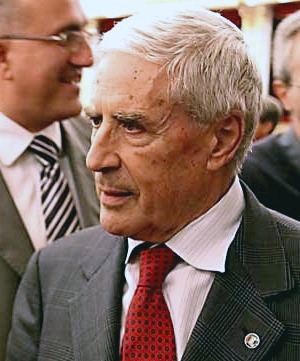
Franco Marini, a towering figure in Italian politics and labor movements, was born on April 9, 1933, in San Pio delle Camere, a small town in the province of L’Aquila, Italy. Over the course of his life, Marini became a central figure in the Italian political landscape, known for his prudence, commitment to the working class, and ability to navigate the complex corridors of power with finesse. This article delves into the life of Franco Marini, exploring his rise to prominence, key milestones, and the lasting impact he left on Italian politics.
Early Life and Education
Franco Marini was born into a large family in the Abruzzo region of Italy, a place known for its strong cultural traditions and rugged landscapes. His upbringing in this environment shaped his character, instilling in him a sense of resilience and dedication. Marini’s early education took place in Rieti, where he attended the classical lyceum, a prestigious type of high school that focuses on the humanities.
After completing his secondary education, Marini pursued a degree in law, graduating with a laurea in giurisprudenza. His academic background in law provided him with the tools to understand and influence the legal and political frameworks that would later become central to his career. Following his graduation, Marini fulfilled his military service as an officer in the Alpini, the elite mountain warfare branch of the Italian Army. This experience further solidified his leadership skills and discipline.
Early Political Involvement and Union Leadership
Franco Marini’s entry into politics was marked by his early involvement with the Christian Democracy (Democrazia Cristiana, or DC) party in 1950, when he was just 17 years old. The DC was the dominant political force in Italy for much of the post-World War II period, advocating for a centrist, socially conservative agenda rooted in Catholic values. Marini’s commitment to these principles was evident from the outset, and he quickly became an active member of the party.
Simultaneously, Marini was involved in the Azione Cattolica (Catholic Action) and the Associazioni Cristiane dei Lavoratori Italiani (ACLI), organizations that were closely aligned with the DC and focused on promoting social justice and the rights of workers. These early experiences laid the groundwork for Marini’s later career, which would be deeply intertwined with the labor movement.
In the early 1960s, Franco Marini began working in the contracts and disputes office of the Italian Confederation of Workers’ Trade Unions (CISL), one of Italy’s largest trade unions. It was here that he began to build his reputation as a staunch defender of workers’ rights. His dedication and effectiveness did not go unnoticed, and he quickly rose through the ranks.
By 1965, Marini had become the Deputy General Secretary of the Federation of Public Employees within CISL. His work during this period was characterized by a commitment to improving the working conditions and rights of public sector employees, a cause that would remain close to his heart throughout his career.
Rise to Prominence in the 1970s and 1980s
The 1970s were a period of significant social and political upheaval in Italy, with widespread labor unrest and the emergence of powerful leftist movements. It was during this time that Franco Marini truly came into his own as a leader within the labor movement. In 1970, he was appointed Deputy Secretary of CISL, a position that placed him at the forefront of labor negotiations and policy-making.
Marini’s leadership style was characterized by pragmatism and a willingness to engage in dialogue with all parties, including employers and government officials. This approach earned him respect across the political spectrum and allowed him to secure important victories for workers.
In 1985, Franco Marini reached the pinnacle of his trade union career when he was elected General Secretary of CISL, succeeding Pierre Carniti. As the head of one of Italy’s most powerful labor organizations, Marini played a key role in shaping national labor policy and advocating for the rights of workers across the country. His tenure as General Secretary was marked by a focus on social dialogue and collaboration, rather than confrontation, a strategy that helped to stabilize industrial relations during a turbulent period.
Transition to National Politics
Franco Marini’s transition from trade union leadership to national politics was a natural progression, given his deep involvement in the Christian Democratic Party and his extensive experience in labor relations. In 1991, following the death of Carlo Donat-Cattin, a prominent DC politician and labor leader, Marini inherited the leadership of the party’s “Forze Nuove” (New Forces) faction. This group was closely aligned with the labor movement and represented the interests of workers within the party.
In April 1991, Marini left his position as General Secretary of CISL to take on a new role as Minister of Labor and Social Security in the seventh government of Prime Minister Giulio Andreotti. As Minister, Marini was responsible for overseeing labor policy and social welfare programs at a time of significant economic challenges for Italy. His tenure was marked by efforts to balance the needs of workers with the demands of economic modernization, a delicate task that required careful negotiation and consensus-building.
The 1990s: Political Turbulence and Party Leadership
The early 1990s were a period of significant political change in Italy, as the country faced the collapse of the First Republic, a system dominated by the Christian Democrats, and the rise of new political forces. In 1992, Franco Marini was elected to the Italian Parliament for the first time, representing the DC in the Chamber of Deputies. He quickly became a key figure within the party, known for his organizational skills and his ability to navigate the complexities of Italian politics.
In 1994, following the dissolution of the Christian Democratic Party amid a wave of corruption scandals and the rise of new political movements, Marini was instrumental in the formation of the Italian People’s Party (Partito Popolare Italiano, or PPI). This new party sought to carry forward the legacy of the DC while adapting to the changing political landscape. Marini’s leadership was crucial during this transitional period, and in 1997, he was elected Secretary of the PPI, succeeding Gerardo Bianco.
As leader of the PPI, Marini faced the challenge of maintaining the party’s identity within the broader center-left coalition known as “The Olive Tree” (L’Ulivo), led by Romano Prodi. While Marini supported the coalition, he was also committed to preserving the distinct identity and values of the PPI, a stance that sometimes put him at odds with other leaders in the coalition.
The 2000s: European Parliament and Senate Presidency
In 1999, Franco Marini was elected to the European Parliament, where he continued to advocate for social justice and workers’ rights on a broader stage. His experience and expertise in labor issues made him a respected voice in European politics, and he played a key role in shaping EU labor policy during his tenure.
However, Marini’s involvement in national politics remained strong. In 2001, the PPI joined forces with other centrist and center-left parties to form “La Margherita,” a new political entity that aimed to unify the center-left under a common banner. Marini was appointed the party’s organizational secretary, a role that underscored his importance within the coalition.
In the 2006 general elections, Franco Marini was elected to the Italian Senate as part of the center-left coalition. Following the election, he was nominated as a candidate for the presidency of the Senate, one of the highest offices in the Italian government. On April 29, 2006, Marini was elected President of the Senate, a position he held until April 28, 2008.
As President of the Senate, Marini presided over a chamber that was deeply divided along political lines. His leadership was characterized by a commitment to fairness and impartiality, and he worked to ensure that the Senate operated effectively during a period of political instability.
Later Years and Legacy
Franco Marini’s later years were marked by continued involvement in politics and public service. In 2013, he was a leading candidate for the presidency of the Italian Republic, representing the Democratic Party (Partito Democratico, or PD). Although he ultimately did not secure the presidency, his candidacy was a testament to his enduring influence and respect within the Italian political establishment.
Throughout his career, Marini was known for his prudence, equidistance, and dedication to the common good. His approach to politics was grounded in a deep sense of responsibility and a commitment to the principles of social justice and solidarity.
Franco Marini passed away on February 9, 2021, at the age of 87, after contracting COVID-19. His death marked the end of an era in Italian politics, and he was remembered as a statesman who devoted his life to the service of his country and its people.
Conclusion
Franco Marini’s life and career offer a compelling narrative of dedication, service, and leadership. From his early days as a trade unionist to his rise to the highest offices in Italian politics, Marini remained steadfast in his commitment to the values of social justice, democracy, and the common good. His legacy is one of prudence, equidistance, and a deep understanding of the complexities of Italian society and politics.
As we reflect on Marini’s contributions to Italian public life, it is clear that his impact will be felt for many years to come. His approach to leadership, characterized by dialogue, consensus-building, and a commitment to fairness, serves as a model for future generations of politicians and public servants.


