
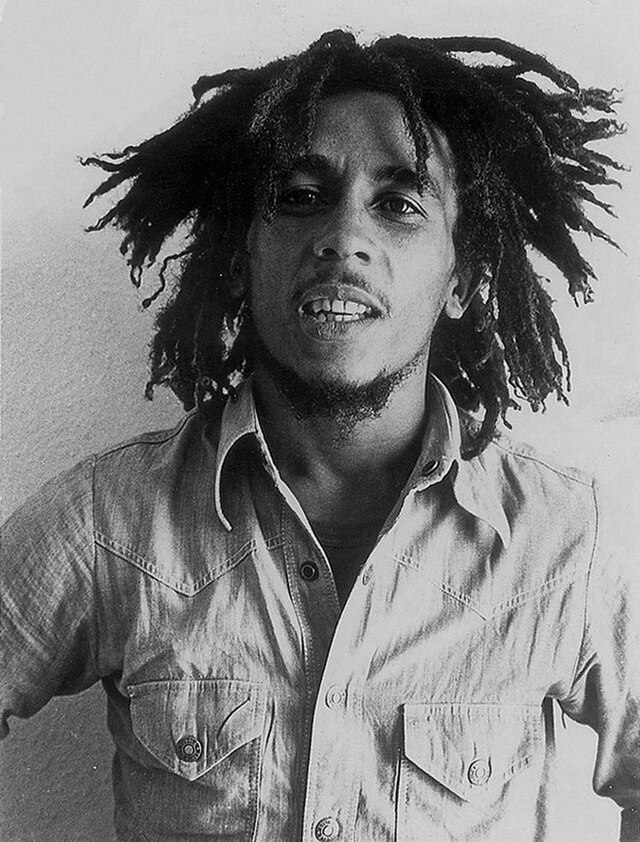
Bob Marley, born Robert Nesta Marley on February 6, 1945, in the small village of Nine Mile in the parish of St. Ann, Jamaica, is one of the most iconic and influential musicians of all time. Known as the King of Reggae, Marley’s music transcends borders and continues to inspire millions around the world with its messages of love, peace, and social justice. This article explores Bob Marley’s life, his rise to fame, and the key highlights that defined his legendary career.
Early Life and Influences
Bob Marley’s early life was marked by significant challenges. He was born to Cedella Booker, a Jamaican woman, and Norval Sinclair Marley, a white British naval officer who was often absent. This mixed heritage would later influence Marley’s worldview and his music, which often dealt with themes of identity, oppression, and unity. Marley once reflected on his racial background with the words, “My father was white, my mother black, I am in the middle. I am nothing. Everything I have is from Jah,” indicating his strong spiritual beliefs that would later define his career.
Growing up in the rural environment of Nine Mile, Marley was exposed to the harsh realities of life early on. His father died when Marley was just ten years old, leaving his mother to raise him in poverty. Despite these hardships, Marley found solace in music. Influenced by the sounds of rhythm and blues, soul, and the traditional Jamaican mento music, Marley began experimenting with music at a young age, creating his own makeshift guitar and immersing himself in the sounds that would later shape his musical style.
Marley moved to Kingston as a teenager, where he was exposed to the vibrant culture of the city’s Trenchtown neighborhood. It was here that Marley’s musical journey truly began. Trenchtown, known for its rough conditions, was also a hub for budding musicians. Marley’s encounters with fellow musicians such as Peter Tosh and Bunny Wailer would be pivotal in his early career.
The Birth of The Wailers
In 1963, Marley, along with Peter Tosh and Bunny Wailer, formed the band that would eventually become known as The Wailers. Initially called “The Teenagers,” the group underwent several name changes before settling on “The Wailing Wailers,” and eventually, just “The Wailers.” The name reflected their connection to the struggles of the poor and the oppressed in Jamaica. The Wailers’ music was rooted in the experience of the Jamaican ghetto and aimed to give voice to those who had none.
The Wailers’ early music was influenced by the ska and rocksteady sounds that were popular in Jamaica at the time. Their first major hit, “Simmer Down,” released in 1964, was a scathing critique of the violence and gang culture in Kingston. The song was a massive success in Jamaica, establishing The Wailers as one of the most important groups on the island.
As the 1960s progressed, The Wailers began to experiment with new sounds and ideas. It was during this period that they embraced the burgeoning Rastafarian movement, which profoundly influenced their music and philosophy. Rastafarianism, with its emphasis on African identity, social justice, and spiritual growth, became a central theme in Marley’s music. The Wailers’ music began to incorporate elements of reggae, a genre that was emerging from the fusion of ska, rocksteady, and traditional African rhythms.
Breakthrough and International Fame
The Wailers’ breakthrough on the international stage came in the early 1970s, thanks to their partnership with Chris Blackwell, the founder of Island Records. Blackwell recognized the potential of The Wailers to reach a global audience and signed them to his label in 1972. The band’s first album under Island Records, Catch a Fire (1973), was a critical and commercial success, marking the beginning of Bob Marley’s rise to global stardom.
Catch a Fire was a groundbreaking album that introduced the world to the unique sound of reggae. With its fusion of rock and reggae, the album was designed to appeal to both Jamaican and international audiences. Songs like “Stir It Up” and “Concrete Jungle” showcased Marley’s ability to blend soulful melodies with socially conscious lyrics, a formula that would become his trademark.
Following the success of Catch a Fire, The Wailers released Burnin’ (1973), which featured the now-classic tracks “Get Up, Stand Up” and “I Shot the Sheriff.” The latter was famously covered by Eric Clapton, whose version became a hit worldwide, further elevating Marley’s profile. Burnin’ was notable for its militant themes, reflecting Marley’s growing commitment to social justice and his role as a voice for the oppressed.
The success of these albums solidified Marley’s reputation as a leading figure in the reggae movement. However, tensions within The Wailers led to the departure of Tosh and Wailer in 1974, as they pursued solo careers. Despite this setback, Marley continued to thrive, now billing his music as “Bob Marley and the Wailers.”
Bob Marley and The Wailers: The Legend Grows
The mid-1970s to early 1980s were the most prolific and successful years of Bob Marley’s career. With albums like Natty Dread (1974), Rastaman Vibration (1976), and Exodus (1977), Marley became an international superstar. Exodus, in particular, was a monumental success, featuring some of Marley’s most enduring songs, including “Jamming,” “One Love,” and “Three Little Birds.”
The themes of Marley’s music during this period were deeply intertwined with his Rastafarian beliefs. His songs spoke of unity, love, and resistance against oppression. “One Love,” with its message of universal harmony, became one of Marley’s most famous songs and was later named Song of the Millennium by the BBC.
In 1976, Marley survived an assassination attempt at his home in Kingston, an incident believed to be politically motivated due to his influence and messages in his music. Despite being shot, Marley performed at the Smile Jamaica concert just two days later, reinforcing his commitment to peace and his fearless dedication to his mission.
After the assassination attempt, Marley relocated to London, where he recorded Exodus. The album was a huge success in Europe and the United States, staying on the UK charts for over a year. The title track, “Exodus,” became a powerful anthem for freedom and movement, reflecting Marley’s own journey and the struggles of the African diaspora.
Later Years and Lasting Legacy
In the late 1970s, Marley’s health began to deteriorate. Despite his declining health, he continued to produce music and tour extensively. The album Survival (1979) focused on African liberation and human rights, while Uprising (1980), his final studio album, featured the spiritually profound “Redemption Song,” a track that has been interpreted as Marley’s farewell to the world.
Tragically, Marley’s life was cut short by cancer, which had spread from a malignant melanoma on his toe. Despite receiving treatment in Germany, Marley’s condition worsened, and he passed away on May 11, 1981, in Miami, Florida, at the age of 36. His death was a massive loss to the world of music, but his legacy continues to grow.
Marley’s funeral in Jamaica was a national event, attended by thousands, including the Prime Minister and opposition leaders. He was laid to rest in a mausoleum in Nine Mile, where he was born, and the site has since become a place of pilgrimage for fans from around the world.
Bob Marley’s Enduring Impact
Bob Marley’s influence extends far beyond his music. He was a cultural icon, a symbol of resistance against oppression, and a champion of peace and unity. His embrace of Rastafarianism and his messages of love and justice resonated across the globe, making him a voice for the marginalized and oppressed.
Marley’s music remains as relevant today as it was during his lifetime. His songs have been covered by countless artists, and his image has become synonymous with the ideals of freedom and equality. Albums like Legend, a compilation of his greatest hits released posthumously in 1984, continue to be bestsellers, introducing new generations to his work.
Marley’s legacy also lives on through his children, many of whom have followed in his footsteps as musicians and activists. Ziggy Marley, Damian “Jr. Gong” Marley, and Stephen Marley, among others, have all made significant contributions to music and continue to spread their father’s message.
In conclusion, Bob Marley’s life was a testament to the power of music to inspire change. His journey from the hills of Nine Mile to the global stage is a story of resilience, creativity, and unwavering commitment to his beliefs. As we reflect on his life and music, it is clear that Bob Marley’s impact will continue to be felt for generations to come. His songs, with their universal messages of love and unity, remain a beacon of hope in a world that still struggles with the issues Marley so passionately addressed.


