
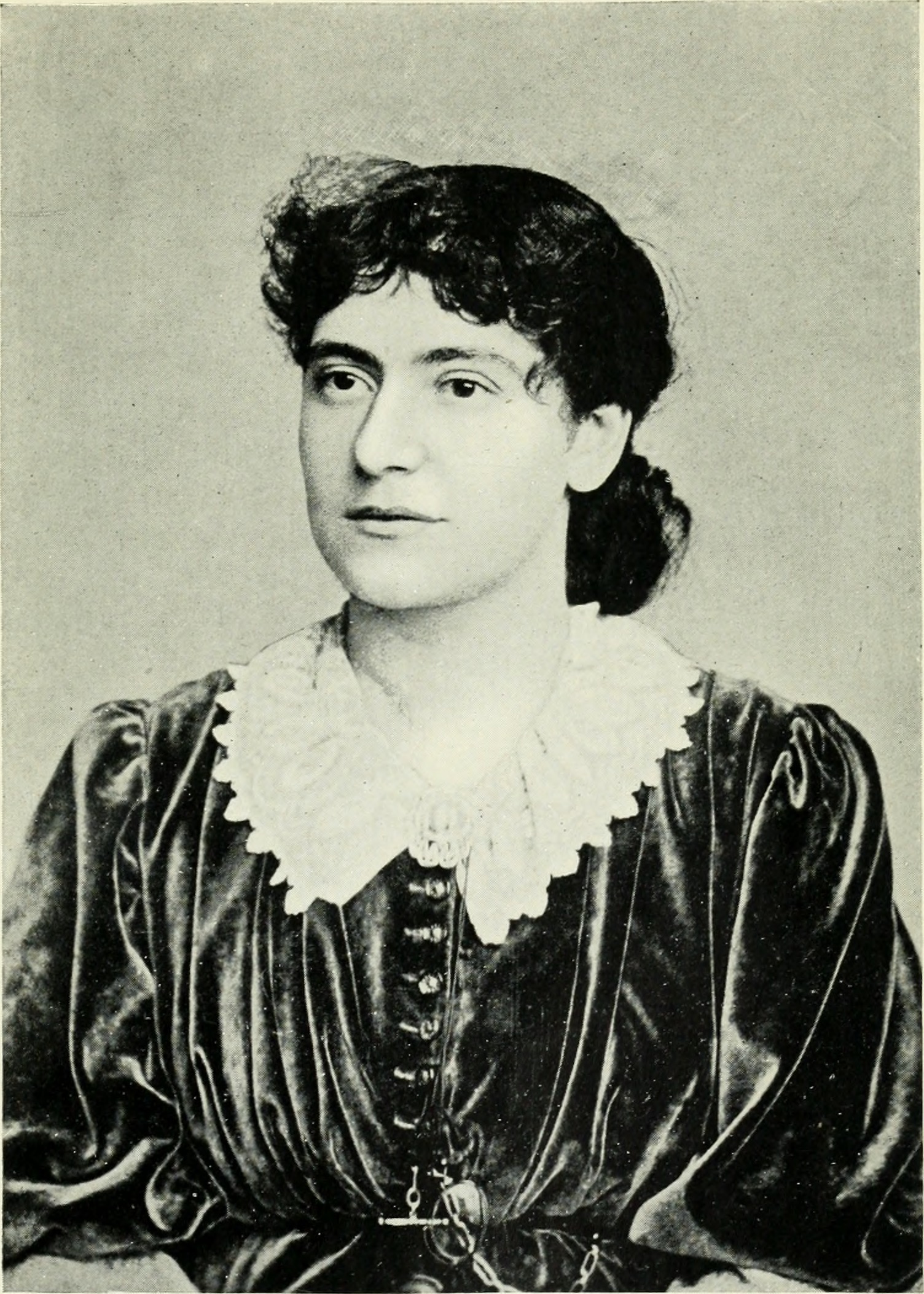
Eleanor Marx, born Jenny Julia Eleanor Marx on January 16, 1855, in Soho, London, was the youngest daughter of the revolutionary thinker Karl Marx. Known to her family as “Tussy,” Eleanor was a significant figure in the social and political movements of her time. Despite the challenges she faced as the daughter of one of history’s most influential thinkers, she carved out her own legacy as a writer, activist, and advocate for workers’ rights and women’s equality.
Early Life and Education
Eleanor was born into a household that was steeped in political thought and activism. Karl Marx, her father, was a towering intellectual figure whose works would later inspire revolutions and shape political ideologies around the world. Her mother, Johanna “Jenny” von Westphalen, was a supportive partner to Karl, helping him navigate the challenges of his political work. Growing up in this environment, Eleanor was exposed to complex ideas from a very young age.
Eleanor’s education was unconventional. Her father personally took charge of her schooling, ensuring that she was well-versed in the classics, languages, and literature. By the age of three, Eleanor was already reciting Shakespearean sonnets, a testament to her prodigious intellect. Karl Marx treated her not just as a daughter, but as an intellectual companion, engaging her in conversations in German, French, and English. This early exposure to diverse languages and ideas laid the foundation for Eleanor’s later work as a translator and writer.
However, Eleanor’s formal schooling was less inspiring. She found the traditional education system oppressive and patriarchal, leading her to leave school at the age of sixteen. She then began working as her father’s secretary, a role that took her to various international conferences where socialist ideas were discussed and propagated. This experience was formative, giving Eleanor firsthand exposure to the global labor movement and the political struggles of the working class.
The Rise of a Revolutionary
In her late teens, Eleanor sought to assert her independence. She moved out of her parents’ home and took a job as a teacher in Brighton. It was here that she met Prosper-Olivier Lissagaray, a French journalist who had been involved in the Paris Commune of 1871. Eleanor assisted Lissagaray in writing the History of the Commune of 1871, a work that would become an important account of this revolutionary period. While Karl Marx approved of Lissagaray’s political views, he was less enthusiastic about his daughter’s romantic involvement with him, ultimately withholding his consent for their marriage.
By the late 1870s, Eleanor had begun to emerge as a significant figure in her own right within the socialist movement. She was deeply involved in the campaign for gender equality and workers’ rights, and her reputation as an eloquent and persuasive orator grew. Despite her burgeoning public role, the early 1880s were marked by personal tragedy. Eleanor returned home to care for her ailing parents. Her mother died in December 1881, followed by her sister, Jenny Caroline, in January 1883, and then her father in March of the same year.
Before his death, Karl Marx entrusted Eleanor with the responsibility of publishing his unfinished manuscripts. This included overseeing the English publication of Das Kapital, one of his most important works. This task was both an honor and a burden, as it required Eleanor to navigate the complex world of publishing while also ensuring that her father’s intellectual legacy was preserved.
Professional Success and Personal Tragedy
In 1884, Eleanor met Edward Aveling, a writer and activist who shared her political beliefs. Despite Aveling’s dubious reputation—he was already married and known for his financial irresponsibility—Eleanor fell deeply in love with him. The two lived together as a couple, although they never married. Their relationship was both a source of great happiness and profound sorrow for Eleanor.
Together, Eleanor and Aveling joined the Social Democratic Federation (SDF), a socialist political party led by Henry Hyndman. Eleanor’s oratory skills and deep understanding of socialist theory quickly earned her a place on the SDF’s Executive Committee. However, she grew increasingly disillusioned with Hyndman’s authoritarian leadership and, in December 1884, she left the SDF to help found the Socialist League alongside William Morris, a leading figure in the British arts and crafts movement.
Eleanor’s activism extended beyond the political sphere into the realm of labor rights. In 1886, she met Clementina Black, a prominent trade unionist, and together they worked to organize the Women’s Trade Union League. Eleanor played a crucial role in several important strikes during this period, including the Bryant and May matchgirls’ strike of 1888, which brought attention to the appalling working conditions faced by women workers. Her efforts in these campaigns were instrumental in advancing workers’ rights in Britain, particularly for women.
Throughout her career, Eleanor was a prolific writer, contributing articles and essays to various socialist publications. In 1886, she published The Woman Question, a book that explored the intersection of socialism and feminism. Her writing was characterized by its clarity, passion, and deep commitment to social justice. Eleanor’s work helped to popularize socialist ideas among the broader public, and she became a leading voice in the international socialist movement.
The Final Years
Despite her public success, Eleanor’s personal life was marked by turmoil. Aveling, with whom she had shared much of her life and work, proved to be a source of constant disappointment. He was frequently unfaithful, financially irresponsible, and emotionally distant. In the final months of her life, Eleanor discovered that Aveling had secretly married another woman, a betrayal that shattered her already fragile emotional state.
On March 31, 1898, unable to bear the pain of Aveling’s betrayal and the cumulative weight of her personal and professional struggles, Eleanor Marx took her own life by ingesting prussic acid. She was just 43 years old. Her death was a tragic end to a life that had been full of promise, passion, and a relentless commitment to the cause of social justice.
Legacy and Historical Context
Eleanor Marx’s life and work were deeply intertwined with the broader social and political movements of the 19th century. She lived during a time of great upheaval, as industrialization, urbanization, and the rise of the working class challenged the established social order. The socialist movement, which sought to address the inequalities and injustices of capitalism, was gaining momentum, and Eleanor was at its forefront.
As the daughter of Karl Marx, Eleanor was acutely aware of the weight of her father’s legacy. However, she was determined to make her own mark on the world. Her work as a translator, writer, and activist helped to disseminate socialist ideas to a wider audience and provided a crucial link between the theoretical work of her father and the practical struggles of the working class.
Eleanor’s commitment to gender equality was also a defining aspect of her life. At a time when women’s roles were largely confined to the domestic sphere, Eleanor was a fierce advocate for women’s rights. She believed that the liberation of women was inextricably linked to the broader struggle for social justice and worked tirelessly to advance both causes.
Despite the challenges she faced, Eleanor’s contributions to the socialist movement and the fight for women’s rights were significant. Her legacy is a testament to the power of individual action in the face of seemingly insurmountable odds. Eleanor’s life was a reflection of the broader social and political currents of her time, and her work continues to inspire activists and scholars today.
Eleanor Marx’s story is also a reminder of the personal costs of political activism. Her life was marked by personal tragedy, and her untimely death was a devastating loss to the socialist movement. However, her work laid the foundation for future generations of activists, who have continued the fight for social justice and equality.
In recognition of her contributions, Eleanor Marx has been the subject of numerous biographies and historical studies. Her life was also the focus of the 2020 film Miss Marx, directed by Susanna Nicchiarelli, which brought her story to a new generation of viewers. The film highlighted not only Eleanor’s political work but also the personal struggles that defined her life.
Conclusion
Eleanor Marx was a revolutionary figure whose life and work left an indelible mark on the history of socialism and the fight for women’s rights. Her intellectual rigor, passionate commitment to social justice, and deep empathy for the struggles of the working class made her a powerful force in the political movements of her time.
Eleanor’s legacy is a complex one, shaped by both her personal experiences and the broader historical context in which she lived. Her life was a testament to the challenges and rewards of political activism, and her work continues to resonate with those who fight for a more just and equitable world.
As we look back on Eleanor Marx’s life, we can see how her story reflects the broader struggles of the 19th century. Her work as a translator, writer, and activist helped to bridge the gap between theory and practice in the socialist movement, and her commitment to gender equality laid the groundwork for future generations of feminists.
Eleanor Marx’s life may have been cut short, but her impact on the world endures. She was a woman ahead of her time, whose ideas and actions continue to inspire those who seek to create a better, more just society. In remembering Eleanor Marx, we honor not only her contributions to the socialist movement but also her unwavering commitment to the cause of social justice.


