
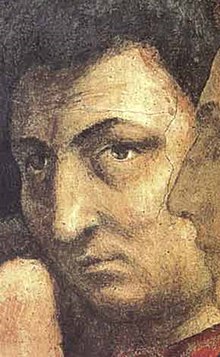
Masaccio, born Tommaso di Ser Giovanni di Mòne di Andreuccio Cassài, is widely regarded as one of the founding figures of the Italian Renaissance. His short life, marked by incredible artistic achievements, has left an indelible mark on the history of art. This article delves into the life of Masaccio, exploring his age, rise to fame, and key highlights, while providing a nuanced understanding of his contributions to Renaissance art.
Early Life and Background
Masaccio was born on December 21, 1401, in Castel San Giovanni di Altura, now known as San Giovanni Valdarno, a small town in Tuscany, Italy. He came from a family that was relatively well-off; his father, Ser Giovanni di Mone Cassai, was a notary, and his grandfather was a craftsman specializing in the creation of wedding chests. The family’s name, “Cassai,” originates from this craft, which involved the construction of wooden chests or “cassoni,” a popular item during that period.
Tragically, Masaccio’s father died when he was only five years old, leaving his mother, Monna Piera de’ Bardi, to raise him and his younger brother Giovanni. Monna Piera later remarried a wealthy widower, which provided the family with some financial stability. Giovanni, Masaccio’s brother, also pursued a career in painting, though he never achieved the same level of fame as his elder sibling.
The Move to Florence and Artistic Development
At the age of 16, Masaccio moved to Florence, the epicenter of an artistic and cultural revolution. The early 15th century was a period of profound transformation in Florence, with pioneering artists like Filippo Brunelleschi and Donatello pushing the boundaries of art and architecture. These figures became important influences on Masaccio, not only because of their innovative work but also due to the personal relationships they shared with him.
Masaccio was particularly inspired by the work of Giotto, whose approach to realism and perspective marked a departure from the stylized forms of the Gothic period. Masaccio’s art would later reflect a synthesis of Giotto’s naturalism, Brunelleschi’s mastery of perspective, and Donatello’s sculptural realism. This combination allowed Masaccio to create a style that was both revolutionary and deeply rooted in the traditions of his predecessors.
Early Works and Artistic Partnerships
Masaccio’s earliest documented work is the “San Giovenale Triptych,” completed in 1422 when he was just 21 years old. This piece, characterized by its vivid use of color and innovative approach to perspective, marks the beginning of his professional career. Around the same time, Masaccio joined the Arte dei Medici e Speziali, one of the seven major guilds in Florence, which included painters.
One of the most significant partnerships in Masaccio’s career was with the older artist Masolino da Panicale. The two collaborated on several important projects, including the “Madonna and Child with St. Anne,” which showcases a blend of Masolino’s more traditional Gothic style with Masaccio’s emerging Renaissance techniques. This partnership was mutually beneficial, with Masaccio learning from Masolino’s experience while simultaneously pushing the boundaries of their shared work with his innovative ideas.
Another notable collaboration was the “Carnesecchi Triptych,” created for the chapel of Paolo Carnesecchi in the church of Santa Maria Maggiore in Florence. Although much of this work has been lost, the surviving pieces, such as “St. Julian,” provide insight into Masaccio’s developing style, characterized by its dynamic compositions and lifelike figures.
The Brancacci Chapel: A Masterpiece of Renaissance Art
In 1424, Masaccio and Masolino were commissioned to decorate the Brancacci Chapel in the Church of Santa Maria del Carmine in Florence. This project would become one of the most important undertakings of Masaccio’s career, and it is where he created some of his most famous works.
The frescoes in the Brancacci Chapel, particularly “The Expulsion from the Garden of Eden” and “The Tribute Money,” are considered masterpieces of early Renaissance art. These works demonstrate Masaccio’s mastery of perspective, use of chiaroscuro (the contrast between light and dark), and his ability to convey human emotion and movement with unprecedented realism. “The Expulsion from the Garden of Eden,” in particular, is noted for its raw emotional intensity, capturing the anguish of Adam and Eve as they are banished from Paradise.
The Brancacci Chapel frescoes were groundbreaking not only for their technical innovations but also for their narrative power. Masaccio’s use of perspective to create a sense of depth and his focus on naturalistic human forms represented a significant departure from the flat, decorative style of the Gothic period. These frescoes would go on to influence countless artists, including Michelangelo, who studied them intensively during his formative years.
Later Works and Artistic Maturity
Following his success with the Brancacci Chapel, Masaccio continued to produce important works, though his career was tragically cut short. One of his most significant later works is the “Holy Trinity,” painted between 1426 and 1428 for the Church of Santa Maria Novella in Florence. This fresco is often regarded as the pinnacle of Masaccio’s artistic achievement and a defining moment in the history of Western art.
The “Holy Trinity” is renowned for its use of linear perspective, a technique that Masaccio had learned from Brunelleschi. The fresco creates the illusion of a three-dimensional space, with the figures of Christ, God the Father, and the Holy Spirit arranged in a triangular composition. The work also includes a striking depiction of a memento mori—a reminder of death—in the form of a skeleton at the base of the fresco, accompanied by the inscription, “I was once what you are, and what I am you also will be.” This powerful message underscores the transient nature of life and the inevitability of death, themes that were central to much of Masaccio’s work.
In addition to the “Holy Trinity,” Masaccio also completed a significant altarpiece for the Carmelite church in Pisa, known as the “Pisa Polyptych.” Although the original altarpiece has been disassembled, with its panels now scattered across various museums, it remains a testament to Masaccio’s skill and artistic vision. The central panel, “Madonna and Child with Angels,” now housed in the National Gallery in London, is particularly noted for its realism and emotional depth.
Tragic Death and Legacy
Masaccio’s life was tragically short. He died in the summer of 1428 at the age of just 27, the same age at which his father had passed away. The exact circumstances of his death remain unclear, with some accounts suggesting that he was poisoned by a rival, although there is no concrete evidence to support this claim. What is certain is that Masaccio’s death marked the premature end of a brilliant career that had already begun to reshape the course of art history.
Despite his brief life, Masaccio’s impact on the Renaissance was profound. His innovations in perspective, use of light and shadow, and focus on realistic human figures paved the way for future generations of artists. He is often credited with helping to lay the foundation for the High Renaissance, a period that would see the likes of Leonardo da Vinci, Michelangelo, and Raphael reach new heights of artistic achievement.
Masaccio’s influence extended beyond his immediate circle of contemporaries. His works were studied and admired by artists throughout the Renaissance and beyond, serving as a key source of inspiration for those seeking to master the principles of realism and perspective. The frescoes in the Brancacci Chapel, in particular, became a kind of artistic pilgrimage site for aspiring painters, who sought to learn from Masaccio’s groundbreaking techniques.
Historical Context and Artistic Significance
To fully appreciate Masaccio’s contributions, it is important to consider the broader historical and cultural context of the early 15th century. This was a time of great change in Italy, as the country transitioned from the medieval period to the Renaissance. The rediscovery of classical antiquity, the rise of humanism, and the flourishing of intellectual and artistic life in cities like Florence created a fertile environment for innovation.
Masaccio was at the forefront of this cultural shift, embodying the Renaissance ideals of individualism, curiosity, and a deep respect for the achievements of the past. His work reflects a profound understanding of both the technical and philosophical aspects of art, blending rigorous scientific principles with a deep sensitivity to the human condition.
In many ways, Masaccio’s art represents a bridge between the medieval world and the modern era. His use of perspective and realistic depiction of figures were revolutionary, helping to move Western art away from the stylized forms of the Gothic period and toward a more naturalistic and human-centered approach. At the same time, his work remained deeply spiritual, exploring themes of faith, redemption, and the divine in a manner that resonated with the religious sensibilities of his time.
Conclusion: The Enduring Legacy of Masaccio
In conclusion, Masaccio’s life and work represent a turning point in the history of art. Despite his short career, he left a lasting legacy that continues to influence artists and captivate audiences today. His mastery of perspective, innovative use of light and shadow, and ability to convey deep emotion through his figures make him one of the most important artists of the Italian Renaissance.
Masaccio’s contributions to art were not only technical but also philosophical, as he sought to explore the relationship between the human and the divine, the physical and the spiritual. His work challenges viewers to see the world in new ways, to appreciate the beauty of the everyday, and to contemplate the deeper mysteries of existence.
Today, Masaccio is remembered as a pioneer, a visionary artist whose work helped to shape the course of Western art. His frescoes in the Brancacci Chapel and his other masterpieces continue to be studied, admired, and celebrated for their brilliance and their profound impact on the development of Renaissance art. Through his art, Masaccio remains a vital presence in the cultural heritage of the world, a testament to the enduring power of creativity and human expression.


