
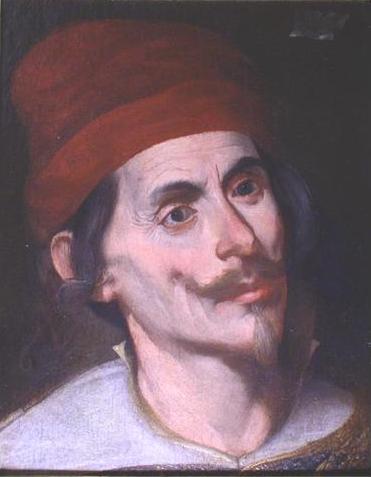
Masaniello—born Tommaso Aniello on June 29, 1620, in Naples, Italy—is a figure whose name resonates with rebellion and the fight against oppression. His life, though tragically short, left a lasting impact on the history of Naples and has been immortalized as a symbol of the common man’s struggle against tyrannical rule. This article delves into the life of Masaniello, exploring his age, the fame he garnered, and the significant events that shaped his brief yet explosive existence.
The Historical Context of Masaniello’s Life
To fully understand Masaniello’s impact, it’s crucial to contextualize his life within the broader socio-political environment of 17th-century Italy. During this period, Naples was under Spanish rule, part of the vast territories controlled by King Philip IV of Spain. Despite being a powerful military empire, Spain was beginning to experience a slow but irreversible economic decline. The financial strain was exacerbated by continuous military conflicts, leading to heavy taxation across its territories, including Naples.
The excessive taxation imposed by the Spanish crown caused widespread discontent among the Neapolitan populace. The taxes were particularly burdensome on essential goods, such as food, which affected the daily lives of ordinary people. This economic strain set the stage for Masaniello’s rise as a leader of the people.
Early Life and Background
Masaniello was born into a humble family in the bustling city of Naples. His father, Francesco d’Amalfi, was a fisherman, a trade that Masaniello would eventually take up himself. Growing up in the coastal city, he became deeply familiar with the hardships faced by the working class, particularly those who, like his family, depended on fishing for their livelihood. His experiences during these formative years would later fuel his passion for justice and equality.
Though little is known about his early life, it is evident that Masaniello was deeply influenced by the harsh realities of life under Spanish rule. His work as a fisherman and later as a fishmonger in the Amalfi region brought him into direct contact with the daily struggles of the Neapolitan people. It was this proximity to the suffering of the masses that ignited in him a sense of responsibility to fight against the oppressive conditions imposed by the Spanish authorities.
The Spark of Rebellion
The pivotal moment in Masaniello’s life came on July 7, 1647, when the Spanish authorities introduced a new tax on fruit and vegetables, further burdening an already oppressed population. This tax was the final straw for the Neapolitans, who had endured years of economic hardship and exploitation. The discontent quickly escalated into a full-blown rebellion, with Masaniello emerging as a natural leader of the uprising.
Masaniello, who was just 27 years old at the time, led the revolt with a fervor that resonated with the anger and frustration of the Neapolitan people. His charisma and oratory skills galvanized the masses, who rallied behind his call to resist the oppressive taxation. The rebellion quickly spread through the city, with Masaniello and his followers, known as “lazzaroni,” targeting the tax offices and even the royal palace.
One of the key factors that contributed to Masaniello’s rapid rise to prominence was the support he received from influential figures like Giulio Genoino, an 80-year-old jurist and priest who had long opposed the Spanish government’s fiscal policies. Genoino saw in Masaniello the perfect figurehead for his revolutionary plans and helped orchestrate the uprising from behind the scenes.
Masaniello’s Leadership and the Height of His Fame
As the rebellion gained momentum, Masaniello found himself at the forefront of a movement that threatened to overthrow Spanish rule in Naples. His leadership was marked by a mix of populism and military strategy. He organized the rebel forces, transforming them from a disorganized mob into a more structured and effective fighting force.
On July 10, 1647, just three days after the rebellion began, Masaniello survived an assassination attempt, which only served to enhance his authority and the people’s trust in him. The Viceroy of Naples, Don Rodrigo Ponce de León, Duke of Arcos, recognizing the gravity of the situation, sought to placate the rebels by appointing Masaniello as the “Captain General of the Faithful People of Naples.” This title not only legitimized Masaniello’s leadership but also marked the peak of his influence.
Masaniello’s newfound power, however, came with significant challenges. Despite his initial success, his leadership soon became erratic. The rapid ascent to power and the pressures of leading a rebellion took a toll on Masaniello, who began to display increasingly erratic behavior. His actions became more authoritarian, and he started to alienate some of his closest allies, including Genoino.
The Fall of Masaniello
Masaniello’s downfall was as swift as his rise. Just nine days after the rebellion began, on July 16, 1647, Masaniello was assassinated in the Monastery of the Carmine in Naples. The exact circumstances of his death remain unclear, with various theories suggesting that he was killed either by the Viceroy’s agents, disillusioned revolutionaries, or even by followers of Genoino, who had grown wary of Masaniello’s increasingly unstable behavior.
After his death, Masaniello’s body was desecrated, and his severed head was presented to the Viceroy as proof of his demise. However, the very next day, a price increase on bread reignited the people’s anger. In a dramatic reversal, the same crowd that had celebrated Masaniello’s death retrieved his body, dressed it in his Captain General’s uniform, and gave him a hero’s burial.
The Legacy of Masaniello
Despite his brief stint as a revolutionary leader, Masaniello’s legacy has endured for centuries. He became a symbol of resistance against oppression, not just in Naples but across Italy. His life and the rebellion he led have been the subject of numerous historical studies, artistic representations, and cultural references.
The phrase “fare il Masaniello,” which roughly translates to “to act like Masaniello,” entered the Italian lexicon to describe audacious, rebellious behavior. This expression captures the essence of Masaniello’s legacy as a fearless, albeit flawed, champion of the common people.
The influence of Masaniello’s rebellion extended beyond his lifetime. The Neapolitan Republic, established in the wake of the uprising, was short-lived, but it set the stage for future movements against foreign domination in Italy. His story inspired not only historians and writers but also composers and playwrights. One of the most notable works inspired by Masaniello’s life is the opera “La muette de Portici” by Daniel Auber, which played a significant role in the Belgian Revolution of 1830.
Conclusion: Masaniello’s Place in History
Masaniello’s life is a poignant reminder of the power of ordinary individuals to influence history. His story is a testament to the enduring struggle for justice and the complexities that come with leadership during times of social upheaval. Although his time in the spotlight was fleeting, the impact of his actions has been felt for generations.
In the broader context of Italian history, Masaniello represents the spirit of resistance against oppression and the quest for self-determination. His legacy continues to be a source of inspiration, reminding us that even in the face of overwhelming odds, the voice of the people can still be heard.


