
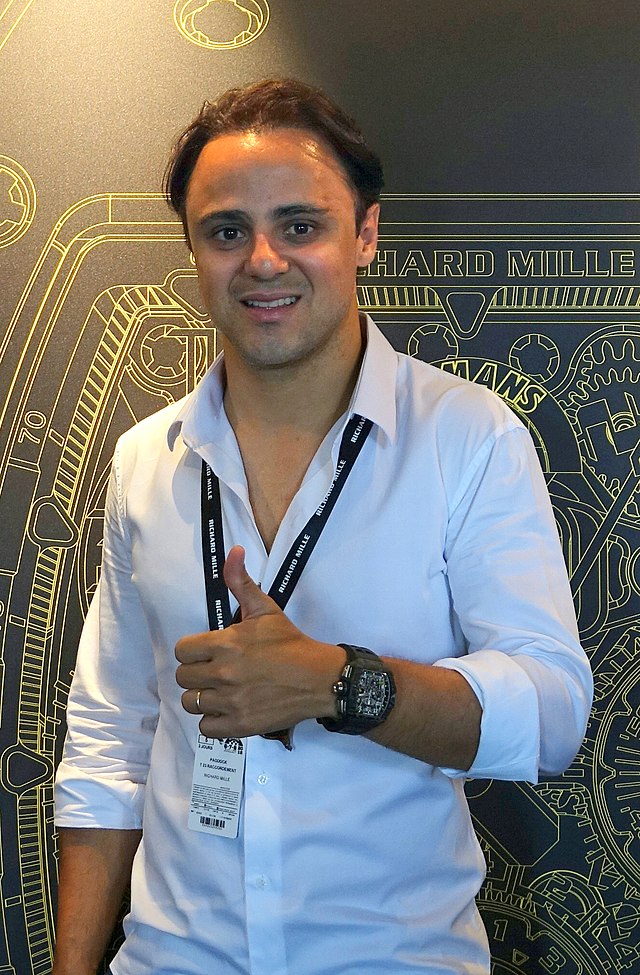
Felipe Massa, born on April 25, 1981, in São Paulo, Brazil, is a renowned figure in the world of motorsport, particularly in Formula 1. With a career that has spanned over two decades, Massa has left an indelible mark on the sport through his remarkable driving skills, determination, and resilience. This article provides a comprehensive overview of Felipe Massa’s life, career, and contributions to the world of Formula 1, highlighting the key moments that have defined his journey from a young karting prodigy to a celebrated F1 driver.
Early Life and Karting Beginnings
Felipe Massa’s passion for racing began at an early age. Growing up in São Paulo, a city known for its vibrant motorsport culture, Massa was introduced to karting when he was just nine years old. In 1990, he made his debut in the competitive world of kart racing, finishing fourth in the São Paulo Micro-Kart Championship. This early success fueled his desire to pursue a career in motorsports, and he continued to compete in karting events throughout his childhood and teenage years.
By 1993, Massa had climbed the ranks in the karting world, securing third place in the São Paulo Championship. His consistent performances in karting laid the foundation for his future in racing, and by 1998, he had transitioned to the Formula Chevrolet series. Massa’s talent was evident from the start, as he finished fifth in the Brazilian Formula Chevrolet Championship in his debut season. The following year, he clinched the championship title, marking his first major victory in single-seater racing.
Rise Through the Ranks: Formula Renault and Formula 3000
Felipe Massa’s success in Formula Chevrolet caught the attention of European racing teams, leading him to compete in the highly competitive Formula Renault series in 2000. That year, Massa dominated the European and Italian Formula Renault Championships, winning both titles and establishing himself as one of the most promising young talents in motorsport.
In 2001, Massa took another significant step in his career by moving to the Formula 3000 Championship, a key stepping stone to Formula 1. Driving for the Draco Racing team, Massa continued to impress with his speed and racecraft, ultimately winning the European Formula 3000 Championship in the penultimate race of the season. This victory solidified his reputation as a rising star in the racing world and paved the way for his entry into Formula 1.
Debut in Formula 1: Sauber and Ferrari Test Driver
Felipe Massa made his Formula 1 debut in 2002 at the age of 20, driving for the Swiss-based Sauber Petronas team. His first race took place at the Australian Grand Prix in Melbourne, where he showcased his potential by qualifying 9th and finishing the race in a respectable 6th position, earning his first points in F1. Throughout his debut season, Massa demonstrated flashes of brilliance, but he also faced challenges, including a few incidents that highlighted the steep learning curve of Formula 1.
At the end of the 2002 season, Sauber recommended that Massa take a year off from racing to gain more experience and refine his technical skills. This advice led to a significant opportunity for Massa: joining Scuderia Ferrari as a test driver for the 2003 season. Working closely with the team at Maranello, Massa gained invaluable experience and insight into the technical aspects of Formula 1, particularly the development and setup of the car. This period of growth would prove crucial for his future success in the sport.
Return to Sauber and the Path to Ferrari
In 2004, Felipe Massa returned to the Sauber team with a two-year contract, driving alongside experienced drivers such as Giancarlo Fisichella and former World Champion Jacques Villeneuve. During these years, Massa continued to hone his skills, consistently outperforming his teammates and scoring valuable points for the team. His performances caught the attention of Ferrari, and in 2005, when it was announced that Rubens Barrichello would be leaving Ferrari, Massa was seen as the natural successor to take his place alongside Michael Schumacher for the 2006 season.
The Ferrari Years: From Learner to Winner
Joining Scuderia Ferrari in 2006 was a dream come true for Felipe Massa. As a member of the most successful team in Formula 1 history, and with the legendary Michael Schumacher as his teammate, Massa entered the “best school” in the sport. The 2006 season was a transformative year for Massa, as he transitioned from a promising talent to a proven race winner. He secured his first Formula 1 victory at the Turkish Grand Prix, followed by a historic win at the Brazilian Grand Prix in Interlagos, where he became the first Brazilian driver to win at home since Ayrton Senna.
Massa’s success in 2006 earned him recognition as one of the top drivers in the sport. With two victories, three pole positions, and one fastest lap, he established himself as a formidable competitor. Despite Ferrari not winning the Constructors’ Championship that year, Massa’s performances laid the groundwork for his continued success with the team.
2007: A Title Contender Emerges
The 2007 season saw Felipe Massa take on a new role as a title contender for Ferrari, following Michael Schumacher’s retirement. Now paired with Kimi Räikkönen, Massa was ready to challenge for the championship. He won three races that year, in Bahrain, Spain, and Turkey, and secured six pole positions and six fastest laps. Despite a strong campaign, mechanical issues and strategic missteps prevented him from claiming the championship, and he finished the season in fourth place.
Off the track, 2007 was also a significant year for Massa, as he married his longtime girlfriend, Raffaella Bassi, in December. The couple’s relationship had begun during Massa’s time in Formula 3000, and their marriage marked a new chapter in his personal life.
2008: A Near Miss in the Title Battle
The 2008 season was arguably the most dramatic of Felipe Massa’s career. With a competitive Ferrari car and a strong start to the season, Massa quickly established himself as a leading contender for the World Championship. Throughout the year, he displayed incredible determination and skill, winning six races, including the Bahrain, Turkish, French, European (Valencia), Belgian, and Brazilian Grands Prix. He also secured six pole positions and three fastest laps.
The championship battle came down to the final race of the season at Massa’s home Grand Prix in Brazil. In a race that would go down in history, Massa crossed the finish line first, momentarily believing he had won the World Championship. However, in a dramatic turn of events, Lewis Hamilton overtook Timo Glock on the final corner of the last lap, securing the fifth place he needed to win the championship by just one point. Despite the heartbreak of losing the title in such a close fashion, Massa’s performance in 2008 earned him widespread respect and admiration.
2009: A Season of Triumph and Tragedy
The 2009 Formula 1 season brought significant changes to the regulations, and Ferrari struggled to adapt to the new rules. Massa’s season got off to a difficult start, with mechanical issues and poor qualifying results hindering his progress. However, he continued to show resilience, securing Ferrari’s first podium of the season at the German Grand Prix.
Tragedy struck at the Hungarian Grand Prix in July 2009. During the second qualifying session, Massa was struck on the helmet by a spring that had come loose from Rubens Barrichello’s car. The impact caused a severe head injury, including a concussion and a fractured skull. Massa lost consciousness and crashed into the barriers, leading to immediate medical intervention. He was airlifted to a hospital in Budapest, where he underwent surgery. Although his condition was serious, Massa’s life was not in danger, but the injury forced him to miss the remainder of the 2009 season.
The Road to Recovery and Return to Racing
After several months of recovery, Felipe Massa made a triumphant return to Formula 1 at the start of the 2010 season. His first race back was the Bahrain Grand Prix, where he finished second behind his new teammate, Fernando Alonso. Massa’s comeback was a testament to his resilience and determination, proving that he could still compete at the highest level despite the challenges he had faced.
Massa continued to race for Ferrari until the end of the 2013 season. Although he did not achieve the same level of success as in previous years, his dedication to the team and his ability to support his teammates, particularly Alonso, earned him respect within the sport.
The Williams Years and Final Races
In 2014, Felipe Massa joined Williams, a team with a storied history in Formula 1. Driving for Williams gave Massa a new lease on his career, and he quickly became a key player for the team. During his time with Williams, Massa achieved several podium finishes and helped the team secure third place in the Constructors’ Championship in 2014 and 2015.
Massa announced his retirement from Formula 1 at the end of the 2016 season, with his final race set to be the Brazilian Grand Prix. However, after Nico Rosberg’s unexpected retirement, Massa was asked to return for one more season in 2017. He agreed, extending his career by another year and continuing to race for Williams. Massa’s final race took place at the 2017 Abu Dhabi Grand Prix, where he finished 10th, closing the curtain on a remarkable career in Formula 1.
Legacy and Contributions to Motorsport
Felipe Massa’s career in Formula 1 is a story of perseverance, talent, and passion. Over 15 seasons, he competed in 269 Grands Prix, securing 11 victories, 16 pole positions, and 41 podiums. Massa’s near-miss in the 2008 World Championship remains one of the most memorable moments in F1 history, highlighting his skill and determination as a driver.
Beyond his achievements on the track, Massa is also known for his sportsmanship, humility, and dedication to his team. His ability to bounce back from adversity, particularly following his accident in 2009, has made him an inspirational figure in the world of motorsport.
Conclusion
Felipe Massa’s journey from a young karting enthusiast in Brazil to a Formula 1 race winner and title contender is a testament to his talent and determination. His career has been marked by incredible highs and heartbreaking lows, but through it all, Massa has remained a beloved figure in the sport. As we reflect on his achievements, it is clear that Felipe Massa’s legacy in Formula 1 will endure for years to come.


