
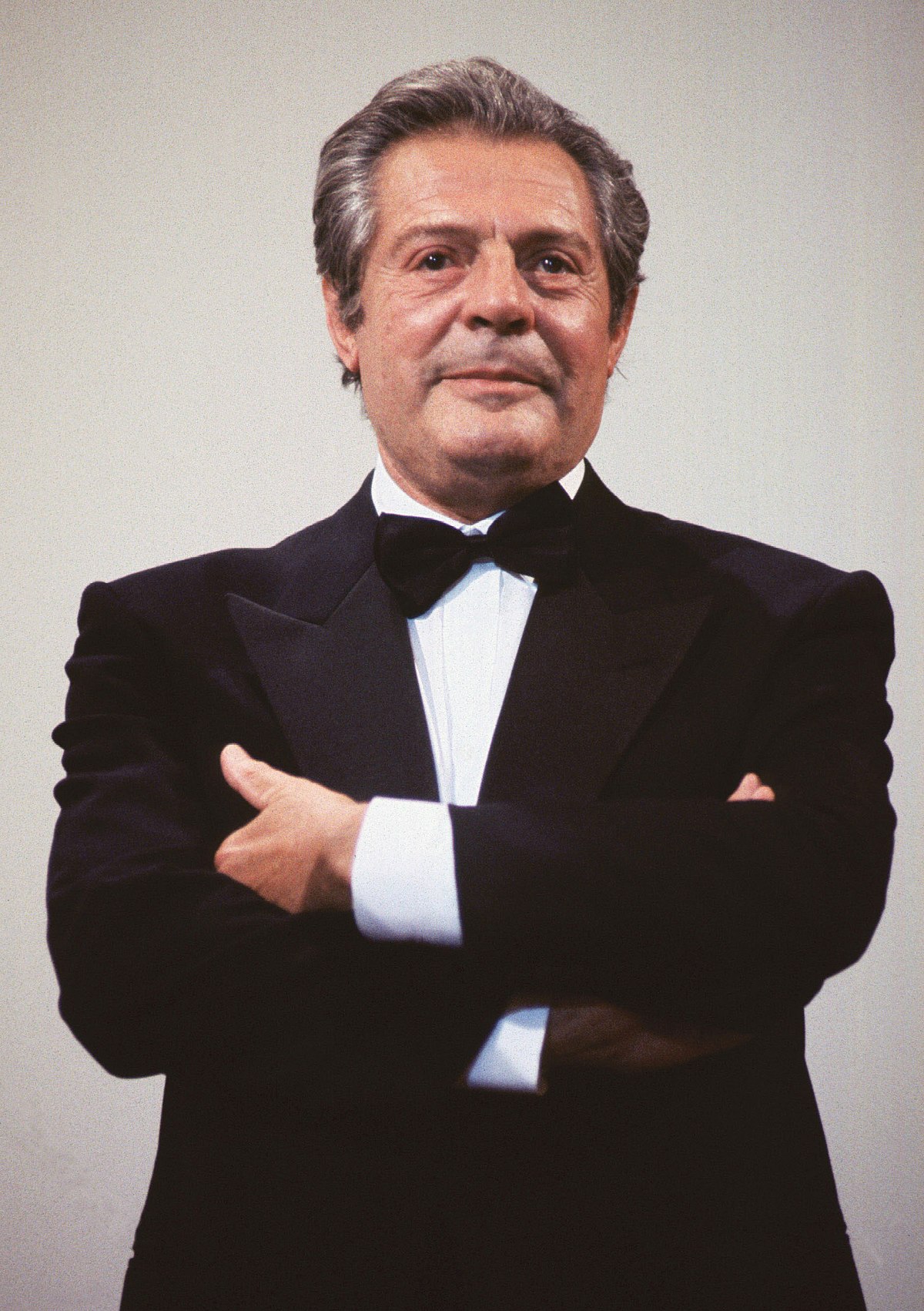
Marcello Mastroianni, born on September 28, 1924, in Fontana Liri, Italy, is one of the most celebrated figures in Italian cinema. With a career spanning over five decades, Mastroianni became renowned for his distinctive acting style, which combined charm, intelligence, and an unpretentious demeanor. His contributions to film and theater have left an indelible mark on the arts, making him an iconic figure both in Italy and internationally.
Early Life and Education
Marcello Vincenzo Domenico Mastroianni grew up in a modest family environment. His early exposure to cinema was somewhat fortuitous, as he made his debut as an extra in several films during his youth. Despite initially pursuing a degree in Economics and Commerce at the University of Rome, Mastroianni’s passion for the arts led him to the theater. His involvement in university theater groups caught the attention of prominent figures in Italian theater, including Luchino Visconti.
Theatrical Beginnings and Early Film Career
Mastroianni’s theatrical career began with significant roles under the direction of Visconti, appearing in plays such as “A Streetcar Named Desire” and “Death of a Salesman.” His ability to convey deep emotional resonance and his natural charisma quickly set him apart from his peers.
His transition into film was marked by a series of supporting roles that showcased his range and potential. Early films like “Le ragazze di Piazza di Spagna” (1952) highlighted his talent for blending charm with subtle introspection. Mastroianni’s performances in these early films began to shape his screen persona as a lovable yet complex character.
Rise to Stardom
The 1960s marked a pivotal decade in Mastroianni’s career. His role in Federico Fellini’s “La Dolce Vita” (1960) was a defining moment that catapulted him to international fame. Playing the character of Marcello Rubini, a disenchanted journalist navigating Rome’s high society, Mastroianni’s performance captured the zeitgeist of an era and earned him critical acclaim.
The collaboration with Fellini continued with “8½” (1963), where Mastroianni portrayed Guido Anselmi, a filmmaker grappling with creative and personal crises. This film further cemented his reputation as a versatile actor capable of delivering profound performances. His ability to portray both comedic and dramatic roles with equal skill became one of his hallmarks.
Iconic Collaborations and Major Achievements
Throughout his career, Mastroianni collaborated with some of the greatest filmmakers of his time. His work with Sophia Loren, in films such as “Marriage Italian Style” (1964) and “Yesterday, Today and Tomorrow” (1963), showcased their on-screen chemistry and earned widespread acclaim.
His roles in films like “Divorce Italian Style” (1961) and “The Conformist” (1970) demonstrated his range, from dark comedies to politically charged dramas. Mastroianni’s performances were often marked by a blend of wit and vulnerability, reflecting the complexities of human nature.
Despite his success, Mastroianni never won an Academy Award, a notable omission in his illustrious career. Nevertheless, his contributions to cinema were widely recognized, and he received numerous other accolades, including several César Awards and Golden Globes.
Later Years and Legacy
In the later years of his career, Mastroianni continued to take on significant roles, including his performances in “A Special Day” (1977) and “Sostiene Pereira” (1995). These roles further demonstrated his enduring talent and versatility. His work in these films addressed various social and political themes, showcasing his ability to engage with contemporary issues through his art.
Mastroianni’s personal life was as compelling as his professional career. Known for his charm and wit, he maintained a private life away from the media spotlight, often eschewing the celebrity culture that surrounded him. His relationships with other actors and filmmakers, including his enduring friendship with Fellini, were marked by mutual respect and admiration.
Marcello Mastroianni passed away on December 19, 1996, in Paris, leaving behind a rich legacy of film and theater. His impact on cinema remains profound, with his films continuing to influence new generations of actors and filmmakers. Mastroianni is remembered not only for his remarkable performances but also for his contribution to the global appreciation of Italian cinema.
Conclusion
Marcello Mastroianni’s career is a testament to his exceptional talent and enduring appeal. From his early days in theater to his iconic roles in Italian and international cinema, Mastroianni’s contributions have shaped the landscape of film. His ability to portray a wide range of characters with depth and nuance, combined with his charismatic presence, has solidified his place as one of the greatest actors of the 20th century. His legacy endures through his influential body of work, inspiring audiences and artists alike.


