
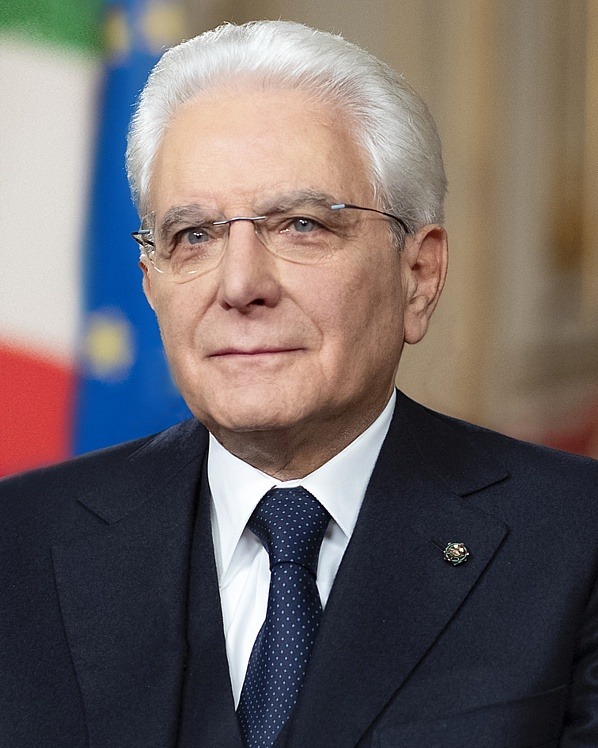
Sergio Mattarella, born on July 23, 1941, in Palermo, Sicily, is a towering figure in Italian politics. As the 12th President of the Italian Republic, Mattarella’s life and career are emblematic of the complexities and challenges that have shaped modern Italy. This article delves into the life of Sergio Mattarella, tracing his path from a young law professor to the highest office in the land, while exploring the historical context and key moments that have defined his legacy.
Early Life and Family Background
Sergio Mattarella was born into a family deeply embedded in the political and social fabric of Italy. His father, Bernardo Mattarella, was a prominent figure in the Christian Democracy (Democrazia Cristiana, or DC) party, serving as a parliamentary representative and holding various ministerial positions. This familial connection to politics exposed Sergio to the intricacies of governance and public service from an early age.
Growing up in a devoutly Christian and politically active household, Sergio was heavily influenced by his father’s values and dedication to public life. The Mattarella family was known for its commitment to Christian Democratic principles, which sought to balance social justice with economic freedom, and this ideological foundation would later become a cornerstone of Sergio’s political philosophy.
Sergio’s older brother, Piersanti Mattarella, also followed in their father’s footsteps, becoming a prominent politician. Tragically, Piersanti’s career and life were cut short when he was assassinated by the Sicilian Mafia in 1980, while serving as the President of the Sicilian Region. This devastating event had a profound impact on Sergio, deepening his resolve to fight against corruption and organized crime—an issue that would come to define much of his political career.
Academic Pursuits and Early Political Involvement
Sergio Mattarella pursued his higher education at the University of Palermo, where he studied law and later became a professor of parliamentary law. His academic background provided him with a deep understanding of the Italian legal system, parliamentary procedures, and constitutional law, which would prove invaluable in his future political roles.
While Sergio initially focused on his academic career, the political landscape of Italy, particularly the turbulent 1970s, drew him into active political life. He became involved with the Christian Democracy party, a dominant force in Italian politics at the time, known for its centrist policies and its role in post-war reconstruction and development.
Tragic Loss and Entry into National Politics
The assassination of his brother Piersanti in 1980 was a turning point for Sergio Mattarella. The brutal murder, which shocked the nation, spurred Sergio to enter national politics with a renewed sense of purpose. He was determined to continue his brother’s work and to combat the pervasive influence of the Mafia in Italian society and politics.
In 1983, Mattarella was elected to the Italian Parliament as a member of the Christian Democracy party. His early legislative work focused on constitutional affairs, reflecting his legal expertise and commitment to upholding the rule of law. He quickly gained a reputation for his integrity, intellectual rigor, and dedication to public service.
Ministerial Roles and Legislative Achievements
Throughout the 1980s and 1990s, Sergio Mattarella held several key ministerial positions, which allowed him to influence the direction of Italian politics significantly. In 1987, he was appointed Minister for Parliamentary Relations under the government of Ciriaco De Mita, and later served as Minister of Public Education under Prime Minister Giulio Andreotti. His tenure in these roles was marked by a focus on educational reform and the modernization of Italy’s legislative processes.
One of Mattarella’s most significant contributions during this period was his role in the creation of Italy’s new electoral law in 1993. The law, often referred to as the “Mattarellum” in his honor, introduced a mixed-member proportional representation system that aimed to provide greater political stability and reduce the influence of smaller parties. This reform was part of a broader effort to address the political fragmentation and corruption that had plagued Italy during the so-called “Years of Lead,” a period of social turmoil and political violence.
The 1990s: Challenges and Reforms
The 1990s were a tumultuous time in Italian politics, marked by the collapse of the Christian Democracy party amidst widespread corruption scandals and the rise of new political movements. Amid this chaos, Mattarella emerged as a steadying influence, known for his incorruptibility and commitment to democratic principles.
In 1994, after the dissolution of the Christian Democracy party, Mattarella joined the newly formed Italian People’s Party (Partito Popolare Italiano, or PPI), which sought to continue the legacy of the DC while adapting to the changing political landscape. He played a key role in the PPI’s efforts to form center-left coalitions, which eventually led to the creation of the Olive Tree alliance (L’Ulivo), a broad center-left coalition that aimed to counter the rising influence of Silvio Berlusconi’s center-right Forza Italia party.
During the first government of Massimo D’Alema, Mattarella served as Vice President of the Council of Ministers, and later as Minister of Defense. His tenure as Defense Minister was particularly notable for his efforts to modernize Italy’s military forces and to strengthen Italy’s role within NATO and the European Union.
The 2000s: Constitutional Court and Rise to the Presidency
In 2001, after serving multiple terms in Parliament and holding various ministerial roles, Sergio Mattarella decided to step back from active politics. However, his legal expertise and unblemished reputation made him a natural choice for the Italian Constitutional Court, to which he was appointed in 2011. As a Constitutional Court judge, Mattarella continued to uphold the principles of justice and democracy, focusing on protecting the rights enshrined in the Italian Constitution.
The Constitutional Court appointment further solidified Mattarella’s status as a respected elder statesman, and his impartiality and dedication to the rule of law made him a trusted figure across the political spectrum. These qualities were crucial when, in 2015, following the resignation of President Giorgio Napolitano, Mattarella was elected as the President of the Italian Republic.
Presidency: A Time of Crises and Stability
Sergio Mattarella’s presidency has been characterized by his calm, measured approach to governance, particularly during times of crisis. His tenure has seen Italy navigate through multiple political crises, including the formation of several coalition governments and the challenges posed by the COVID-19 pandemic.
One of the most notable moments of Mattarella’s presidency came in 2018, following the general election that resulted in a hung parliament. After weeks of negotiations, Mattarella rejected the appointment of Paolo Savona, an outspoken critic of the European Union, as Minister of Economy and Finance, citing concerns over Italy’s economic stability and its relationship with the EU. This decision, though controversial, underscored Mattarella’s commitment to safeguarding Italy’s democratic institutions and its place within the European community.
In 2021, amid the ongoing pandemic and the subsequent economic challenges, Mattarella played a crucial role in facilitating the formation of a national unity government led by former European Central Bank President Mario Draghi. This move was widely praised as a necessary step to guide Italy through a period of unprecedented difficulty.
Re-Election and Continued Service
As Mattarella’s first term as President drew to a close in 2022, Italy once again faced political uncertainty. After several rounds of voting failed to produce a consensus candidate to succeed him, Mattarella was asked to accept a second term—a rare occurrence in Italian politics. Despite his initial reluctance, Mattarella agreed to continue serving, driven by a sense of duty to the nation.
His re-election was seen as a stabilizing force for Italy, ensuring continuity and experienced leadership during a challenging time. Mattarella’s willingness to remain in office reflects his deep commitment to the Italian Republic and his understanding of the gravity of the challenges facing the country.
Personal Life and Legacy
Sergio Mattarella is known for his reserved and humble demeanor, qualities that have endeared him to the Italian public. Unlike many politicians, he has always shied away from the spotlight, preferring to let his actions speak for themselves. This humility, combined with his unwavering commitment to democratic principles, has made him one of the most respected figures in Italian public life.
Mattarella’s personal life has been marked by tragedy and resilience. The loss of his brother Piersanti to Mafia violence deeply influenced his views on justice and the rule of law, shaping his lifelong dedication to fighting corruption and defending Italy’s democratic institutions.
As President, Mattarella has consistently emphasized the importance of national unity, social justice, and the protection of civil liberties. His speeches often reflect a deep concern for the most vulnerable members of society, and he has been a vocal advocate for addressing issues such as inequality, environmental sustainability, and the challenges posed by migration.
Conclusion
Sergio Mattarella’s life and career are a testament to the power of integrity, dedication, and service to the public good. From his early days as a law professor in Palermo to his role as the President of the Italian Republic, Mattarella has demonstrated an unwavering commitment to upholding the values of democracy, justice, and human rights.
In a political landscape often marked by division and scandal, Mattarella has stood out as a figure of stability and moral authority. His presidency, marked by its handling of crises with calm and deliberation, has left a lasting impact on Italy’s political and social fabric.
As he continues to serve in his unprecedented second term, Sergio Mattarella remains a symbol of the enduring strength of Italy’s democratic institutions. His legacy will undoubtedly be remembered as one of principled leadership and steadfast dedication to the values that underpin the Italian Republic.


