
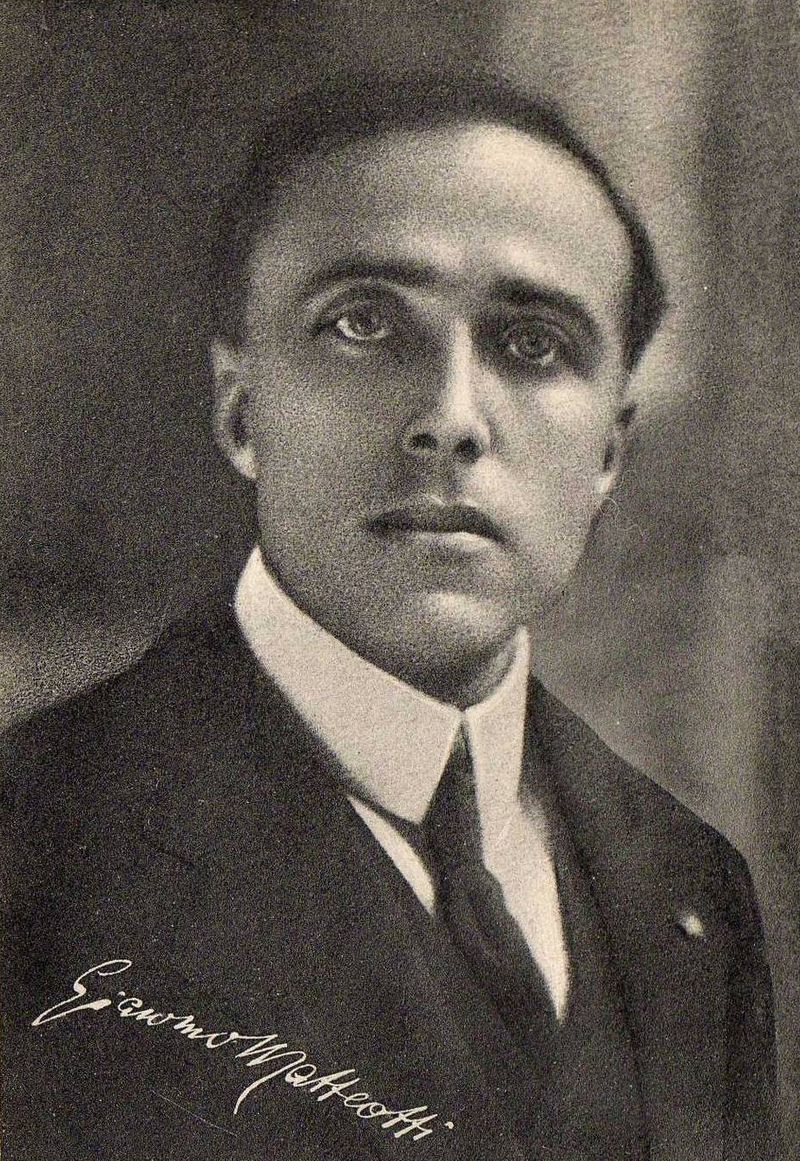
Giacomo Matteotti, a pivotal figure in Italian history, is remembered as a symbol of resistance against fascism and a martyr for democracy. Born on May 22, 1885, in Fratta Polesine, Rovigo, Italy, Matteotti’s life was marked by his unwavering commitment to social justice, his vocal opposition to Benito Mussolini’s fascist regime, and his tragic assassination, which sent shockwaves throughout Italy and the world. This article delves into the life of Giacomo Matteotti, exploring his early years, rise to political prominence, and the enduring legacy he left behind.
Early Life and Education
Giacomo Matteotti was born into a family of modest means in the Po River Valley, an area known for its agricultural struggles. Despite their humble beginnings, his parents, through hard work and prudent investments, managed to acquire significant land holdings. This rural upbringing, in close proximity to the hardships faced by the peasantry, deeply influenced Matteotti’s worldview and his early gravitation towards socialist ideals.
Matteotti’s education began in his hometown, where he attended the local gymnasium in Rovigo. It was here that he first encountered the ideas of socialism, introduced to him by his older brother Matteo. This ideological foundation was further solidified during his teenage years, as he witnessed the stark inequalities and exploitation of the rural poor. The impact of these experiences was profound, shaping Matteotti into a fervent advocate for social justice.
In 1907, Matteotti graduated with a degree in law from the University of Bologna. His academic pursuits were not just a means to personal advancement but a way to equip himself with the tools necessary to fight for the rights of the oppressed. His legal training would later prove invaluable in his political career, particularly in his ability to articulate and defend his positions with clarity and conviction.
Political Career: From Local Politics to National Influence
Matteotti’s political journey began in 1910 when he was elected to the Provincial Council of Rovigo. His early foray into politics was characterized by a commitment to reform and a belief in the gradual, democratic transformation of society—a stance that set him apart from more radical elements within the socialist movement. Matteotti was a reformist, advocating for change through legal and parliamentary means rather than through revolution.
As a councilor, Matteotti demonstrated exceptional administrative abilities and a deep dedication to public service. He worked tirelessly to improve the living conditions of the rural poor, focusing on issues such as land reform, workers’ rights, and social welfare. His efforts earned him a reputation as a principled and effective leader, and his influence within the socialist movement began to grow.
With the outbreak of World War I, Matteotti took a firm stand against Italy’s involvement in the conflict. He was a vocal proponent of neutrality, arguing that the war would bring untold suffering to the working class and further entrench the power of the ruling elites. This anti-war stance placed him at odds with the nationalist sentiments of the time and led to threats and persecution by nationalist factions.
In 1916, Matteotti’s outspoken opposition to the war led to his internment in Sicily after delivering a speech against the conflict at the Provincial Council of Rovigo. This act of repression only strengthened his resolve to fight for peace and social justice. That same year, he married Velia Titta, with whom he would have three children. His son, Giancarlo Matteotti, would later follow in his father’s footsteps, dedicating himself to political activism.
Post-War Political Landscape and Opposition to Fascism
Following the end of World War I, Italy was plunged into a period of social and political turmoil. The country was deeply divided, with widespread disillusionment over the war’s outcome and a growing sense of economic and social instability. It was against this backdrop that Benito Mussolini and his fascist movement began to rise to prominence, exploiting the fears and frustrations of the populace.
Matteotti, by this time an influential member of the Socialist Party, was one of the first and most vocal critics of the burgeoning fascist movement. In 1919, he was elected to the Italian Parliament, where he used his position to denounce the violence and authoritarianism of Mussolini’s Blackshirts, the paramilitary squads that terrorized political opponents across the country.
His fearless opposition to fascism made him a target for Mussolini and his supporters. Matteotti was not only attacked in the press but also physically assaulted on several occasions. In March 1921, he was kidnapped and brutally beaten by fascists in Castelguglielmo. Despite the personal danger, Matteotti refused to be silenced. He continued to speak out against the fascist regime, warning of the existential threat it posed to Italian democracy and civil liberties.
The Final Struggle: Matteotti’s Last Stand
In 1923, Matteotti published “Un anno di dominazione fascista” (“A Year of Fascist Domination”), a scathing critique of the fascist government’s failures, particularly in economic and financial policy. In this work, he accused Mussolini’s regime of replacing the rule of law with arbitrary rule, subjugating the state to the interests of a single party, and dividing the nation into oppressors and the oppressed.
As Italy prepared for the 1924 general elections, Matteotti became increasingly vocal in his opposition to the fascist government. He condemned the election as a farce, citing widespread voter intimidation, electoral fraud, and the suppression of opposition parties. On May 30, 1924, in a now-famous speech to the Italian Parliament, Matteotti openly challenged the validity of the election results, accusing the fascists of rigging the process and engaging in acts of violence against political opponents.
His speech was a bold and defiant act, one that would ultimately seal his fate. As he concluded his remarks, Matteotti reportedly told his colleagues, “I have spoken. Now you can prepare my funeral oration.” These words would prove tragically prophetic.
Assassination and Aftermath
On June 10, 1924, less than two weeks after his parliamentary speech, Giacomo Matteotti was abducted by a group of fascist thugs on the Lungotevere Arnaldo da Brescia in Rome. He was forced into a car, where he was brutally beaten and stabbed to death. His body was later found in a shallow grave in the countryside outside Rome, six days after his disappearance.
The assassination of Giacomo Matteotti sent shockwaves throughout Italy and the international community. It exposed the violent and repressive nature of Mussolini’s regime, triggering a political crisis that threatened to topple the fascist government. However, Mussolini managed to consolidate his power, using the crisis to further entrench his dictatorship.
Despite the regime’s efforts to suppress dissent, Matteotti’s murder became a rallying point for anti-fascist forces in Italy and abroad. His death highlighted the brutal reality of fascism and galvanized opposition to Mussolini’s rule. Matteotti’s legacy as a martyr for democracy and human rights would endure long after his death.
Legacy and Commemoration
Giacomo Matteotti’s life and death have left an indelible mark on Italian history. He is remembered as a courageous and principled leader who stood up to tyranny at great personal risk. His commitment to social justice, democracy, and the rule of law continues to inspire generations of activists and politicians.
In recognition of his contributions, the Italian government established the Giacomo Matteotti Award in 2005. This award is presented annually in three categories: essays, literary or theatrical works, and academic theses, all of which reflect the ideals of brotherhood among peoples, freedom, and social justice that Matteotti championed.
Matteotti’s story serves as a powerful reminder of the importance of standing up for one’s beliefs, even in the face of overwhelming odds. His life and legacy continue to resonate in a world where the struggle for democracy and human rights remains ongoing.
In conclusion, Giacomo Matteotti’s life was a testament to the power of conviction and the importance of defending democratic values. His unwavering opposition to fascism, even at the cost of his life, makes him a timeless symbol of resistance against oppression. As we reflect on his legacy, it is clear that Matteotti’s ideals and courage will continue to inspire those who fight for justice and freedom around the world.


