
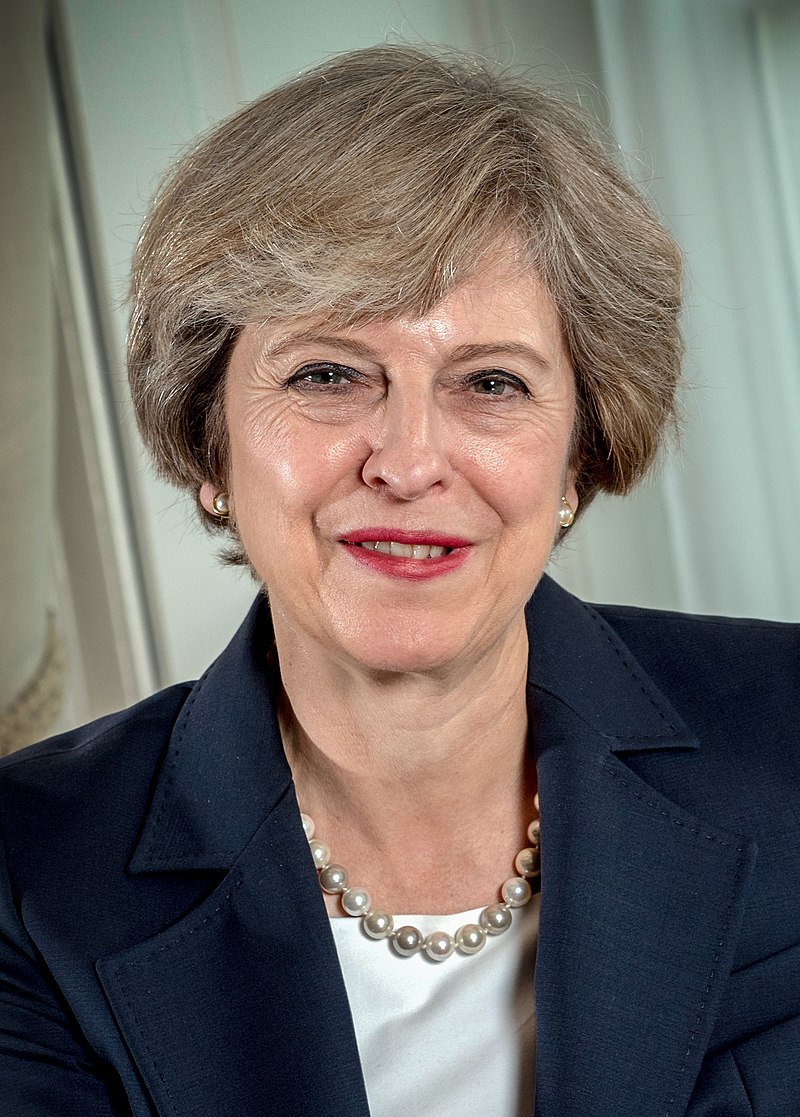
Theresa May, born Theresa Mary Brasier on October 1, 1956, in Eastbourne, Sussex, England, stands as a pivotal figure in contemporary British politics. A leader whose career has been defined by resilience, determination, and an unwavering commitment to public service, May’s journey from a vicar’s daughter to becoming the second female Prime Minister of the United Kingdom is a testament to her fortitude and political acumen. This comprehensive exploration delves into her life, career, and the significant milestones that have shaped her legacy.
Early Life and Education
Theresa May was born into a modest family, with her father, Hubert Brasier, serving as a vicar in the Anglican Church, and her mother, Zaidee Brasier, supporting the household. The values instilled by her religious upbringing and the disciplined environment of her early life would profoundly influence her character and approach to leadership.
May’s early education began at the local primary schools in Oxfordshire, where she displayed a keen intellect and a natural aptitude for learning. She continued her education at St. Juliana’s Convent School for Girls, a Roman Catholic independent school in Begbroke. This education provided her with a solid foundation, both academically and morally, further shaping her worldview.
In 1974, Theresa May enrolled at the University of Oxford, where she studied geography at St Hugh’s College. Her time at Oxford was formative, not just academically but also politically. It was here that she became actively involved in the Oxford University Conservative Association, laying the groundwork for her future in politics. May graduated in 1977 with a degree in geography, ready to embark on her professional journey.
Early Career and Entry into Politics
Theresa May’s professional career began at the Bank of England, where she worked from 1977 until 1983. Her role at the Bank provided her with valuable insights into the financial and economic mechanisms that drive national policy. This experience was further broadened when she took on the role of senior advisor for international affairs at the Association for Payment Clearing Services, where she worked until 1986.
During this period, May’s interest in politics continued to grow. She married Philip May in 1980, a banker whom she met through mutual friends at a Conservative Party event. Their marriage would be marked by mutual respect and support, with Philip playing a significant role in her political life.
In 1986, May took her first official step into the political arena by becoming a councilor for the London Borough of Merton. Her work in local government gave her firsthand experience in addressing the needs of the community, further fueling her ambition to make a more significant impact on a national level.
The 1990s: Rising Through the Ranks
Theresa May’s first attempt to enter Parliament came in the 1992 general election, where she ran as the Conservative candidate for North West Durham. Although unsuccessful, this setback did not deter her. She continued to work diligently within the Conservative Party, and in 1997, she was elected as the Member of Parliament for Maidenhead, a position she would hold for over two decades.
Once in Parliament, May quickly established herself as a capable and hardworking MP. Her early roles included serving as a member of the opposition under William Hague, where she was responsible for shadow portfolios related to education, disabled people, and women. These roles allowed her to champion issues close to her heart, such as improving educational opportunities and advocating for gender equality.
The 2000s: A Trailblazer in Conservative Politics
The early 2000s marked a period of significant advancement in Theresa May’s political career. Following the 2001 general election, she was appointed as the Shadow Secretary of State for Transport by Iain Duncan Smith, the then-leader of the Conservative Party. In this role, May demonstrated her ability to navigate complex policy areas, earning her a reputation as a pragmatic and effective politician.
In 2002, May made history by becoming the first woman to be appointed as Chairman of the Conservative Party. Her tenure was notable for her candid assessment of the party’s image, famously referring to it as the “Nasty Party” during the Conservative Party Conference. This speech was a call to modernize the party, making it more inclusive and appealing to a broader electorate. May’s leadership during this period helped to reshape the Conservative Party’s identity, setting the stage for future electoral successes.
Government Roles and the Path to Prime Minister
Theresa May’s political career reached new heights when the Conservative Party, led by David Cameron, won the 2010 general election. Cameron appointed May as Home Secretary, one of the most challenging and high-profile positions in the UK government. As Home Secretary, May became only the fourth woman in British history to hold one of the Great Offices of State.
Her tenure as Home Secretary was marked by a series of significant reforms. One of her first actions was the introduction of the Identity Documents Act 2010, which abolished the Labour government’s National Identity Card scheme. May also oversaw changes to the collection and storage of DNA samples, ensuring that they were handled in a way that respected individual privacy while maintaining public safety.
May’s approach to immigration and security was firm but fair. She introduced stricter immigration controls and took decisive action against individuals deemed a threat to national security, such as banning the entry of controversial figures like the Muslim preacher Zakir Naik. Her policies often sparked debate, but they underscored her commitment to maintaining the security and integrity of the UK.
In 2012, May relinquished her role as Minister for Women and Equalities to focus on her duties as Home Secretary. However, her stance on issues such as same-sex marriage evolved during this period. Initially criticized for her opposition to expanding gay rights in adoption, May later became a vocal supporter of marriage equality, recording a video for the Out4Marriage campaign and advocating for the legalization of same-sex marriage.
The Road to Brexit and the Premiership
The 2010s were a tumultuous decade in British politics, and Theresa May was at the center of the storm. The most significant political event of this period was the 2016 Brexit referendum, in which the UK voted to leave the European Union. Despite having campaigned for Remain, May accepted the referendum result and positioned herself as the candidate who could unite the Conservative Party and deliver Brexit.
Following David Cameron’s resignation in the wake of the referendum, May announced her candidacy for the Conservative Party leadership. Her campaign emphasized the need for strong, stable leadership and a clear vision for the UK’s future outside the EU. May’s experience, reputation for competence, and ability to appeal to both Remain and Leave supporters made her the frontrunner.
On July 11, 2016, after her main rival Andrea Leadsom withdrew from the race, Theresa May became the leader of the Conservative Party and, consequently, the Prime Minister of the United Kingdom. Her ascension to the role made her the second woman in British history to hold the office, following in the footsteps of Margaret Thatcher.
Prime Minister: Challenges and Controversies
Theresa May’s tenure as Prime Minister was defined by the challenges of navigating Brexit. Her initial approach was encapsulated in the phrase “Brexit means Brexit,” signaling her commitment to honoring the referendum result. However, delivering Brexit proved to be far more complex than anticipated.
One of her first major actions as Prime Minister was to trigger Article 50 of the Treaty on European Union, formally beginning the UK’s withdrawal process. May then embarked on a series of negotiations with the EU, seeking to secure a deal that would respect the referendum result while minimizing economic disruption.
May’s leadership was tested as she sought to balance the competing demands of her party, Parliament, and the public. The 2017 general election, which she called to strengthen her mandate, resulted in a hung Parliament, forcing her to rely on the support of Northern Ireland’s Democratic Unionist Party (DUP) to govern.
The Brexit negotiations culminated in a draft withdrawal agreement, but securing its approval in Parliament proved to be an insurmountable challenge. May faced multiple defeats in the House of Commons, as both hardline Brexiteers and pro-Remain MPs rejected her deal. Despite her efforts to bridge the divides, the impasse led to growing calls for her resignation.
Resignation and Legacy
On May 24, 2019, an emotional Theresa May announced her resignation as leader of the Conservative Party, acknowledging that she had been unable to deliver Brexit. Her resignation marked the end of a turbulent premiership, characterized by intense political pressure and deep divisions within the UK.
May formally stepped down as Prime Minister on July 24, 2019, succeeded by Boris Johnson, a leading figure in the Leave campaign. While her time as Prime Minister was fraught with difficulties, Theresa May’s legacy is more than just Brexit. She will be remembered as a leader who sought to bring stability to a country in the midst of one of its most significant political upheavals.
Throughout her career, May was known for her work ethic, integrity, and commitment to public service. She was a trailblazer in many respects, from being the first female Chairman of the Conservative Party to becoming the second woman to serve as Prime Minister. Her influence on British politics, particularly in the realms of immigration, security, and equality, will continue to be felt for years to come.
Conclusion: The Enduring Impact of Theresa May
Theresa May’s journey from a vicar’s daughter to Prime Minister of the United Kingdom is a story of perseverance and dedication. Her legacy is one of a leader who, despite facing immense challenges, remained committed to her principles and to the service of her country. May’s time in office was marked by her efforts to steer the UK through one of its most divisive periods, and while her tenure was not without controversy, her impact on British politics is undeniable.
As history reflects on Theresa May’s contributions, she will be remembered not only for her role in the Brexit saga but also for her broader contributions to public life, including her advocacy for social justice and her work in modernizing the Conservative Party. Theresa May’s story is a testament to the complexities of leadership and the enduring challenges of political life.


