
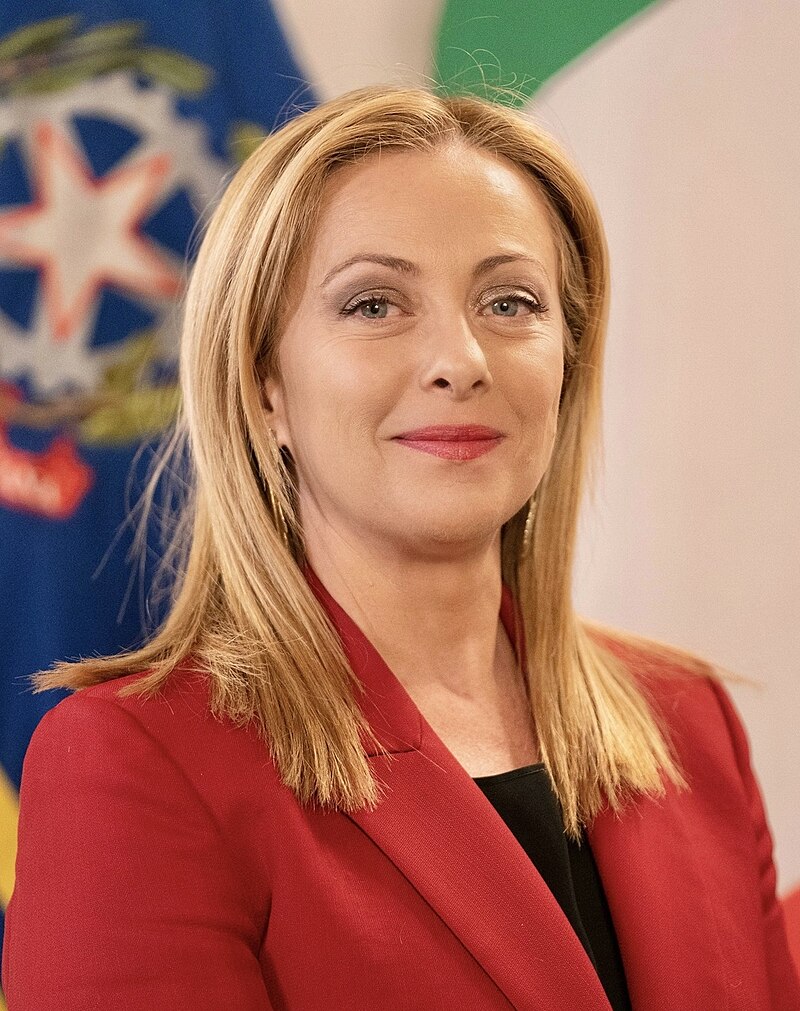
Giorgia Meloni, born on January 15, 1977, in Rome, Italy, is a prominent Italian politician who has become a significant figure in the country’s political landscape. Rising from modest beginnings in Rome’s Garbatella neighborhood, Meloni’s journey to becoming Italy’s first female Prime Minister is a story of perseverance, conviction, and strategic political acumen. As a journalist by training and a politician by vocation, Meloni has shaped and led a political movement that has redefined the Italian right. This article explores her life, her rise to fame, and the key milestones that have marked her career.
Early Life and Political Beginnings
Giorgia Meloni was raised in the working-class district of Garbatella, a neighborhood known for its strong community spirit and its historical ties to the Italian left. Despite this environment, Meloni was drawn to the values of conservatism and nationalism from a young age. She was politically active from her teenage years, founding a student movement called “Gli Antenati” (The Ancestors) when she was just 15. This movement was at the forefront of student protests against the educational reforms proposed by the then Minister of Public Education, Rosa Iervolino.
Meloni’s early involvement in politics was not just a youthful experiment but a clear indication of her future path. By 1996, she had become a national leader of “Azione Studentesca” (Student Action), a right-wing student organization that represented the interests of conservative youth in Italy. Her leadership skills and ability to mobilize young people quickly brought her to the attention of senior political figures within the National Alliance (Alleanza Nazionale), a conservative political party that emerged from the post-fascist Italian Social Movement (MSI).
Early Career and Rise in Politics
In 1998, at the age of 21, Giorgia Meloni ran for a seat on the Provincial Council of Rome as a candidate for the National Alliance. She was elected and served as a member of the commission on culture, education, and youth policies. This role marked her entry into formal politics and laid the foundation for her future political career.
The early 2000s were a period of rapid political ascent for Meloni. In 2000, she became a national leader of “Azione Giovani” (Youth Action), the youth wing of the National Alliance. Her leadership was further solidified in 2004 when she was elected president of the organization, making her the first woman to hold this position in the history of the Italian right.
Meloni’s political philosophy was deeply influenced by the conservative and nationalist values of the Italian right. She believed in the importance of national identity, traditional family values, and a strong, sovereign state. These principles would later become central to her leadership of the political party “Fratelli d’Italia” (Brothers of Italy).
National Recognition and Political Roles
Giorgia Meloni’s national political breakthrough came in 2006 when she was elected to the Italian Chamber of Deputies as a representative of the National Alliance in Lazio 1, a district in Rome. At the age of 29, she was one of the youngest members of parliament, and her potential was quickly recognized by senior party members.
Her political star continued to rise rapidly. In the same year, she was elected as Vice President of the Chamber of Deputies, a prestigious position that placed her at the center of Italian politics. Meloni’s role in parliament allowed her to develop her legislative skills and to build alliances across the political spectrum.
The most significant turning point in Meloni’s early career came in 2008, when she was appointed Minister for Youth Policies in the government of Prime Minister Silvio Berlusconi. At just 31 years old, she became the youngest minister in the history of the Italian Republic. In this role, Meloni focused on issues related to youth employment, education, and family policies, often emphasizing the importance of traditional values and national pride.
Founding of Fratelli d’Italia
The political landscape in Italy underwent significant changes in the early 2010s, and Giorgia Meloni was at the forefront of these transformations. Disillusioned with the direction of the center-right People of Freedom (Popolo della Libertà, or PdL) party, led by Silvio Berlusconi, Meloni decided to chart her own course.
In November 2012, Meloni, along with Guido Crosetto and Ignazio La Russa, founded a new political movement called “Fratelli d’Italia” (Brothers of Italy). The party was named after the opening line of the Italian national anthem and sought to revive the spirit of nationalism and conservatism in Italy. Meloni envisioned Fratelli d’Italia as a party that would defend Italian sovereignty, promote conservative values, and challenge the dominance of the European Union in Italian politics.
Despite its modest beginnings, Fratelli d’Italia quickly gained traction, especially among voters disillusioned with the mainstream center-right parties. Meloni’s leadership was characterized by her strong communication skills, her ability to connect with ordinary Italians, and her clear articulation of the party’s values. Under her guidance, the party adopted a staunchly eurosceptic and anti-immigration stance, which resonated with a significant portion of the Italian electorate.
Challenges and Growth in the 2010s
The early years of Fratelli d’Italia were challenging. In the 2014 European Parliament elections, the party received only 3.7% of the vote, failing to cross the 4% threshold needed to secure representation. Despite this setback, Meloni remained committed to her vision and continued to build the party’s base.
One of the most significant alliances during this period was with Matteo Salvini’s Lega Nord (Northern League), another right-wing party that shared Fratelli d’Italia’s eurosceptic and nationalist positions. Together, Meloni and Salvini led a series of high-profile campaigns against the government of Prime Minister Matteo Renzi, particularly opposing his constitutional reforms and his approach to immigration.
Meloni’s opposition to same-sex adoption and her defense of traditional family values made her a prominent figure in the conservative movement. Her participation in the “Family Day” rallies, which advocated for the protection of traditional marriage and family structures, solidified her image as a defender of conservative values.
The Path to Power: 2020s and Becoming Prime Minister
The 2020s marked a turning point in Giorgia Meloni’s political career. By this time, Fratelli d’Italia had established itself as a major force in Italian politics, with Meloni emerging as one of the most influential leaders on the right. The party’s consistent stance on national sovereignty, immigration, and family values resonated with a growing number of Italians, especially in the context of economic uncertainty and political instability.
The 2022 general elections were a watershed moment for Fratelli d’Italia. Under Meloni’s leadership, the party won approximately 26% of the vote, making it the most popular party in Italy. This electoral victory was a testament to Meloni’s ability to connect with voters and to articulate a vision that appealed to a broad cross-section of the Italian population.
Following the election, Meloni was tasked with forming a government, making her the first woman in Italian history to serve as Prime Minister. Her appointment was a historic milestone, not only for Italy but also for the broader European political landscape. As Prime Minister, Meloni has faced the challenge of balancing her party’s nationalist and eurosceptic positions with the practical realities of governing a major European nation.
Personal Life and Public Image
Despite her intense public life, Giorgia Meloni has also maintained a relatively private personal life. She is in a relationship with Andrea Giambruno, a journalist and television producer, with whom she has a daughter named Ginevra. Meloni has often spoken about the challenges of balancing her political career with motherhood, and her experiences have resonated with many working mothers in Italy.
Meloni’s public image is that of a determined and uncompromising leader. She is known for her direct communication style and her ability to connect with ordinary Italians. Her speeches often emphasize themes of national pride, sovereignty, and traditional values, and she has become a symbol of a resurgent conservative movement in Italy.
However, Meloni’s rise to power has not been without controversy. Her views on immigration, LGBTQ+ rights, and the European Union have drawn criticism from various quarters, both within Italy and abroad. Critics argue that her policies could exacerbate social divisions and undermine Italy’s role in the European Union. Nevertheless, Meloni has remained steadfast in her positions, arguing that her policies reflect the will of the Italian people and the need to protect Italy’s national interests.
Historical Context and Impact
Giorgia Meloni’s rise to power must be understood within the broader context of Italian and European politics. Her ascent reflects the growing influence of right-wing populism in Europe, driven by concerns over immigration, economic insecurity, and the perceived loss of national sovereignty. Meloni’s success is part of a broader trend in which nationalist and eurosceptic parties have gained ground across the continent, challenging the traditional political establishment.
In Italy, Meloni’s leadership represents a shift in the country’s political landscape. Her emphasis on national identity, sovereignty, and traditional values has resonated with a significant portion of the electorate, particularly in the wake of the economic challenges and political instability that have characterized recent years. Her ability to articulate a clear and consistent vision for Italy’s future has made her one of the most influential figures in contemporary Italian politics.
Meloni’s impact extends beyond Italy’s borders. As the leader of a major European nation, her positions on issues such as immigration, the European Union, and international relations have significant implications for the broader European and global context. Her tenure as Prime Minister is likely to shape Italy’s role in Europe and the world for years to come.
Conclusion: The Legacy of Giorgia Meloni
Giorgia Meloni’s life and career are a testament to the power of determination, conviction, and political strategy. From her early days as a young activist in Garbatella to her historic role as Italy’s first female Prime Minister, Meloni has consistently defied expectations and reshaped the Italian political landscape.
Her leadership of Fratelli d’Italia has redefined the Italian right, bringing issues of national sovereignty, traditional values, and euroscepticism to the forefront of the political debate. While her policies and positions have sparked controversy, there is no denying her impact on Italian and European politics.
As we look to the future, Giorgia Meloni’s legacy will be shaped by her ability to navigate the complex challenges of governing a major European nation in a time of significant political and economic uncertainty. Whether she succeeds in achieving her vision for Italy will depend on her ability to balance her party’s ideals with the practical realities of leadership. One thing is certain: Giorgia Meloni has already secured her place in history as one of the most influential and consequential leaders of her generation.


