
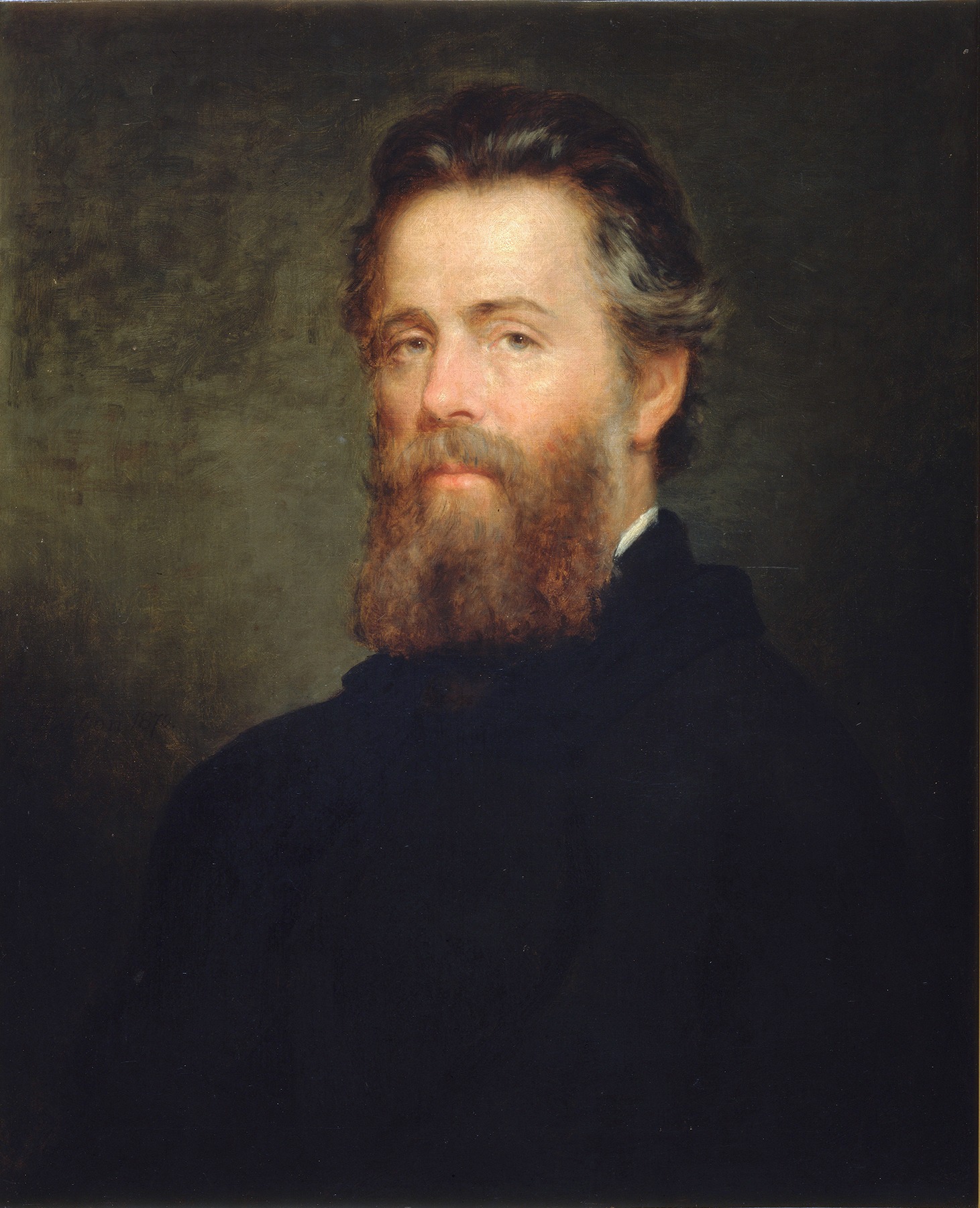
Herman Melville is a name that resonates with literary greatness, a figure whose work has stood the test of time, and whose life story is as complex and multifaceted as the characters he created. Born on August 1, 1819, in New York City, Melville’s journey from obscurity to literary legend is a tale of perseverance, passion, and profound insight into the human condition. Despite the significant challenges he faced throughout his life, including financial difficulties, critical failures, and eventual obscurity, Melville’s work, particularly his magnum opus Moby-Dick, has secured his place in the pantheon of great American writers.
Early Life and Background
Herman Melville was born into a family that experienced both the highs of affluence and the lows of financial ruin. His father, Allan Melville, was a successful merchant whose business ventures initially afforded the family a comfortable lifestyle. However, by the time Herman was 12 years old, financial mismanagement and a series of unfortunate events led to his father’s business failure and subsequent decline into mental illness. Allan Melville’s untimely death in 1832 left the family in financial disarray, forcing them to move to the small village of Lansingburgh, New York, on the Hudson River. This dramatic shift in circumstances profoundly influenced Herman’s worldview, planting the seeds for the themes of struggle, survival, and existential quest that would later permeate his writing.
The Call of the Sea: Early Adventures
Melville’s early career was marked by a restless spirit and a deep desire for adventure. In 1839, at the age of 20, Melville embarked on his first sea voyage as a cabin boy on a ship bound for Liverpool, England. This experience was formative, providing him with firsthand knowledge of the maritime life that would become central to many of his later works. His return to the United States did not diminish his wanderlust, and in 1841, Melville signed up for another voyage, this time aboard the whaling ship Acushnet, which sailed from New Bedford, Massachusetts, into the vast Pacific Ocean.
The journey aboard the Acushnet lasted over a year and a half, taking Melville to the distant and exotic locales of the South Seas. It was during this period that he had some of his most harrowing and transformative experiences. After a particularly grueling stretch at sea, Melville deserted the ship in the Marquesas Islands in 1842. His time living among the indigenous peoples of the Marquesas provided the material for his first successful book, Typee: A Peep at Polynesian Life (1846), which was followed by its sequel, Omoo (1847). These semi-autobiographical novels, which blended adventure, ethnography, and critique of Western colonialism, brought Melville early fame and established him as a writer of note.
The Pinnacle of Fame: Moby-Dick
Despite the success of his early works, Melville’s literary ambitions far exceeded the confines of the adventure genre. In 1850, he began working on what would become his masterpiece, Moby-Dick. Inspired by his own experiences at sea, as well as by the works of his friend and fellow writer Nathaniel Hawthorne, Moby-Dick was a daring and innovative novel that fused elements of adventure, philosophy, and allegory. The novel tells the story of Captain Ahab’s obsessive quest to kill the white whale, Moby Dick, which had previously maimed him. This narrative framework allowed Melville to explore profound themes such as the nature of evil, the limits of knowledge, and the existential struggle between man and nature.
However, upon its publication in 1851, Moby-Dick was met with mixed reviews. The novel’s complex structure, dense symbolism, and unconventional narrative style were off-putting to many contemporary readers, who were more accustomed to straightforward adventure tales. Consequently, Moby-Dick failed to achieve commercial success during Melville’s lifetime, and his reputation as a writer began to decline.
The Decline and Late Years
As the 1850s progressed, Melville’s literary output became increasingly introspective and experimental. Works such as Pierre; or, The Ambiguities (1852) and The Confidence-Man (1857) delved deeper into the psychological and moral complexities of human existence, but these works were not well-received by the public or critics. Faced with financial difficulties and growing obscurity, Melville turned to lecturing and later secured a position as a customs inspector in New York City, a job he held for 19 years.
Despite the lack of recognition in his later years, Melville continued to write, producing poetry and prose that reflected his deepening philosophical concerns. His later works, including the posthumously published novella Billy Budd, Sailor, reveal a writer grappling with the darker aspects of human nature and the inexorable passage of time.
Posthumous Recognition
Herman Melville passed away on September 28, 1891, largely forgotten by the literary world. He died in relative obscurity, with his major works out of print and his legacy uncertain. However, the 20th century saw a dramatic reevaluation of Melville’s work. The publication of Raymond Weaver’s biography Herman Melville: Mariner and Mystic in 1921, along with the republication of Moby-Dick, sparked a Melville revival. Scholars and critics began to recognize the depth and complexity of his writing, and Moby-Dick was hailed as one of the greatest American novels ever written.
Today, Melville is celebrated as a master of American literature, whose works continue to be studied and admired for their profound insights into the human condition. His life story, marked by early success, mid-life obscurity, and posthumous recognition, mirrors the themes of struggle, resilience, and redemption that characterize his most famous works.
Legacy and Impact
Herman Melville’s legacy extends beyond his literary achievements. His work has influenced countless writers, artists, and thinkers across generations. Moby-Dick alone has inspired adaptations in every conceivable medium, from film and theater to opera and visual art. The novel’s exploration of obsession, revenge, and the sublime power of nature resonates with modern audiences as much as it did with Melville’s contemporaries.
Moreover, Melville’s life and work offer valuable insights into the cultural and historical context of 19th-century America. His critique of imperialism, exploration of the American frontier, and deep engagement with the philosophical questions of his time make him a figure of enduring relevance. In a world where the tension between progress and preservation, conquest and coexistence, continues to shape human experience, Melville’s work remains as vital and thought-provoking as ever.
Conclusion
Herman Melville’s life was one of profound contrasts—between wealth and poverty, fame and obscurity, success and failure. Yet through it all, he remained committed to his art, producing works of enduring significance that continue to challenge and inspire readers around the world. Today, Melville is rightly regarded as one of the giants of American literature, a writer whose explorations of the human spirit and the natural world have left an indelible mark on the cultural landscape.
His story is a testament to the power of literature to transcend time and place, to speak to the deepest questions of existence, and to illuminate the complexities of the human soul. As we continue to grapple with the same fundamental questions that Melville explored in his work, his life and legacy serve as a reminder of the enduring power of the written word.


