
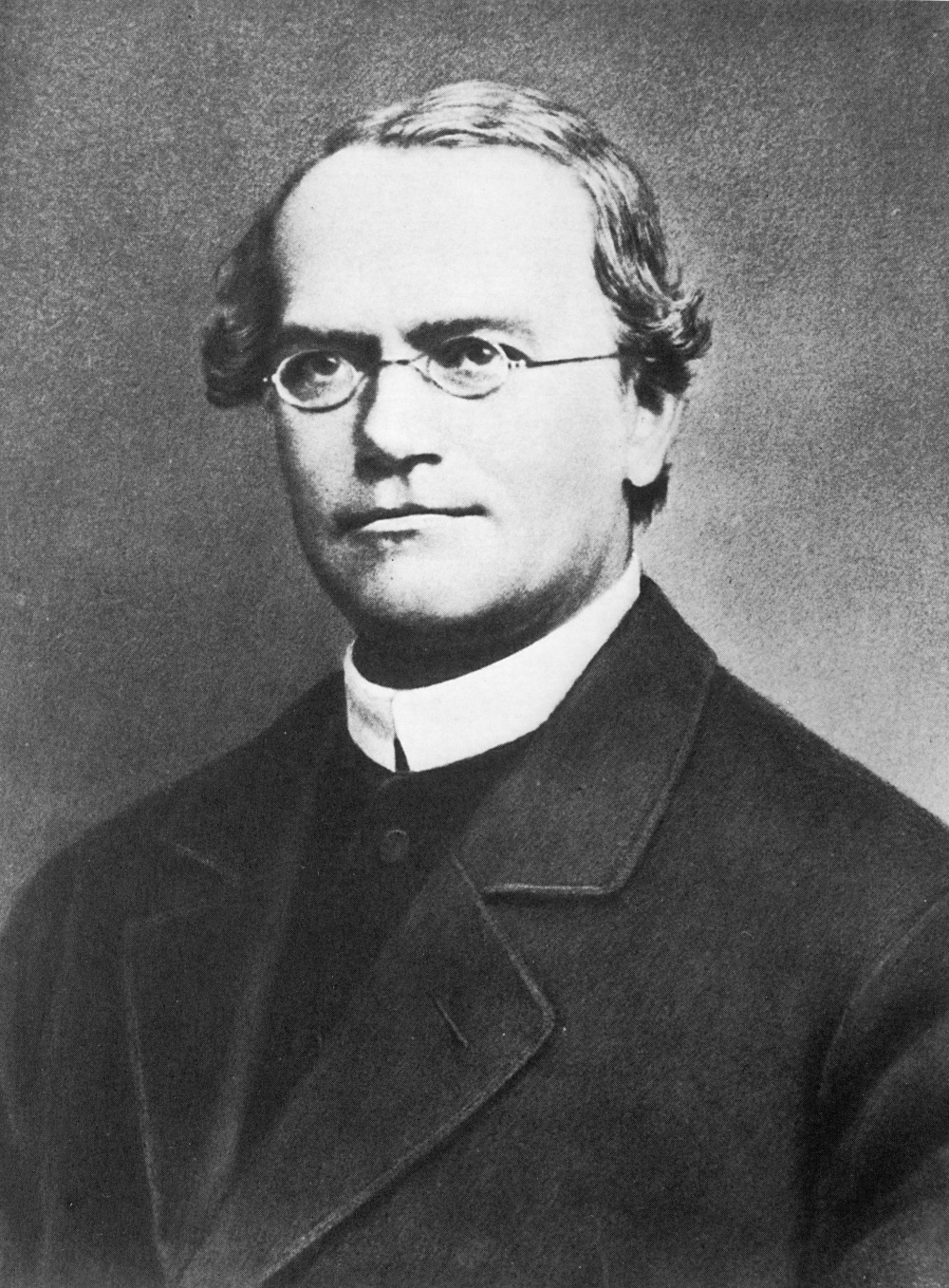
Gregor Johann Mendel, born on July 20, 1822, in Hynčice (now part of the Czech Republic), is a name that resonates profoundly within the realms of biology, genetics, and science at large. Widely regarded as the “Father of Modern Genetics,” Mendel’s groundbreaking work on the inheritance of traits in pea plants laid the foundation for the field of genetics. Despite his immense contributions, his work was largely unrecognized during his lifetime, gaining significance only decades after his death. This article delves into the life, fame, and enduring legacy of Gregor Mendel, exploring the key highlights that define his remarkable journey.
Early Life and Education: Foundations of a Scientific Mind
Born into a modest farming family in the Austrian Empire, young Johann Mendel, who later adopted the name Gregor upon entering monastic life, was exposed to the rural way of life from an early age. His parents, Anton and Rosine Mendel, were simple peasants, and young Johann spent much of his childhood working in the fields. Despite the harsh realities of agrarian life, Mendel’s early experiences with plants and nature likely played a role in shaping his future interests.
Mendel’s early education took place at the local school, where his intellectual curiosity quickly became apparent. Recognizing his potential, his family supported his pursuit of higher education, despite their limited means. After completing his primary education, Mendel attended the gymnasium in Troppau (now Opava), where he excelled in his studies, particularly in the natural sciences.
Following his graduation, Mendel enrolled in the Philosophical Institute in Olomouc (now Olomouc), where he studied philosophy, mathematics, and physics. However, his time in Olomouc was challenging. Mendel faced financial difficulties and struggled with the German language, which was the medium of instruction. Nevertheless, his determination saw him through, and he completed his studies with distinction.
Entering the Monastery: A Path to Scientific Exploration
In 1843, at the age of 21, Mendel made a life-changing decision to join the Augustinian monastery of St. Thomas in Brno (then Brünn), Austria. This decision was motivated by both his spiritual inclinations and the opportunity the monastery provided for academic pursuits. The monastery, under the leadership of Abbot Cyrill Napp, was a center of learning and scholarship, encouraging the intellectual development of its members.
At the monastery, Mendel adopted the name Gregor and was ordained as a priest in 1847. His monastic life afforded him the time and resources to delve into his scientific interests, particularly in the fields of mathematics, physics, and botany. Recognizing his potential, the abbot sent Mendel to the University of Vienna in 1851 to further his studies in these disciplines.
At Vienna, Mendel was exposed to the cutting-edge scientific theories of the time. He studied under some of the most prominent scientists, including physicist Christian Doppler and botanist Franz Unger. These influences were crucial in shaping Mendel’s scientific approach, particularly his application of mathematical principles to biological research.
The Pea Plant Experiments: Laying the Groundwork for Genetics
Upon his return to the monastery in 1853, Mendel began teaching physics and natural history at the local school. However, it was his research in the monastery’s garden that would eventually lead to his most significant contributions to science. Mendel chose the common pea plant (Pisum sativum) as the subject of his experiments, largely because of its distinct and easily observable traits, such as seed color, seed shape, and flower color.
Over the course of seven years, Mendel meticulously bred and cross-bred thousands of pea plants, tracking how traits were passed from one generation to the next. His experiments involved careful observation, precise breeding techniques, and a rigorous application of statistical analysis—an approach that was revolutionary for the time.
In 1865, after years of experimentation, Mendel formulated what are now known as the “Mendelian Laws of Inheritance.” These laws—comprising the Law of Segregation, the Law of Independent Assortment, and the Law of Dominance—explained how traits are inherited in a predictable manner. Mendel’s work demonstrated that inheritance was not a blending of traits, as was commonly believed, but rather a process where discrete units (later known as genes) were passed from parents to offspring.
Publication and Initial Reception: A Work Ahead of Its Time
Mendel presented his findings to the Natural History Society of Brno in two lectures delivered in 1865. His research was published in the society’s proceedings the following year under the title “Experiments on Plant Hybridization.” Despite the groundbreaking nature of his work, it was met with little interest or understanding from the scientific community at the time.
The reasons for this lack of recognition are manifold. First, Mendel’s work was published in an obscure journal with limited circulation. Second, the scientific community of the time was not yet ready to embrace the idea of discrete hereditary units, as the prevailing theories of inheritance were based on blending and the influence of environmental factors. Moreover, Mendel’s use of mathematical analysis in biological research was ahead of its time, and many biologists lacked the mathematical background to fully grasp the significance of his findings.
As a result, Mendel’s work remained largely unnoticed, and he spent the latter part of his life as the abbot of his monastery, dealing with administrative duties and financial struggles rather than pursuing further scientific research.
Later Life and Legacy: The Rediscovery of Mendel’s Work
Mendel’s later years were marked by personal and professional challenges. As abbot, he became embroiled in a lengthy dispute with the Austrian government over the imposition of new taxes on religious institutions. This battle consumed much of his time and energy, leaving little room for scientific endeavors. Despite these difficulties, Mendel remained dedicated to his monastic duties and maintained his interest in scientific observation, particularly in meteorology.
Gregor Mendel passed away on January 6, 1884, at the age of 61, due to complications from chronic nephritis. At the time of his death, his scientific contributions were largely unrecognized, and he was known primarily as a diligent priest and teacher.
It was not until the turn of the 20th century, more than three decades after Mendel’s death, that his work gained the recognition it deserved. In 1900, three European scientists—Hugo de Vries, Carl Correns, and Erich von Tschermak—independently rediscovered Mendel’s principles of heredity while conducting their own research on plant hybridization. They recognized the significance of Mendel’s work and acknowledged him as the pioneer of modern genetics.
The rediscovery of Mendel’s laws came at a time when the scientific community was better equipped to understand and appreciate the implications of his findings. The subsequent development of the field of genetics, including the identification of genes and the elucidation of DNA’s structure, cemented Mendel’s place in the history of science.
Historical Context and Impact on Modern Science
Mendel’s work laid the foundation for the field of genetics, a discipline that has profoundly impacted our understanding of biology, medicine, and evolution. The principles he established have been applied to a wide range of organisms, from plants to animals, and have led to significant advancements in agriculture, medicine, and biotechnology.
The early 20th century saw the integration of Mendelian genetics with Charles Darwin’s theory of evolution, leading to the development of the “modern synthesis” of evolutionary biology. This synthesis provided a comprehensive framework for understanding how genetic variation and natural selection drive the evolution of species.
Mendel’s work also had a lasting impact on the study of human genetics, leading to the identification of hereditary diseases and the development of genetic counseling and testing. Today, the principles of Mendelian inheritance are taught in biology classrooms around the world, and Mendel is revered as one of the great pioneers of science.
Conclusion: The Enduring Legacy of Gregor Mendel
Gregor Mendel’s life is a testament to the power of curiosity, perseverance, and the pursuit of knowledge. Although his work went unrecognized during his lifetime, Mendel’s discoveries have had a profound and lasting impact on the field of genetics and our understanding of heredity. His meticulous experiments with pea plants and his application of mathematical principles to biology revolutionized the study of inheritance and laid the groundwork for modern genetics.
Mendel’s legacy extends beyond his scientific contributions. His life story serves as a reminder that groundbreaking discoveries often go unappreciated in their time, but their true value may only be realized by future generations. Today, Mendel is celebrated as a visionary whose work has shaped the course of scientific inquiry and transformed our understanding of the natural world.
As we continue to explore the complexities of genetics and heredity, Gregor Mendel’s insights remain as relevant as ever, guiding researchers in their quest to unravel the mysteries of life.


