
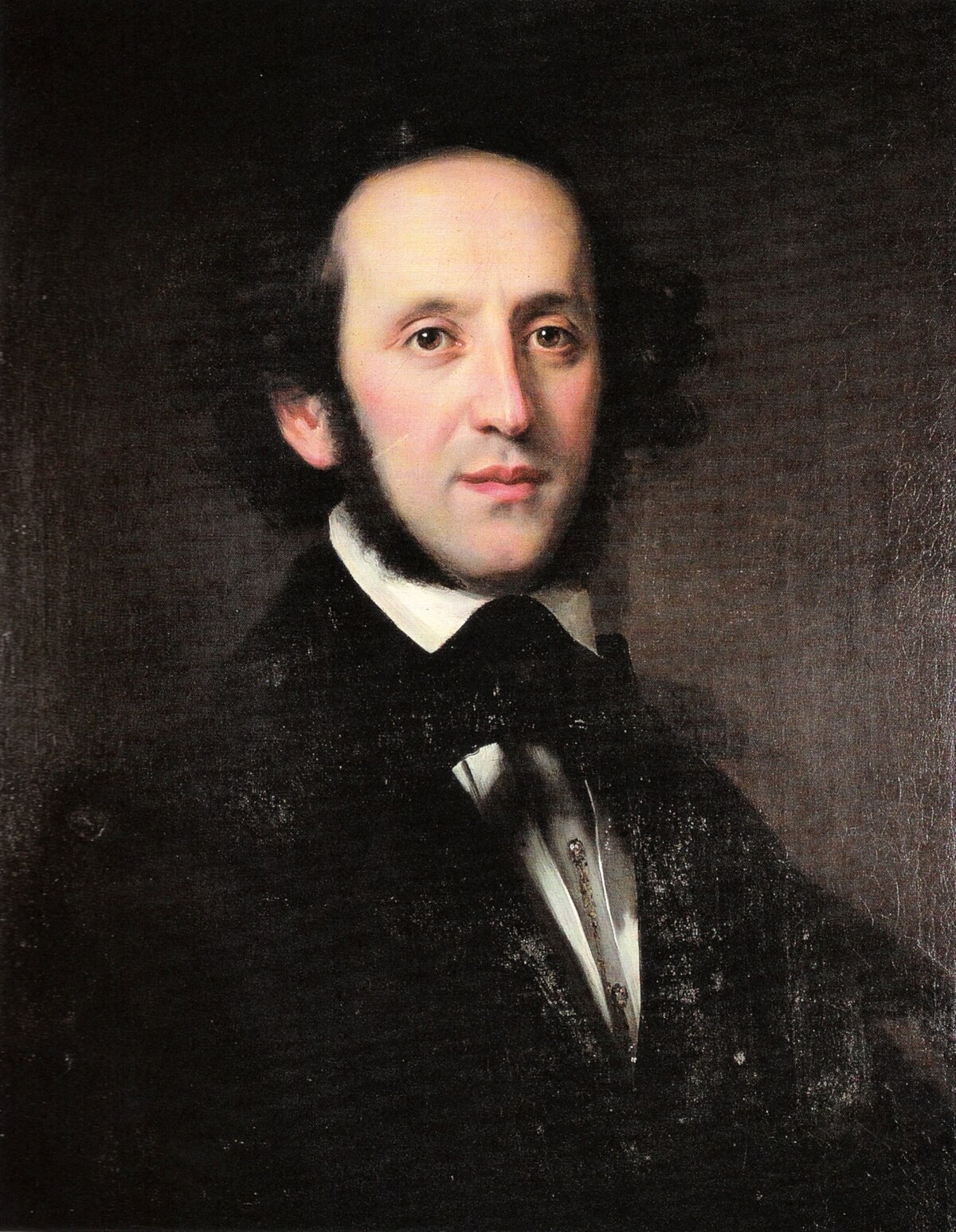
Felix Mendelssohn, born Jakob Ludwig Felix Mendelssohn Bartholdy on February 3, 1809, in Hamburg, Germany, was one of the most celebrated composers of the 19th century. A child prodigy, Mendelssohn became a towering figure in the world of classical music, known for his symphonies, concertos, oratorios, piano music, and chamber works. His life, marked by both incredible achievements and profound personal challenges, offers a fascinating glimpse into the world of a musical genius who bridged the Classical and Romantic eras. This article explores Mendelssohn’s life, his journey to fame, and the significant milestones that defined his career and legacy.
Early Life and Family Background
Felix Mendelssohn was born into a family of immense cultural and intellectual wealth. His grandfather, Moses Mendelssohn, was a prominent philosopher of the Jewish Enlightenment, and his father, Abraham Mendelssohn, was a successful banker. The Mendelssohn family was deeply embedded in the cultural and intellectual life of Germany, and Felix, along with his siblings, received an exceptional education.
From an early age, Mendelssohn was surrounded by music, literature, and the arts. His mother, Lea Salomon Mendelssohn, was a highly cultured woman who ensured that her children were well-versed in various disciplines. Felix began his formal music education under the tutelage of his mother and later studied with notable teachers such as Carl Friedrich Zelter, who introduced him to the works of Johann Sebastian Bach.
Mendelssohn’s childhood was marked by his extraordinary talent and prodigious output. By the age of twelve, he had already composed a number of works, including symphonies for strings, concertos, and chamber music. His early exposure to the classics, combined with his family’s intellectual environment, laid the foundation for his later success.
Early Compositions and Rise to Prominence
Felix Mendelssohn’s early works quickly established him as a composer of exceptional promise. At the age of sixteen, he composed the Octet for Strings in E-flat major, Op. 20, a work that remains one of his most beloved compositions. The Octet is a masterpiece of structural innovation and lyrical beauty, demonstrating a maturity far beyond Mendelssohn’s years.
The following year, in 1826, Mendelssohn composed the Overture to A Midsummer Night’s Dream, inspired by William Shakespeare’s play. This work, composed when he was just seventeen, is one of the earliest examples of programmatic music, where the music is intended to evoke specific images or stories. The Overture’s whimsical and fantastical character perfectly captures the spirit of Shakespeare’s play, and it includes the famous “Wedding March,” which has become a staple at wedding ceremonies worldwide.
These early successes were not mere youthful precocity; they were the beginnings of a career that would see Mendelssohn become one of the most respected composers in Europe. His works were characterized by their clarity of form, melodic inventiveness, and emotional depth, qualities that would define his music throughout his life.
Revival of Bach and the Gewandhaus Orchestra
One of Felix Mendelssohn’s most significant contributions to music history was his role in reviving the works of Johann Sebastian Bach, who had fallen into relative obscurity after his death in 1750. In 1829, Mendelssohn organized a performance of Bach’s St. Matthew Passion in Berlin, the first performance of the work since Bach’s death. This event is often credited with sparking a renewed interest in Bach’s music, leading to the “Bach Revival” that would elevate Bach to the status of one of the greatest composers of all time.
Mendelssohn’s dedication to Bach’s music was not only an act of homage but also a reflection of his deep respect for the Baroque master’s genius. This revival had a profound impact on the Western musical canon, ensuring that Bach’s works would be studied, performed, and revered by generations of musicians and audiences.
In 1835, Mendelssohn was appointed as the conductor of the Gewandhaus Orchestra in Leipzig, one of the oldest symphony orchestras in the world. Under his leadership, the Gewandhaus Orchestra became a premier ensemble, known for its precision and expressive power. Mendelssohn’s tenure at the Gewandhaus was marked by his commitment to both contemporary and classical music, as he championed works by his contemporaries, such as Robert Schumann, while also promoting the music of composers like Bach, Beethoven, and Mozart.
Mendelssohn’s influence extended beyond conducting; he played a pivotal role in the establishment of the Leipzig Conservatory in 1843, where he served as the first director. The conservatory attracted some of the finest musicians of the time and became one of the leading institutions for musical education in Europe.
Compositional Style and Major Works
Felix Mendelssohn’s music is often celebrated for its balance between the formal structures of the Classical period and the expressive lyricism of the Romantic era. His compositions are characterized by their clarity, elegance, and melodic richness, often infused with a sense of the picturesque and the poetic.
Among his major orchestral works are the Symphony No. 3 in A minor, Op. 56 (the “Scottish” Symphony) and the Symphony No. 4 in A major, Op. 90 (the “Italian” Symphony). The Scottish Symphony was inspired by Mendelssohn’s travels in Scotland, and it captures the rugged landscapes and melancholic atmosphere of the region. In contrast, the Italian Symphony is imbued with the warmth and vibrancy of Italy, reflecting Mendelssohn’s impressions of the country during his Grand Tour of Europe.
Mendelssohn’s Violin Concerto in E minor, Op. 64 is another cornerstone of his oeuvre. Composed in 1844, it remains one of the most popular and frequently performed violin concertos in the repertoire. The concerto is notable for its seamless integration of the soloist and orchestra, as well as its lyrical themes and virtuosic demands.
In the realm of choral music, Mendelssohn’s oratorios Elijah (1846) and St. Paul (1836) stand out as monumental achievements. Elijah, in particular, has been praised for its dramatic intensity and powerful choruses, drawing comparisons to the oratorios of Handel.
Mendelssohn also made significant contributions to piano literature, including his Lieder ohne Worte (Songs Without Words), a series of short lyrical piano pieces that exemplify his gift for melody and his ability to convey deep emotions in miniature forms.
Personal Life and Challenges
Despite his professional success, Mendelssohn’s life was not without personal challenges. He was deeply affected by the antisemitism that persisted in 19th-century Europe, particularly as he came from a Jewish family, although they converted to Christianity when he was a child. The Mendelssohn family adopted the additional surname Bartholdy to signify their Christian faith, but Felix always felt a complex relationship with his Jewish heritage.
Mendelssohn was also profoundly attached to his family, particularly to his sister Fanny, who was herself a gifted composer and pianist. Their close relationship was a source of inspiration and support for both, but her sudden death in May 1847 devastated him. Felix, already struggling with his health due to overwork, was unable to recover from the shock of her loss. He suffered a series of strokes and died on November 4, 1847, at the age of 38, in Leipzig.
Legacy and Influence
Felix Mendelssohn’s death at such a young age cut short a career that had already had a profound impact on the musical world. His legacy is preserved not only in his compositions but also in his contributions to music education, his role in the revival of Bach’s music, and his influence on subsequent generations of composers.
Mendelssohn’s music, with its blend of Classical form and Romantic expressiveness, served as a model for many later composers, including Johannes Brahms and Max Bruch. His works continue to be a staple of concert programs around the world, beloved for their melodic beauty, technical brilliance, and emotional depth.
In addition to his musical legacy, Mendelssohn’s impact on cultural institutions, such as the Gewandhaus Orchestra and the Leipzig Conservatory, helped shape the development of Western music in the 19th century. His efforts to promote the music of past masters and his commitment to artistic excellence left an indelible mark on the history of classical music.
Conclusion
Felix Mendelssohn was a prodigious talent whose contributions to classical music are immeasurable. From his early compositions that displayed a mastery of form and lyrical expression to his leadership in reviving the works of Bach, Mendelssohn’s influence on the musical world is profound and lasting.
His ability to balance tradition with innovation, his dedication to the preservation and promotion of great music, and his own compositions that continue to resonate with audiences make Mendelssohn a central figure in the history of Western music. Despite his relatively short life, Mendelssohn’s achievements have secured his place as one of the great composers of the 19th century, whose works remain an enduring testament to his genius.


