
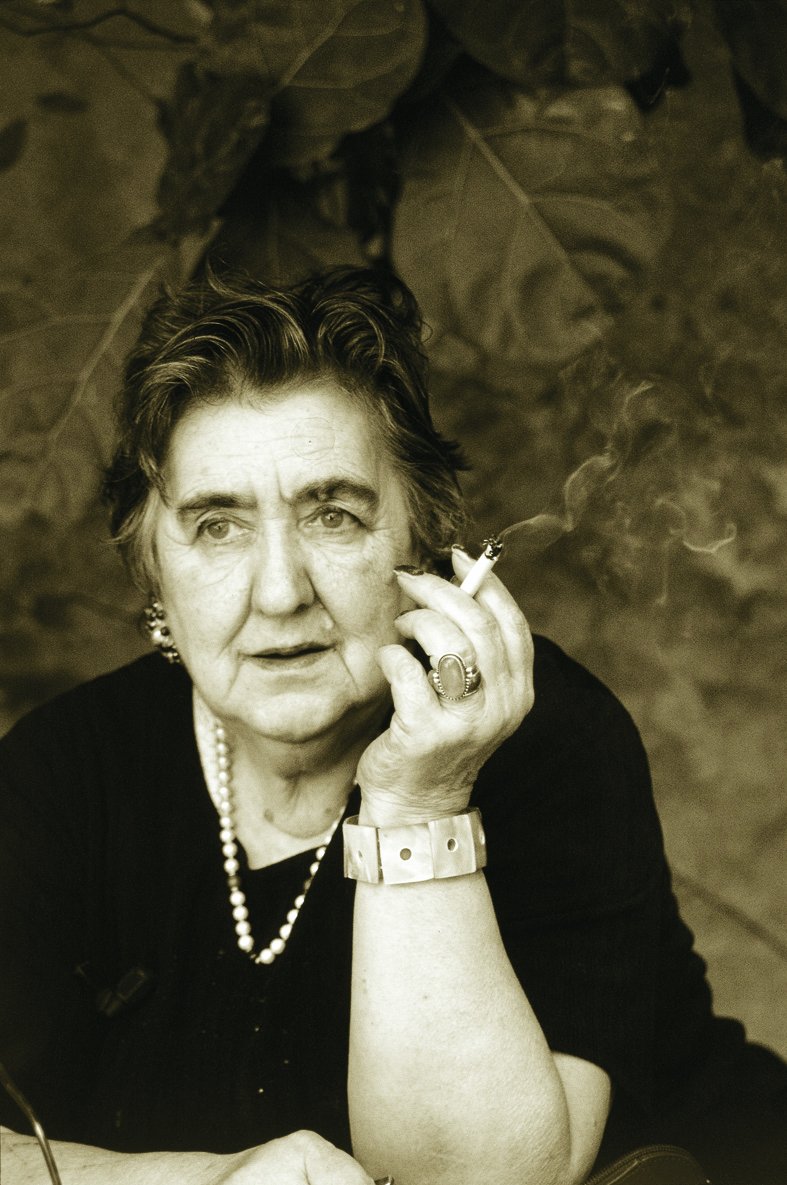
Alda Merini, a luminary of Italian poetry, was born on March 21, 1931, in Milan, Italy. Her life is a tapestry woven with brilliance and suffering, marked by her unique literary voice and her experiences with mental illness. Merini’s journey from a young poet to one of Italy’s most revered literary figures is a tale of resilience, creativity, and an indomitable spirit. This article delves deep into the life, fame, and significant milestones of Alda Merini, exploring the nuances of her life and the historical context that shaped her legacy.
Early Life and Education
Alda Merini was born into a modest family in Milan, the youngest of three siblings. Her early life was shaped by the economic challenges faced by her family, yet it was also rich with intellectual curiosity. She attended the “Laura Solera Mantegazza” professional institute, where she received her formal education. Despite her deep love for literature, Merini faced setbacks early on; she was denied admission to the prestigious Manzoni High School after failing the Italian entrance exam. This rejection, however, did not deter her. Instead, it fueled her determination to pursue a career in literature.
Even as a teenager, Merini displayed a remarkable talent for writing. She began writing poetry at the age of 15, and her early works caught the attention of influential literary figures. Giacinto Spagnoletti, an Italian literary critic and poet, was the first to recognize her talent. He became her mentor and helped her publish her first poems in 1950, which appeared in the anthology Antologia della poesia italiana 1909-1949.
The Shadows of Mental Illness
Merini’s early adulthood was marked by her first encounters with mental illness, a recurring theme throughout her life. In 1947, at the age of 16, she experienced what she later described as the “first shadows of her mind.” She was briefly interned in a psychiatric hospital, an experience that would profoundly influence her writing and worldview.
Despite these early struggles, Merini continued to write, and her talent did not go unnoticed. In 1951, with the encouragement of Nobel laureate Eugenio Montale, her work was included in the anthology Poetesse del Novecento. This marked a significant milestone in her literary career, establishing her as a voice to be reckoned with in Italian poetry.
Marriage, Motherhood, and Early Literary Success
In 1953, Alda Merini married Ettore Carniti, a baker from Milan. The couple had four daughters: Emanuela, Barbara, Flavia, and Simonetta. Despite the demands of motherhood, Merini continued to write, and in 1953, she published her first volume of poetry, La Presenza di Orfeo. This work was followed by Nozze Romane and Paura di Dio in 1955. These early collections were marked by a deep sense of spirituality and a preoccupation with the metaphysical, themes that would continue to permeate her work.
However, Merini’s life took a darker turn in the late 1950s. Struggling with mental illness, she was again institutionalized, this time for a much longer period. From 1965 to 1972, she spent several years in the psychiatric hospital “Paolo Pini” in Milan. This period of her life was marked by profound suffering and isolation, but it also became a source of deep artistic inspiration. The experiences she endured during her time in the asylum would later be transformed into some of her most powerful and haunting poetry.
Return to Writing and the Rise to Fame
Merini’s return to writing in the late 1970s marked the beginning of a new phase in her life and career. After years of silence, she began to write again, producing works that were deeply introspective and often harrowing in their portrayal of her experiences with mental illness. Her writings from this period are characterized by their raw emotional intensity and their exploration of themes such as madness, suffering, and the search for identity.
In 1984, Merini published La Terra Santa, a collection of poems that vividly depicted her experiences in the asylum. The book was a critical success and is widely regarded as one of her masterpieces. La Terra Santa won the prestigious Viareggio Prize and cemented Merini’s reputation as one of Italy’s most important contemporary poets.
During this period, Merini also formed a close relationship with Michele Pierri, a fellow poet. The two corresponded for years, and in 1983, they married. Merini moved to Pierri’s home in Taranto, where she continued to write prolifically. While in Taranto, she produced several important works, including La Gazza Ladra (1985) and her first prose work, L’altra verità. Diario di una diversa (1986). L’altra verità is particularly significant as it offers a deeply personal account of her time in psychiatric hospitals, blending reality with surreal, dreamlike imagery.
Later Years and Continued Literary Success
Merini returned to Milan in 1986 after separating from Pierri. The late 1980s and 1990s were a period of remarkable creativity and recognition for her. She continued to publish extensively, and her works from this period reflect a mature poet who had fully embraced her voice and style.
Her poetry from this era was marked by a more reflective tone, often exploring themes of love, loss, and the passage of time. Merini’s work continued to receive critical acclaim, and she was awarded numerous literary prizes, including the Librex-Guggenheim “Eugenio Montale” Prize for Poetry in 1993 and the Viareggio Prize in 1996 for her collection La Vita Facile.
Merini’s personal life during these years was characterized by a sense of renewed stability, despite ongoing health challenges. She lived in a small apartment in the Navigli district of Milan, where she became a well-known figure in the local community. Her home was often filled with visitors, including young poets, journalists, and admirers, who came to seek her wisdom and companionship.
In 2002, Merini published Folle, folle, folle d’amore per te, a collection of poems that celebrated love and passion, themes that had always been central to her work. The book included a foreword by Italian singer-songwriter Roberto Vecchioni, who had earlier composed a song in her honor titled “Canzone per Alda Merini.”
Legacy and Impact
Alda Merini passed away on November 1, 2009, at the age of 78, after battling bone cancer. Her death marked the end of a remarkable literary career, but her legacy continues to thrive. Merini’s poetry is celebrated for its emotional depth, lyrical beauty, and the raw honesty with which she depicted her struggles with mental illness.
Merini’s work has had a profound impact on Italian literature, particularly in the way it brought attention to issues of mental health and the stigmatization of those suffering from mental illness. Her poetry offers a powerful testament to the resilience of the human spirit and the ability to find beauty and meaning even in the darkest of circumstances.
In recognition of her contributions to literature, Google honored Merini with a Google Doodle on March 21, 2016, commemorating what would have been her 85th birthday. The doodle featured an image of Merini, surrounded by flowers, a fitting tribute to a poet whose work was often described as a “garden of words.”
Nuances and Historical Context
To fully appreciate Alda Merini’s work, it is essential to consider the historical and cultural context in which she lived and wrote. Merini came of age in post-war Italy, a period marked by significant social and political upheaval. The Italy of the 1950s and 60s was a country in transition, struggling to rebuild after the devastation of World War II while also grappling with issues such as industrialization, modernization, and the changing role of women in society.
Merini’s work reflects many of these tensions, particularly in her exploration of themes such as identity, marginalization, and the role of women in society. Her poetry often gives voice to those who have been silenced or marginalized, whether due to mental illness, gender, or social status.
Furthermore, Merini’s experiences with the psychiatric system in Italy offer valuable insights into the treatment of mental illness during the 20th century. Her writings provide a powerful critique of the dehumanizing aspects of institutionalization and challenge the stigma associated with mental illness.
Conclusion: The Enduring Influence of Alda Merini
Alda Merini’s life and work continue to resonate with readers around the world. Her poetry, with its blend of raw emotion, lyrical beauty, and profound insight, speaks to the universal human experiences of love, suffering, and the search for meaning. Merini’s ability to transform her personal struggles into art is a testament to her resilience and creativity.
As a poet, Merini leaves behind a legacy that is both deeply personal and universally relevant. Her work challenges us to confront the darker aspects of the human experience, while also offering a vision of hope, beauty, and redemption. In the years since her death, Merini’s influence has only grown, and she is now regarded as one of the most important voices in contemporary Italian literature.
Her life serves as an inspiration to those who struggle with mental illness, reminding us that even in the face of adversity, it is possible to create something beautiful and enduring. As we continue to read and reflect on her work, Alda Merini’s voice remains a vital and powerful presence in the world of poetry.


