
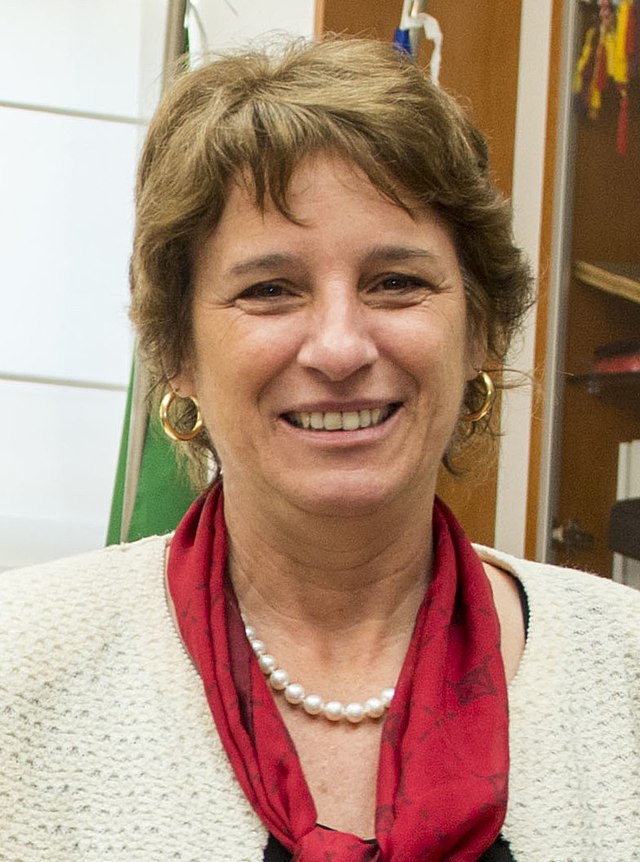
Cristina Messa, born on October 8, 1961, in Monza, Italy, is a distinguished figure in the realms of medicine, academia, and public administration. Her journey from a dedicated medical professional to one of Italy’s most prominent academic leaders and eventually a government minister is a testament to her profound impact on higher education and research in Italy. This article provides an in-depth exploration of Cristina Messa’s age, fame, and life highlights, offering detailed insights into her career and the broader historical context of her contributions to academia and public service.
Early Life and Education
Cristina Messa was born and raised in Monza, a city known for its historical and cultural significance in the Lombardy region of Italy. Her early education set the stage for a lifelong commitment to learning and excellence. Messa pursued her higher education in Medicine and Surgery, earning her degree with honors from the University of Milan in 1986. Her academic brilliance was evident early on, and she further specialized in Nuclear Medicine, obtaining her postgraduate degree in 1989 from the same institution.
Messa’s thirst for knowledge and her ambition to excel in her field led her to pursue several periods of study abroad, including in the United States and the United Kingdom. These experiences not only broadened her perspective but also equipped her with the skills and knowledge necessary to make significant contributions to the medical and academic fields upon her return to Italy.
Academic and Research Career
Cristina Messa’s academic career began in earnest at the San Raffaele Hospital in Milan, where she worked as a researcher. Her focus on diagnostic imaging and radiotherapy quickly established her as a leading expert in the field. In 2001, Messa was appointed as an associate professor at the University of Milan-Bicocca, a relatively new university that was rapidly gaining a reputation for its innovative approach to education and research.
By 2013, Messa had risen to the rank of full professor, reflecting her significant contributions to both teaching and research. Her work at the university was not limited to academia; she also held several administrative roles, including directing the Complex Operative Unit of Nuclear Medicine at the San Gerardo Hospital in Monza from 2005 to 2012. Additionally, Messa played a crucial role in the development of the Molecular Imaging Center, which later became part of the Technomed Foundation at the University of Milan-Bicocca. Her leadership in these roles helped to advance the field of nuclear medicine and improve patient outcomes through innovative diagnostic techniques.
First Female Rector of the University of Milan-Bicocca
In 2013, Cristina Messa achieved a historic milestone by becoming the first female rector of the University of Milan-Bicocca, and only the fourth woman to hold such a position at an Italian university. Her appointment as rector marked a significant moment in the history of Italian academia, where gender disparities in leadership positions have long been a challenge.
During her tenure as rector, which lasted until 2019, Messa implemented several key initiatives that significantly enhanced the university’s performance and reputation. Under her leadership, the University of Milan-Bicocca saw an expansion of its academic offerings, with new and innovative courses designed to meet the evolving needs of students and the job market. Messa also focused on improving student retention and success rates, implementing policies that reduced dropout rates and increased enrollments.
One of Messa’s most notable achievements as rector was her commitment to fostering a research-driven environment. She prioritized the enhancement of research activities, leading to substantial economic growth in patent-related activities. Her efforts were reflected in the university’s improved performance in regional competitiveness initiatives, as well as in the National Evaluation of Research Quality (VQR 2011-2014) and the selection of Departments of Excellence by the National Agency for the Evaluation of Universities and Research Institutes (ANVUR).
Messa’s leadership extended beyond the University of Milan-Bicocca. As a member of the Executive Committee of the Conference of Italian University Rectors (CRUI), she was responsible for the research portfolio, where she played a pivotal role in shaping national research policies. In 2017, she became the president of Italy’s first inter-university foundation, U41, further demonstrating her commitment to fostering collaboration and innovation within the academic community.
Institutional Roles and Contributions to the CNR
In addition to her academic roles, Cristina Messa has held several important positions at the national and European levels. From 2011 to 2015, she served as Vice President of the National Research Council (CNR), Italy’s largest public research institution. In this role, Messa was instrumental in advancing research initiatives that promoted innovation, industrial competitiveness, and the internationalization of Italy’s research system.
Messa’s work at the CNR included leading efforts to develop and implement the National Research Infrastructure Program (PNIR), a strategic initiative aimed at strengthening Italy’s research infrastructure and capabilities. Her contributions helped to create networks for the humanities and significantly bolstered large-scale infrastructure projects, which have had lasting impacts on the Italian research landscape.
Furthermore, Messa has been actively involved in European research initiatives. Since 2013, she has served as the Italian delegate to the Horizon 2020 program, the European Union’s flagship research and innovation program. Her involvement in Horizon 2020 has been crucial in securing funding and support for Italian research projects, enhancing the country’s role in the European research community.
Appointment as Minister of University and Research
Cristina Messa’s extensive experience in academia and research culminated in her appointment as Minister of University and Research in February 2021, under the government of Prime Minister Mario Draghi. Her appointment was widely celebrated as a recognition of her expertise and her commitment to advancing education and research in Italy.
As Minister, Messa has been tasked with overseeing the country’s higher education and research sectors during a time of significant challenges, including the ongoing COVID-19 pandemic. Her priorities have included ensuring the continuity of education and research activities, supporting students and faculty during the pandemic, and implementing reforms to strengthen Italy’s university and research systems.
Messa’s leadership as Minister has also focused on promoting international collaboration and enhancing the global competitiveness of Italian universities. She has been an advocate for increasing investment in research and innovation, recognizing their critical importance to Italy’s economic and social development. Her tenure as Minister has already seen significant progress in these areas, with new initiatives aimed at attracting international talent, fostering interdisciplinary research, and supporting the next generation of researchers.
Personal Life and Background
Cristina Messa’s personal life has been marked by a strong commitment to family and education. Although born in Monza, she grew up in Milan, where she developed a deep connection to the city and its academic institutions. Messa met her future husband, Paolo, during their high school years, and the couple later married and had two children, Beatrice and Giorgio.
Despite her demanding career, Messa has always prioritized her family, balancing her professional responsibilities with her role as a mother. Her daughter Beatrice pursued studies in languages at the University of Milan, while her son Giorgio attended a scientific high school. Messa’s dedication to her family and her ability to maintain a work-life balance have been a source of inspiration for many, particularly women in academia and public service.
Legacy and Impact
Cristina Messa’s career is a shining example of how dedication, expertise, and a commitment to excellence can lead to significant achievements in both academia and public service. Her impact on the University of Milan-Bicocca, the National Research Council, and now as Minister of University and Research has been profound, shaping the future of education and research in Italy.
Messa’s legacy is one of innovation, leadership, and a relentless pursuit of progress. Her efforts to improve the quality and accessibility of education, foster research and innovation, and promote gender equality in academia have set a new standard for future generations. As a trailblazer for women in leadership, Messa’s achievements continue to inspire and pave the way for greater diversity and inclusion in higher education and beyond.
Conclusion
Cristina Messa’s life and career are a testament to the power of knowledge, leadership, and a commitment to public service. From her early days as a medical student to her current role as Minister of University and Research, Messa has consistently demonstrated her ability to drive change and make a lasting impact. Her story is one of resilience, determination, and an unwavering belief in the importance of education and research as the foundation for a better future.
As Italy continues to navigate the challenges of the 21st century, Cristina Messa’s contributions will undoubtedly play a crucial role in shaping the country’s educational and research landscape. Her legacy serves as an enduring reminder of the transformative power of education and the critical role of leaders who are willing to push boundaries, challenge the status quo, and inspire others to do the same.


