
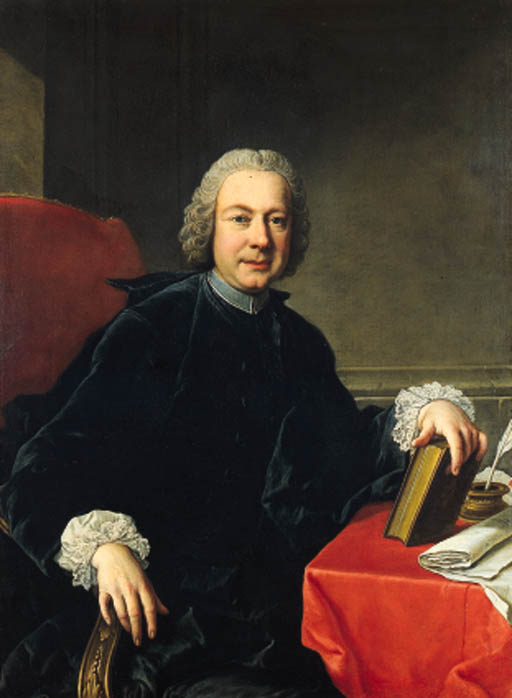
Pietro Metastasio, born Pietro Antonio Domenico Bonaventura Trapassi on January 3, 1698, in Rome, Italy, is a towering figure in the world of literature and music, renowned as the foremost librettist and dramatist of the 18th century. His works have left an indelible mark on Italian opera and the broader European cultural landscape. Metastasio’s life and career are not just a tale of artistic brilliance but also one of cultural reform and the evolution of operatic tradition.
Early Life and Background
Pietro Metastasio was born into a modest family. His father, Felice Trapassi, was an ex-sergeant in the Corsican regiment of Pope Alexander VIII, while his mother, Francesca Galastri, hailed from Florence. Despite their humble origins, the Trapassi family held deep roots in the cultural life of Rome. Pietro was the firstborn, followed by a younger brother, Leopoldo.
Metastasio’s early life was marked by tragedy. His mother passed away when he was just four years old, leaving his father to care for him and his brother. Despite the early loss, Metastasio showed remarkable intellectual promise. His precocious talent for poetry caught the attention of Gian Vincenzo Gravina, a prominent scholar and jurist, who became his mentor and protector.
Gravina was so impressed by young Pietro’s ability to improvise verse that he took him under his wing, changing his surname to the Hellenized “Metastasio,” which became his professional name. Under Gravina’s guidance, Metastasio received a comprehensive education, studying Latin, law, and literature. Gravina also introduced him to the cultural elite of Rome, including the members of the Arcadian Academy, where Metastasio’s poetic talents were showcased.
The Rise of a Prodigy
By the age of 12, Metastasio had translated Homer’s Iliad into Italian verse, an extraordinary feat for someone so young. At 14, he composed his first tragedy, Giustino, a work that displayed a maturity and depth far beyond his years. Gravina published the work in 1713, and it was met with critical acclaim, further solidifying Metastasio’s reputation as a prodigy.
However, the intense pressure of public performance and the competitive literary environment took a toll on Metastasio’s health. Gravina, concerned for his young protégé’s well-being, sent him to Calabria to recover under the care of the philosopher Gregorio Caloprese. The coastal air and Caloprese’s tutelage helped restore Metastasio’s health, and he continued to develop his literary talents.
In 1718, following the death of Gravina, Metastasio inherited a considerable fortune, which provided him with the financial independence to pursue his literary ambitions. His first significant work as a librettist, Endimione (Endymion), was composed in 1721 for the wedding of a nobleman. This serenata was well-received and marked the beginning of Metastasio’s career in the operatic world.
The Evolution of Metastasio’s Career
Metastasio’s career took a significant leap forward when he was commissioned to write Gli orti esperidi (The Gardens of the Hesperides) for the birthday of Empress Elisabeth Christine of Brunswick-Wolfenbüttel in 1722. The work was set to music by Nicola Porpora and performed by the celebrated castrato Farinelli, with whom Metastasio would form a lasting friendship. The success of Gli orti esperidi established Metastasio as a leading librettist, and his works began to be in high demand.
It was during this period that Metastasio became closely associated with Marianna Bulgarelli, known as “La Romanina,” a famous soprano of the time. Bulgarelli recognized Metastasio’s potential and encouraged him to focus on writing for the opera. She introduced him to the leading composers of the day, including Johann Adolf Hasse, Giovanni Battista Pergolesi, and Leonardo Vinci, who would go on to set many of Metastasio’s texts to music.
Living in Bulgarelli’s household, Metastasio found a nurturing environment where he could hone his craft. It was here that he wrote some of his most famous librettos, including Didone abbandonata (Dido Abandoned) in 1724, which brought him widespread fame. Didone abbandonata was quickly followed by other significant works such as Catone in Utica (Cato in Utica) in 1727 and Ezio in 1728. These works established Metastasio’s reputation as the leading dramatist of his time.
Court Poet in Vienna
In 1729, Metastasio’s life took a pivotal turn when he was invited to Vienna to become the court poet for the Habsburg Empire, succeeding Apostolo Zeno. This position was one of the most prestigious in Europe and provided Metastasio with the perfect platform to influence the development of opera on a grand scale.
During his time in Vienna, Metastasio entered what is often referred to as his “golden period.” His works from this era are characterized by their refined structure, lyrical beauty, and the deep emotional resonance of their characters. Among his most notable works are Demetrio (1731), Adriano in Siria (Adrian in Syria, 1732), and Olimpiade (The Olympiad, 1733). These librettos were set to music by the most prominent composers of the day and were performed across Europe, making Metastasio a household name.
Metastasio’s work was not confined to secular themes. He also composed religious texts, such as La Passione di Nostro Signore Gesù Cristo (The Passion of Our Lord Jesus Christ) in 1730, which was enormously popular and widely performed. His ability to convey deep religious sentiment through poetry was highly regarded, and his sacred works were as influential as his operatic librettos.
However, Metastasio’s success was not without personal challenges. His relationship with Marianna Bulgarelli became strained, and she eventually left the stage, which deeply affected him. Additionally, his position at the Viennese court required him to navigate the complex politics and social hierarchies of the Habsburg Empire, which could be challenging for someone of non-noble birth.
Later Years and Decline
As the years passed, Metastasio’s output began to slow, partly due to declining health and partly due to changing tastes in the operatic world. The Enlightenment brought new ideas that were often at odds with Metastasio’s classical and baroque sensibilities. His works, which were rooted in the ideals of the Italian Arcadian movement, began to seem outdated to some critics and audiences.
Despite these challenges, Metastasio continued to write and remained a central figure in Viennese cultural life. He became a mentor to the young Archduchess Maria Antonia, who would later become the famous Queen Marie Antoinette of France. He taught her poetry and music, and his influence on her early education was profound.
In 1768, Metastasio was honored by being elected to the Accademia della Crusca, a prestigious institution dedicated to preserving the Italian language. This recognition was a testament to his lasting impact on Italian literature and opera.
By the late 1770s, Metastasio had largely withdrawn from public life, focusing on his personal affairs and preparing his works for publication. He passed away on April 12, 1782, in Vienna, leaving behind a considerable fortune, which he bequeathed to the children of his longtime friend Niccolò Martines.
The Legacy of Pietro Metastasio
Pietro Metastasio’s legacy is vast and enduring. As the foremost librettist of the 18th century, his works played a crucial role in shaping the development of opera seria, a genre that dominated European stages for much of the 18th century. His librettos were set to music by nearly every major composer of the time, including Mozart, Gluck, and Haydn, and were performed in theaters across Europe, from Naples to London to St. Petersburg.
Metastasio’s influence extended beyond the realm of music. His poetic style, characterized by its clarity, elegance, and emotional depth, set a standard for Italian literature that would influence generations of writers. His works were admired not only for their artistic merit but also for their moral and philosophical content, which reflected the values of the Enlightenment while remaining rooted in the classical traditions of the Italian Renaissance.
Metastasio was also a key figure in the Arcadian movement, which sought to reform Italian poetry and drama by returning to the simplicity and clarity of classical models. His works embody the ideals of the Arcadians, combining poetic beauty with intellectual rigor and emotional authenticity.
Today, Metastasio’s works continue to be studied and performed, and his influence on the development of Western music and literature is widely recognized. His librettos, with their finely wrought characters and compelling narratives, remain as powerful and moving as they were in his own time, ensuring that his name will be remembered for generations to come.


