
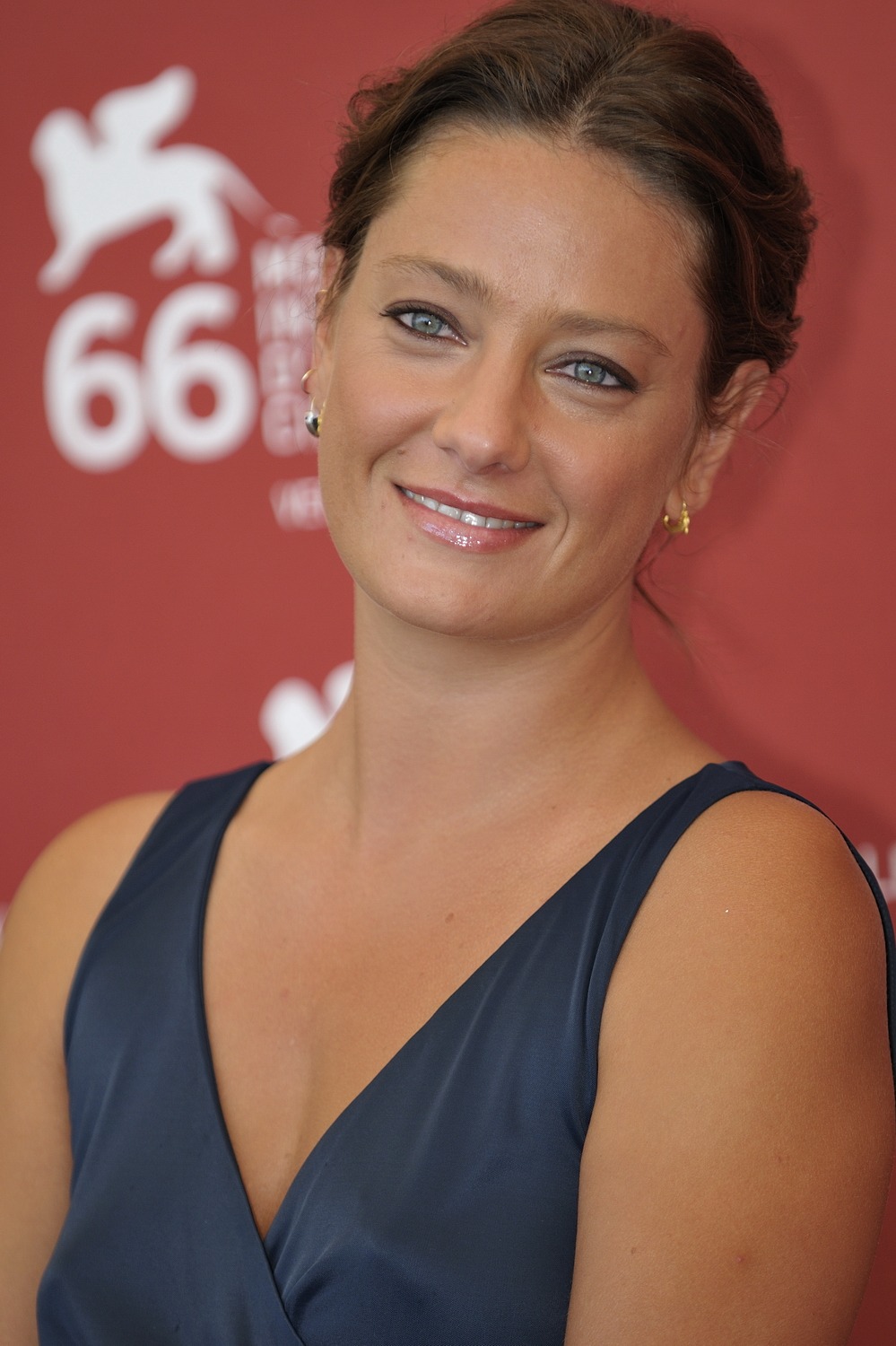
Giovanna Mezzogiorno, born on November 9, 1974, in Rome, Italy, is one of the most accomplished and respected actresses in Italian cinema. Her career, spanning over two decades, is marked by powerful performances in both film and theater. Known for her deep emotional range and ability to portray complex characters, Mezzogiorno has become a symbol of excellence in acting. In this article, we will delve into Giovanna Mezzogiorno’s early life, her rise to fame, and the significant highlights of her illustrious career, all while exploring the nuances and historical context of her journey.
Early Life and Background
Giovanna Mezzogiorno was born into a family deeply rooted in the arts. She is the daughter of the late Vittorio Mezzogiorno, a renowned Italian actor, and Cecilia Sacchi, an accomplished actress. Growing up in such a creatively charged environment, Giovanna was exposed to the world of theater and cinema from a very young age. This early exposure laid the foundation for her future career and instilled in her a profound appreciation for the performing arts.
Despite the expectations that came with being the daughter of two prominent actors, Giovanna chose to carve her own path. After completing her basic education in Italy, she moved to Paris, where she trained at the prestigious Workshop of Peter Brook, one of the most influential theater directors of the 20th century. Brook’s workshop was known for its rigorous approach to acting, focusing on the physical and emotional aspects of performance. This experience in Paris was pivotal in shaping Giovanna’s acting style, emphasizing authenticity and emotional depth.
Early Career and Breakthrough
Giovanna Mezzogiorno’s professional acting debut came in 1995, when she starred in the play “Qui est là,” directed by Peter Brook. Her performance in this production earned her critical acclaim and marked the beginning of a promising career. The following year, she was awarded the Coppola-Prati Prize for her role, a significant achievement for a young actress just starting out.
Her transition to the silver screen was equally successful. In 1997, Giovanna made her film debut in “Il viaggio della sposa” (The Bride’s Journey), directed by Sergio Rubini. Her portrayal of a young woman on a challenging journey across Italy won her widespread praise. The film showcased her ability to convey vulnerability and strength simultaneously, traits that would become hallmarks of her acting career. For this performance, she received several awards, including the Targa d’Argento for New Talents of Italian Cinema, a Globo d’Oro, and the prestigious Flaiano Prize for Best Actress.
Establishing Herself in Italian Cinema
Throughout the late 1990s and early 2000s, Giovanna Mezzogiorno continued to build her reputation as one of Italy’s most talented actresses. In 1998, she starred in “Del perduto amore” (Of Lost Love), directed by Michele Placido. Her performance earned her the Nastro d’Argento, Ciak d’Oro, and the Pasinetti Award for Best Actress. These accolades solidified her status as a leading actress in Italian cinema.
Giovanna’s ability to choose diverse and challenging roles set her apart from her peers. She was not content with simply being a star; she sought out roles that allowed her to explore the depths of human emotion and experience. This approach led her to collaborate with some of Italy’s most esteemed directors, including Gabriele Muccino and Ferzan Ozpetek.
Rise to International Fame: The Last Kiss and Facing Windows
Giovanna Mezzogiorno’s international breakthrough came in 2001 with the film L’ultimo bacio (The Last Kiss), directed by Gabriele Muccino. The film, which explores the lives and relationships of a group of friends in their late twenties, struck a chord with audiences both in Italy and abroad. Giovanna’s portrayal of Francesca, a woman grappling with the complexities of love and commitment, was both poignant and relatable. L’ultimo bacio became a cultural phenomenon, and Giovanna’s performance was central to its success.
Two years later, in 2003, Giovanna starred in La finestra di fronte (Facing Windows), directed by Ferzan Ozpetek. In this film, she played the role of Giovanna, a woman trapped in a loveless marriage who finds solace in her friendship with an elderly Holocaust survivor. The film was a critical and commercial success, and Giovanna’s performance was widely praised for its emotional depth and sensitivity. La finestra di fronte earned her several awards, including the David di Donatello Award for Best Actress, one of the highest honors in Italian cinema.
Continuing Success and Versatility
Throughout the 2000s and 2010s, Giovanna Mezzogiorno continued to take on a wide range of roles, demonstrating her versatility as an actress. She starred in films across various genres, from intense dramas to light-hearted comedies, always bringing a unique perspective to her characters.
In 2007, she starred in La bestia nel cuore (The Beast in the Heart), directed by Cristina Comencini. The film, which deals with the theme of repressed memories and family secrets, was Italy’s official entry for the Best Foreign Language Film category at the Academy Awards. Giovanna’s performance as Sabina, a woman struggling to uncover the truth about her past, was both haunting and powerful.
Her role in Vincere (2009), directed by Marco Bellocchio, further showcased her ability to tackle complex characters. In the film, she portrayed Ida Dalser, the secret wife of Italian dictator Benito Mussolini. The film received critical acclaim, and Giovanna’s portrayal of a woman driven to madness by her love for Mussolini was widely regarded as one of her finest performances.
Theater Work and Personal Life
In addition to her film career, Giovanna Mezzogiorno has remained deeply committed to the theater, the medium where she first honed her craft. She has appeared in several stage productions, continuing to challenge herself as an actress and exploring new dimensions of performance. Her work in theater has been an integral part of her artistic journey, allowing her to reconnect with the raw, live nature of acting that originally inspired her.
Despite her public persona, Giovanna has managed to keep much of her personal life private. She married film director and producer Alessio Fugolo in 2009, and the couple has twin sons, Zeno and Leone, born in 2011. Giovanna has often spoken about the importance of balancing her career with her responsibilities as a mother, and she has been praised for her ability to maintain a fulfilling personal life while continuing to pursue her artistic passions.
Influence and Legacy
Giovanna Mezzogiorno’s influence on Italian cinema is undeniable. Over the course of her career, she has become a symbol of artistic integrity and dedication to the craft of acting. Her performances have consistently been marked by a deep understanding of her characters, an emotional intensity that resonates with audiences, and a willingness to take on roles that challenge societal norms and expectations.
Her legacy is also tied to her ability to bring attention to important social issues through her work. Whether portraying a Holocaust survivor’s confidante, a woman fighting against fascism, or a mother uncovering dark family secrets, Giovanna has used her platform to shed light on the human condition in all its complexities.
As an actress who has successfully navigated both the Italian and international film industries, Giovanna Mezzogiorno has opened doors for future generations of Italian actors. Her work continues to inspire young performers who look up to her as a model of excellence in the arts.
Current and Future Projects
Giovanna Mezzogiorno remains active in the film industry, continually seeking out roles that allow her to explore new aspects of her craft. She has expressed a desire to work more extensively in international cinema, and her fluency in multiple languages positions her well for this transition.
In recent years, she has also taken on more roles behind the camera, expressing an interest in directing and producing. This expansion of her career into different areas of filmmaking reflects her commitment to storytelling and her desire to contribute to the arts in new and meaningful ways.
Conclusion
Giovanna Mezzogiorno’s journey from the daughter of renowned actors to one of Italy’s most respected actresses is a story of talent, perseverance, and a deep love for the craft of acting. Her career is marked by a series of powerful performances that have left an indelible mark on Italian cinema and beyond.
As she continues to evolve as an artist, taking on new challenges and exploring different facets of her creativity, Giovanna Mezzogiorno’s influence is sure to grow. Her legacy as an actress who combines beauty, intelligence, and emotional depth will endure, inspiring future generations of performers and solidifying her place in the history of cinema.


