
Early Life and Background
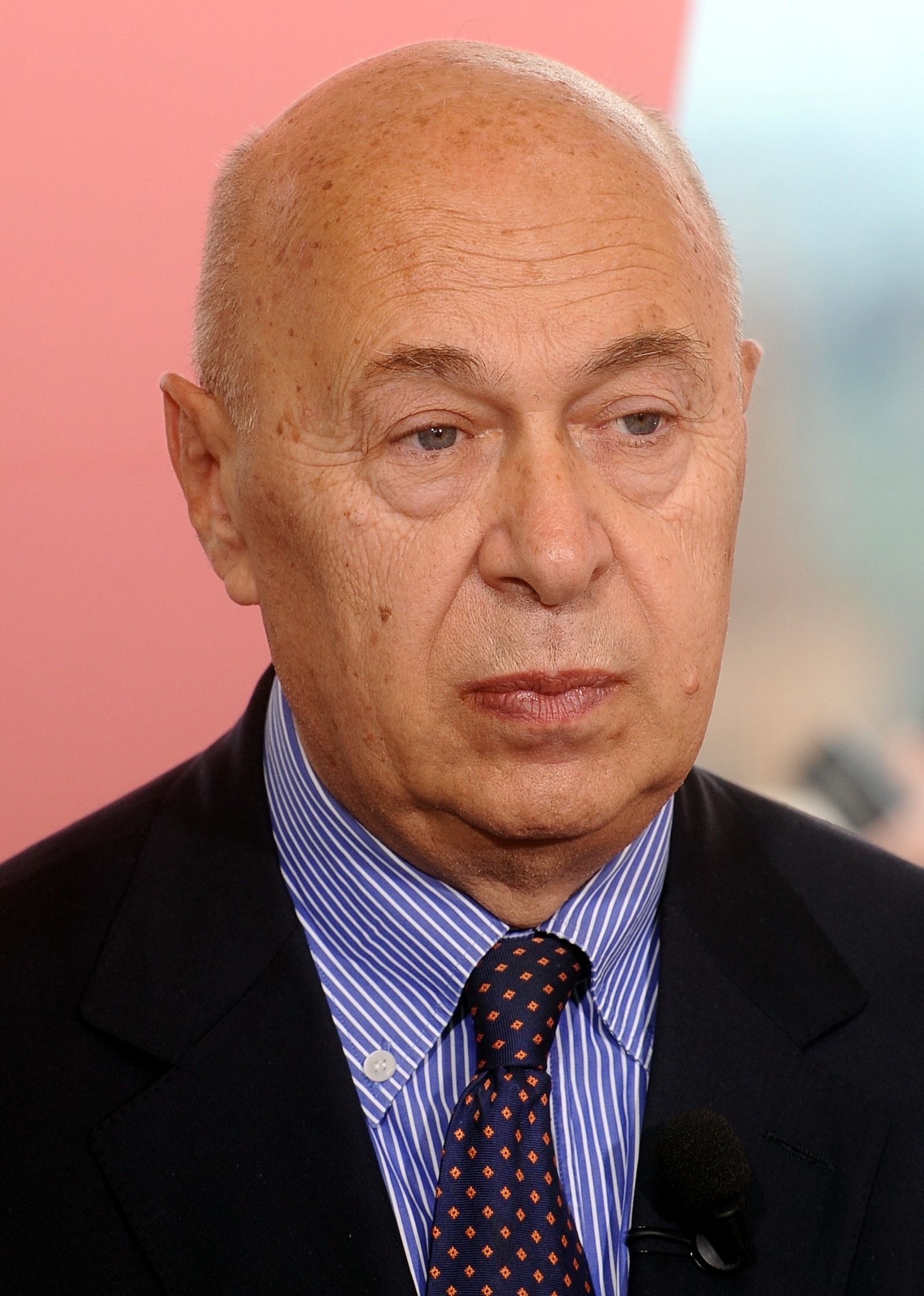
Paolo Mieli, a prominent Italian journalist, historian, and essayist, was born on February 25, 1949, in Milan, Italy. Coming from a family with a deep journalistic tradition, Mieli was influenced by his father, Renato Mieli, a well-respected journalist and founder of ANSA (Agenzia Nazionale Stampa Associata), Italy’s premier news agency. Growing up in a Jewish family in post-war Italy, Mieli’s early life was shaped by the complex social and political dynamics of the time, which later became central to his professional life.
Early Journalism Career and Political Engagement
Mieli’s career in journalism began at a remarkably young age. By the time he was 18, he had already started working at L’Espresso, one of Italy’s leading weekly magazines. His early years in journalism coincided with a period of significant political upheaval in Italy, particularly the rise of the student and workers’ movements of the late 1960s. During this time, Mieli was actively involved in the far-left political group Potere Operaio, which was part of the extraparliamentary left-wing movement in Italy. This experience deeply influenced his early journalistic work, as he navigated the tension between activism and reporting.
In 1971, Mieli was one of the signatories of an open letter published in L’Espresso regarding the case of Giuseppe Pinelli, an anarchist who died under suspicious circumstances while in police custody during the investigation of the Piazza Fontana bombing. This event marked a significant moment in Italian history and Mieli’s involvement highlighted his early commitment to social justice and investigative journalism.
Transition to Historical Journalism
As Mieli’s career progressed, his approach to journalism evolved. Influenced by his academic background in modern history, which he studied at the University of Rome under the guidance of renowned historians such as Rosario Romeo and Renzo De Felice, Mieli began to shift away from the radicalism of his youth. His focus turned towards a more moderate and analytical approach to journalism, emphasizing the importance of historical context in understanding current events.
This transition was evident in his writing and editorial work, where he began to apply a historical lens to contemporary issues. His relationship with L’Espresso continued to grow, and under the mentorship of Livio Zanetti, the magazine’s editor-in-chief, Mieli honed his skills as a historian-journalist, blending rigorous historical analysis with journalistic inquiry.
The 1980s and 1990s: Rise to Prominence
In 1985, Mieli moved to la Repubblica, where he worked for about a year and a half before joining La Stampa. His work at these major Italian newspapers further solidified his reputation as a leading journalist. On May 21, 1990, Mieli was appointed editor-in-chief of La Stampa, a role in which he made significant editorial contributions that helped modernize the newspaper.
Mieli’s editorial philosophy, which would later be termed “mielismo,” was characterized by a blend of traditional journalism with a modern sensibility that acknowledged the influence of television and new media on public discourse. He sought to make La Stampa more accessible and relevant to a broader audience, without sacrificing the newspaper’s journalistic integrity.
In September 1992, Mieli took on the role of editor-in-chief of the Corriere della Sera, Italy’s most prestigious newspaper. His tenure at the Corriere was marked by his efforts to modernize the paper, both in terms of content and style. Mieli introduced a more concise and direct form of journalism that resonated with the changing media landscape, where television was increasingly competing with print for the public’s attention.
During the turbulent years of Tangentopoli—the nationwide corruption scandal that rocked Italy in the early 1990s—Mieli steered the Corriere della Sera through one of the most challenging periods in Italian journalism. He maintained the newspaper’s independence by ensuring balanced reporting that held both public and private powers accountable. His leadership during this time reinforced the Corriere’s reputation as a cornerstone of Italian journalism.
Editorial Leadership and Influence
Paolo Mieli stepped down as editor-in-chief of the Corriere della Sera on May 7, 1997, handing over the reins to Ferruccio de Bortoli. However, Mieli remained an influential figure within the RCS MediaGroup, the newspaper’s publishing house, serving as its editorial director. In this capacity, Mieli continued to shape the editorial direction of the group, overseeing content across various platforms and ensuring that the Corriere maintained its position as a leading voice in Italian and international journalism.
Following the death of Indro Montanelli, one of Italy’s most revered journalists, Mieli took on the responsibility of managing the Corriere’s daily “letters to the editor” section, engaging directly with readers on a variety of topics, particularly those related to history. This role allowed Mieli to continue his work as a historian-journalist, providing insightful commentary on historical events and their relevance to contemporary issues.
The 2000s: A Return to Leadership
In 2003, Mieli was briefly appointed as the designated president of RAI, Italy’s national public broadcasting company. However, he quickly withdrew from the position, citing a lack of sufficient support for his editorial vision. This decision highlighted Mieli’s commitment to editorial independence and his unwillingness to compromise on his principles.
Mieli returned to the Corriere della Sera as editor-in-chief on December 24, 2004, succeeding Stefano Folli. His second tenure at the Corriere was marked by a continued focus on innovation and adaptation to the changing media environment. Under his leadership, the newspaper not only maintained its authoritative voice but also expanded its digital presence, adapting to the growing importance of online journalism.
In March 2009, Mieli once again handed over the editorship of the Corriere to Ferruccio de Bortoli, this time moving on to become the president of RCS Libri, the publishing arm of RCS MediaGroup. In this role, Mieli oversaw the publication of numerous significant works, furthering his influence in the Italian literary and intellectual scene.
The 2010s: Television and Historical Commentary
The 2010s saw Mieli expand his influence into television, where he became a familiar face on RAI, particularly through his involvement in programs focused on historical topics. Mieli was a key figure in RAI’s “Progetto Storia,” a series of programs aimed at making history accessible to a broad audience. He served as a host, commentator, and author on shows such as Correva l’anno, La grande storia, and Passato e Presente, bringing his deep historical knowledge and journalistic expertise to viewers across Italy.
In addition to his television work, Mieli continued to contribute to the Corriere della Sera, writing editorials and cultural reviews. He also directed historical essay collections for Rizzoli and curated a series on historical topics for BUR, further cementing his status as one of Italy’s foremost public intellectuals.
The 2020s: Continued Impact and Legacy
In 2020, Paolo Mieli was reaffirmed as the host of Passato e Presente, a program produced by RAI Cultura that explores historical events and their impact on the present. The show, which airs daily on RAI Tre and is repeated on RAI Storia, has become a cornerstone of Mieli’s work, allowing him to continue educating and engaging with the public on historical issues.
In addition to his television work, Mieli has been a regular commentator on Radio 24’s 24 Mattino, where he discusses the day’s news and provides a historical perspective on current events. His involvement in radio and television, combined with his ongoing editorial work, demonstrates Mieli’s versatility as a journalist and historian.
In 2021, Mieli was appointed president of the jury for the prestigious Viareggio Repaci Literary Prize, further recognizing his contributions to Italian culture and literature. This role highlights Mieli’s continued influence in shaping the intellectual and cultural discourse in Italy.
Conclusion
Paolo Mieli’s career is a testament to the enduring power of journalism and the importance of historical context in understanding the present. From his early days as a young journalist navigating the political upheavals of the 1960s, to his leadership roles at Italy’s most influential newspapers, Mieli has consistently demonstrated a commitment to truth, integrity, and intellectual rigor.
His work has not only shaped public discourse in Italy but has also influenced the broader fields of journalism and history. Mieli’s ability to blend historical analysis with contemporary commentary has made him a unique and respected voice in Italian media. As he continues to engage with the public through television, radio, and print, Paolo Mieli remains a vital figure in Italian journalism, a guardian of history, and a guide to understanding the complex world we live in.


