
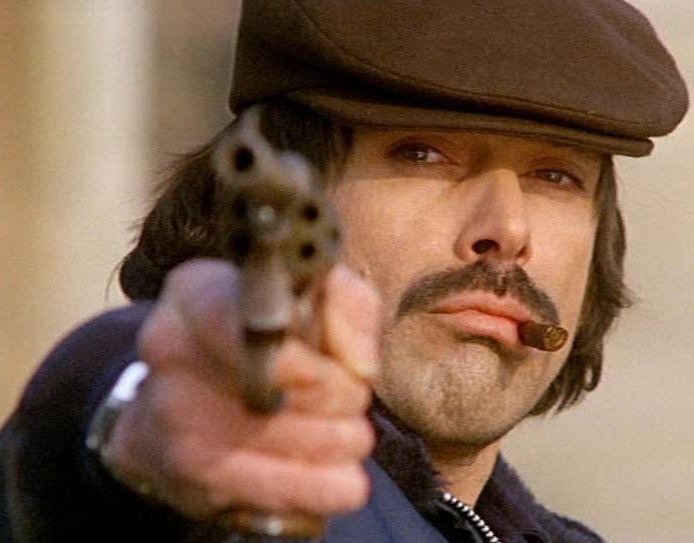
Tomas Milian, born Tomás Quintín Rodriguez Varona y Milian on March 3, 1933, in Havana, Cuba, is remembered as one of the most versatile actors of his generation. Known for his compelling performances in both Italian cinema and Hollywood, Milian’s career spanned over five decades, making him a beloved figure in international film. From his early life in Cuba to his rise in American and European cinema, Tomas Milian’s journey reflects a rich tapestry of talent, resilience, and adaptability.
Early Life and Background
Tomas Milian was born into a turbulent political environment in Cuba. His father, Tomás Rodriguez, was a general in the regime of Gerardo Machado. After a coup led by Fulgencio Batista, Milian’s father faced arrest, and the young Tomas experienced the trauma of his father’s suicide on December 31, 1945, when he was just 12 years old. This tragic event deeply impacted him, prompting a desire to leave his homeland. In the 1950s, Milian moved to the United States, seeking a fresh start away from his painful memories in Cuba.
Upon arriving in the United States, Milian settled in Miami and pursued his passion for acting. He enrolled at the University of Miami’s Theater Academy, where he honed his craft before moving to New York City. It was here, at the prestigious Actor’s Studio, that Milian truly began to develop his acting skills, driven by his desire to express himself and escape his troubled past. His early years in America were marked by struggle, but also by a deep commitment to his craft, as he participated in various theatrical productions, including performances on Broadway.
Rise to Fame in Italy
In 1959, Tomas Milian’s career took a significant turn when he traveled to Italy. His participation in the Festival of Spoleto, where he performed in a pantomime, caught the attention of Italian director Mauro Bolognini. This opportunity marked the beginning of Milian’s illustrious career in Italian cinema. His ability to bring depth and authenticity to his roles quickly made him a sought-after actor.
During the early 1960s, Milian appeared in several Italian films that showcased his versatility. His notable works from this period include “Il bell’Antonio” and “Madamigella di Maupin” directed by Mauro Bolognini, “L’imprevisto” by Alberto Lattuada, “Un giorno da leoni” by Nanni Loy, and “Boccaccio ’70” by Luchino Visconti. These films were instrumental in establishing Milian as a prominent figure in Italian cinema. His performances were characterized by a unique blend of intensity and sensitivity, making him a favorite among directors and audiences alike.
Milian’s dissatisfaction with the limited roles and dubbing in Italian cinema led him to shift his focus towards more popular genres. This decision proved to be pivotal as it allowed him to showcase his talent in the spaghetti western genre. His collaboration with directors like Sergio Sollima and Lucio Fulci resulted in iconic performances in films such as “The Bounty Killer,” “La resa dei conti,” “I quattro dell’apocalisse,” and “Banditi a Milano.” These roles not only cemented his reputation as a versatile actor but also made him a cult figure in the genre.
The Icon of Italian Spaghetti Westerns and Poliziotteschi
The 1960s and 1970s were a golden era for Tomas Milian as he became one of the most recognizable faces in the spaghetti western genre. His portrayal of complex characters, often anti-heroes, resonated with audiences who were drawn to his rugged charisma and intense screen presence. In Sergio Sollima’s “La resa dei conti,” Milian’s portrayal of Cuchillo, a cunning Mexican bandit, became legendary, earning him a permanent place in the pantheon of spaghetti western stars.
Milian’s transition from westerns to crime films, particularly the Italian poliziotteschi genre, showcased his ability to adapt and reinvent himself. The poliziotteschi films, known for their gritty depiction of crime and justice, provided Milian with roles that were a stark contrast to his earlier work in westerns. His collaboration with director Umberto Lenzi led to several successful films such as “Milano odia: la polizia non può sparare,” “Il giustiziere sfida la città,” and “Roma a mano armata.” These films, initially overlooked by critics, later gained cult status and are considered classics of the genre.
A significant factor in Milian’s success in these roles was his collaboration with Ferruccio Amendola, a voice actor who provided the distinctive voice for many of Milian’s characters in Italian films. This partnership helped shape Milian’s screen persona, making him even more popular among Italian audiences.
Iconic Roles and Characters
One of Tomas Milian’s most memorable characters was that of Nico Giraldi, a tough, street-smart cop who became the protagonist of a series of successful films directed by Bruno Corbucci. These films, including “Squadra antifurto,” “Squadra antitruffa,” “Il figlio dello sceicco,” and “Squadra antimafia,” were hugely popular in Italy and established Milian as a household name. His portrayal of Giraldi, a character who combined toughness with a sense of humor, resonated with audiences who appreciated his ability to balance action with comedy.
Another iconic character played by Milian was Er Monnezza, a small-time thief with a big personality. This role, along with his portrayal of Nico Giraldi, showcased Milian’s ability to bring depth and humor to his characters, making them relatable and endearing to audiences. His performances in these roles demonstrated his range as an actor, capable of shifting effortlessly between drama and comedy.
Hollywood and Later Career
Despite his success in Italy, Tomas Milian never lost his desire to explore new opportunities. In the early 1980s, he returned to the United States, where he continued to act in both films and television. His American film credits include “Revenge” by Tony Scott, “Havana” by Sydney Pollack, “JFK” by Oliver Stone, and “Amistad” by Steven Spielberg. These roles, though smaller than his leading parts in Italy, allowed Milian to work with some of the most respected directors in Hollywood.
Milian also made appearances in popular American television series such as “Murder, She Wrote,” “Oz,” and “Law and Order.” Although his role in the sitcom “Frannie’s Turn” was short-lived, Milian continued to work steadily, proving his resilience and adaptability as an actor.
In the 2000s, Milian continued to work in both American and international cinema, appearing in films like “Traffic” by Steven Soderbergh and “The Lost City” directed by Andy Garcia. His final years in the film industry were marked by a return to the dramatic roles that had defined his early career, demonstrating his enduring passion for acting and storytelling.
Legacy and Impact
Tomas Milian passed away on March 22, 2017, in Miami at the age of 84, leaving behind a rich legacy in both European and American cinema. His career is a testament to his versatility as an actor and his ability to transcend cultural and linguistic barriers. Milian’s performances were marked by a profound emotional depth and a commitment to authenticity, qualities that have earned him a lasting place in the hearts of audiences worldwide.
Milian’s contribution to cinema, particularly in Italy, cannot be overstated. He was more than just an actor; he was a cultural icon who helped shape the landscape of Italian genre cinema. His ability to embody a wide range of characters, from bandits to policemen to small-time crooks, showcased his unique talent and left an indelible mark on the film industry.
In conclusion, Tomas Milian’s life and career were characterized by a relentless pursuit of his craft and a willingness to take risks. From his early days in Cuba to his rise as a star in Italy and Hollywood, Milian’s journey is a story of resilience, talent, and a passion for storytelling that continues to inspire actors and filmmakers around the world. His legacy endures through the many films that continue to captivate audiences, ensuring that Tomas Milian will be remembered as one of the greats in the history of cinema.


