
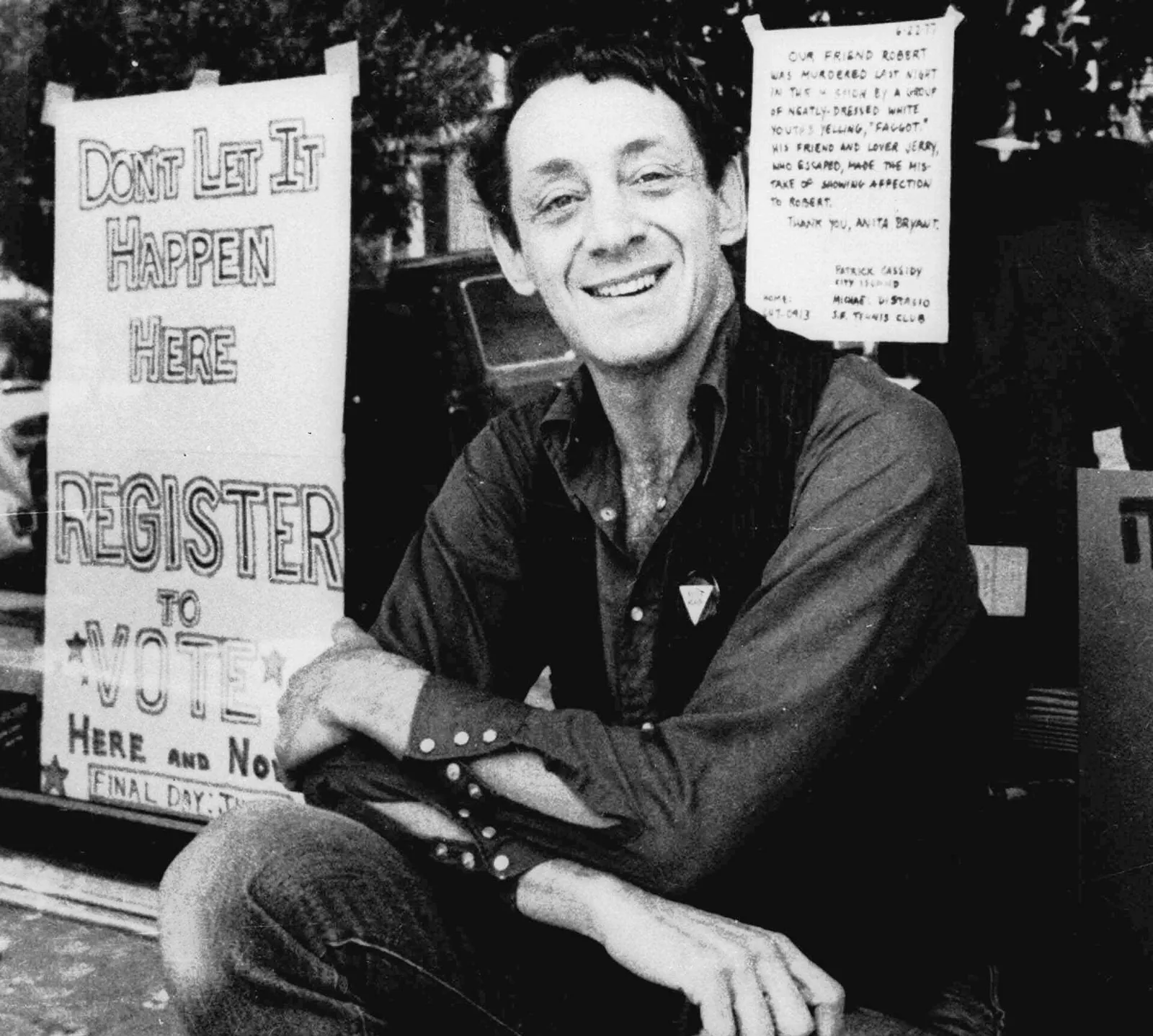
Harvey Milk, a name that resonates deeply within the LGBTQ+ community and beyond, is remembered as a trailblazing activist and the first openly gay elected official in California. Born on May 22, 1930, in Woodmere, New York, Milk’s journey from a closeted young man to a symbol of courage and equality is both inspiring and tragic. His life, career, and untimely death have had a profound impact on the fight for LGBTQ+ rights in the United States and around the world.
Early Life and Career
Harvey Bernard Milk was born into a Jewish family of Lithuanian descent. Growing up in a conservative environment, Milk’s early life was marked by a struggle with his sexual identity. During his youth, he kept his homosexuality hidden, conforming to societal expectations while inwardly grappling with his true self. After graduating from high school, Milk attended the New York State College for Teachers in Albany, where he majored in mathematics.
In 1951, Harvey Milk joined the United States Navy, serving during the Korean War. He was honorably discharged in 1955 with the rank of lieutenant. Following his military service, Milk returned to New York and began working as a public school teacher on Long Island. However, his passion for education was short-lived, as Milk became increasingly disillusioned with the conservative atmosphere and the necessity of concealing his sexual orientation.
After leaving his teaching position, Milk worked as a researcher and financial analyst at Bache & Company on Wall Street. Despite his success in the financial world, he found the corporate environment stifling, particularly because of the need to hide his homosexuality. The oppressive culture of the time made it difficult for anyone in the LGBTQ+ community to live openly, and this struggle for authenticity would later fuel Milk’s activism.
A Move to San Francisco: The Beginning of Activism
In 1972, Harvey Milk relocated to San Francisco, a city known for its vibrant counterculture and emerging gay rights movement. It was in San Francisco’s Castro District, a neighborhood that had become a haven for the LGBTQ+ community, that Milk found both a new home and a sense of purpose. He opened a camera store, Castro Camera, which quickly became a community hub and the headquarters for his future political campaigns.
The early 1970s were a time of social upheaval in the United States, with various civil rights movements gaining momentum. The LGBTQ+ community, however, remained marginalized, often facing violent backlash. Milk, energized by the spirit of the times and the desire to live openly, decided to enter the political arena. He ran for a seat on the San Francisco Board of Supervisors in 1973, despite having no formal political experience, limited financial resources, and facing significant opposition—even from within the gay community.
Although Milk’s first campaign was unsuccessful, he was undeterred. He realized that visibility was crucial for the LGBTQ+ community and that representation mattered. Undaunted by his initial loss, he continued to build his political base, focusing on the needs and rights of the gay community while also addressing broader issues such as affordable housing, public transportation, and the rights of minorities.
The Castro Street Fair and Political Ascent
Harvey Milk’s first significant breakthrough came in 1974 when he organized the Castro Street Fair, an event aimed at promoting the businesses in the Castro District and fostering a sense of community. The fair was a resounding success, cementing Milk’s status as a local leader and earning him the nickname “The Mayor of Castro Street.” This event marked the beginning of Milk’s transformation from a small business owner to a prominent political figure.
Building on this momentum, Milk ran for the Board of Supervisors again in 1975. Although he lost for the second time, his campaign had a much broader impact, garnering support from various progressive groups and individuals. His visibility as a gay man in politics was revolutionary at a time when homosexuality was still widely stigmatized. Milk’s camera store became the epicenter of his campaign, and his tireless efforts to rally the community began to pay off.
San Francisco’s political landscape was changing, and in 1977, Harvey Milk’s perseverance finally bore fruit. That year, he won a seat on the Board of Supervisors, becoming the first openly gay elected official in California. His victory was not just a personal achievement; it was a milestone for the LGBTQ+ movement and a beacon of hope for countless others who had been living in the shadows.
Harvey Milk’s Impact on San Francisco and the LGBTQ+ Movement
Once in office, Harvey Milk wasted no time in pushing for change. He focused on issues that affected both the LGBTQ+ community and the broader population of San Francisco. One of his first acts was to sponsor a civil rights bill that prohibited discrimination based on sexual orientation. The ordinance, which passed with overwhelming support, was one of the most comprehensive in the country at the time and set a precedent for future legislation across the United States.
Milk also played a key role in defeating Proposition 6, also known as the Briggs Initiative, a 1978 California ballot measure that sought to ban gay and lesbian individuals from working in public schools. The initiative was spearheaded by State Senator John Briggs and had garnered significant support from conservative and religious groups. Milk recognized the existential threat that Proposition 6 posed to the LGBTQ+ community and campaigned vigorously against it. His efforts, along with those of many other activists, ultimately led to the proposition’s defeat, a landmark victory for gay rights in America.
In addition to his legislative work, Milk was a powerful orator, known for his ability to inspire and mobilize people. One of his most famous speeches, delivered during the 1978 Gay Pride parade, called on LGBTQ+ individuals to come out of the closet and live openly. He believed that visibility was the key to acceptance and that by showing the world who they truly were, LGBTQ+ people could break down the barriers of prejudice and fear.
The Tragic Assassination of Harvey Milk
Tragically, Harvey Milk’s life and career were cut short on November 27, 1978, when he was assassinated by Dan White, a former San Francisco supervisor. White had resigned from his position earlier that year but sought to be reinstated after a change of heart. Mayor George Moscone, who had appointed Milk, refused White’s request, leading to the fateful day when White entered City Hall, killed Moscone, and then shot Milk in his office.
The assassination sent shockwaves through San Francisco and the entire nation. Harvey Milk was just 48 years old at the time of his death. His murder, along with that of Mayor Moscone, highlighted the deep-seated homophobia and political tensions of the time. The LGBTQ+ community was devastated, but Milk’s legacy would not be forgotten.
The trial of Dan White added insult to injury. White’s defense team employed what became known as the “Twinkie defense,” arguing that his consumption of junk food was a sign of diminished mental capacity. The jury ultimately convicted White of voluntary manslaughter rather than first-degree murder, and he was sentenced to just seven years and eight months in prison. The leniency of the sentence sparked outrage and led to the White Night Riots, a series of violent protests in San Francisco.
Harvey Milk’s Legacy
Despite the tragic end to his life, Harvey Milk’s legacy endures. He is remembered as a pioneer of the gay rights movement and a symbol of courage in the face of adversity. His life’s work laid the groundwork for future generations of LGBTQ+ activists and politicians, and his influence continues to be felt today.
In 2008, Harvey Milk’s life was immortalized in the film “Milk,” directed by Gus Van Sant and starring Sean Penn, who won an Academy Award for his portrayal of Milk. The film brought Milk’s story to a global audience and reignited interest in his contributions to the fight for equality.
In recognition of his impact, Harvey Milk has been posthumously honored with numerous awards and memorials. In 2009, he was awarded the Presidential Medal of Freedom, the highest civilian honor in the United States, by President Barack Obama. Additionally, May 22, his birthday, is celebrated as Harvey Milk Day in California, a day of reflection and activism.
Harvey Milk’s story is a powerful reminder of the importance of standing up for one’s beliefs, even in the face of overwhelming opposition. His life and legacy continue to inspire those who fight for justice and equality, making him a timeless figure in the ongoing struggle for LGBTQ+ rights.
Conclusion
Harvey Milk was more than just a politician; he was a symbol of hope for a community that had long been marginalized and oppressed. His determination to live openly and fight for the rights of LGBTQ+ individuals helped to change the course of history. Milk’s legacy is a testament to the power of visibility and the importance of representation in all areas of society.
Today, more than four decades after his death, Harvey Milk’s name remains synonymous with courage, resilience, and the enduring fight for equality. His life serves as a beacon for those who continue to advocate for LGBTQ+ rights, reminding us that change is possible when people come together to demand it.


