
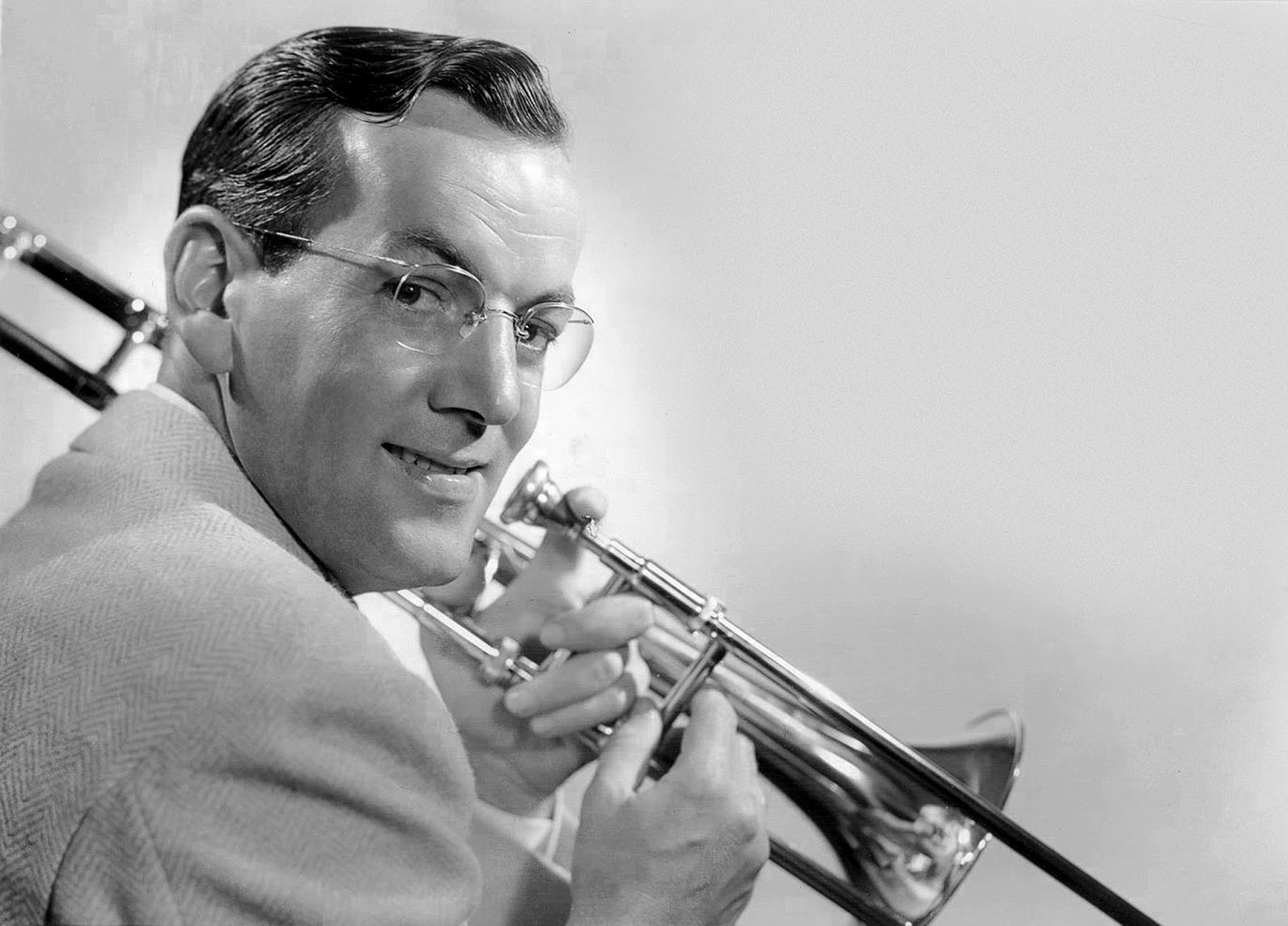
Glenn Miller is a name synonymous with the golden age of swing music. Born Alton Glenn Miller on March 1, 1904, in Clarinda, Iowa, his life and career left an indelible mark on the American music scene, particularly during the big band era of the 1930s and 1940s. Miller’s journey from a small-town boy to a global music icon is one of passion, perseverance, and unparalleled talent.
Early Life and Musical Beginnings
Glenn Miller’s early years were spent in various small towns in the Midwest. His family moved frequently, and by 1918, they had settled in Fort Morgan, Colorado. It was here that Miller’s love for music began to flourish. Initially, he made money by milking cows, which he saved up to buy a trombone. This instrument would become his lifelong companion and the tool through which he would express his musical genius.
In high school, Miller played in the school orchestra and formed his first band with classmates. Despite his early passion for music, Miller pursued formal education and enrolled at the University of Colorado in 1923. However, his academic pursuits took a backseat to his growing involvement in music, leading him to drop out and pursue a career as a professional musician.
Rise to Fame
Glenn Miller’s early career was a mix of struggle and discovery. He played with various bands and honed his skills as a trombonist, composer, and arranger. One of his most significant early contributions was the composition “Moonlight Serenade,” which would later become one of his signature pieces.
By 1926, Miller had joined Ben Pollack’s band, one of the most popular dance bands of the time. This period was crucial in Miller’s development as a musician. He also played for Victor Young’s orchestra, which accompanied stars like Judy Garland and Bing Crosby. However, Miller soon realized that his true calling was not just playing the trombone but also composing and arranging music.
In 1937, Miller formed his first band, but it struggled to stand out among the many other bands of the era. Disheartened by the band’s lack of success, Miller disbanded the group in January 1938. This failure, however, became a turning point in his career. Determined to create a unique sound that would set him apart, Miller began experimenting with different musical arrangements, focusing on the clarinet’s role in his compositions.
The Glenn Miller Orchestra
Miller’s perseverance paid off when he formed a new band in 1938. This time, he crafted a distinctive sound characterized by a clarinet-led reed section, a smooth, melodic style that became instantly recognizable. The Glenn Miller Orchestra quickly gained popularity, and by 1939, they were a household name in the United States.
The band’s rise to fame was meteoric. They played sold-out shows at venues like the Meadowbrook Ballroom in New Jersey and the Glen Island Casino in New York. Their records were played on jukeboxes across the country, and songs like “In the Mood,” “Tuxedo Junction,” and “Chattanooga Choo Choo” became anthems of the era. In fact, “Chattanooga Choo Choo” was the first-ever gold record, selling over a million copies in just a few months.
The Glenn Miller Orchestra’s success was not just limited to record sales and live performances. They also appeared on radio shows, most notably on CBS, where they performed three times a week on a show sponsored by Chesterfield cigarettes. Miller’s music became the soundtrack of a generation, providing comfort and joy during the difficult years of World War II.
Military Service and Mysterious Disappearance
In 1942, at the height of his fame, Glenn Miller made a surprising decision. Motivated by a sense of duty and patriotism, he enlisted in the United States Army Air Forces. Initially, he served as a captain and later as a major, leading the Army Air Force Band. This military orchestra was tasked with entertaining troops stationed in Europe, boosting morale through music.
Miller’s dedication to the war effort was unwavering. He led the band in numerous performances, both live and broadcasted, reaching thousands of soldiers and civilians. However, his service was tragically cut short on December 15, 1944, when the plane he was traveling in disappeared over the English Channel. Miller was on his way to Paris to perform for troops who had recently liberated the city from Nazi occupation.
The circumstances of Glenn Miller’s death remain shrouded in mystery. Despite extensive searches, his body was never found, leading to various theories about what happened. The most widely accepted explanation is that his plane was accidentally shot down by friendly fire during a British air raid. However, the true cause of the crash has never been conclusively determined, adding an element of intrigue to Miller’s already legendary status.
Legacy and Influence
Glenn Miller’s impact on music cannot be overstated. His innovative arrangements and unique sound defined the swing era and left a lasting legacy that continues to influence musicians to this day. The Glenn Miller Orchestra continued to perform after his death, with various bandleaders, including Buddy DeFranco and Ray Anthony, keeping his music alive.
In 1953, Miller’s life was immortalized in the film “The Glenn Miller Story,” starring James Stewart. The movie was a commercial success and introduced Miller’s music to a new generation of fans. His influence also extended to the world of jazz, where he is remembered as one of the genre’s most important figures.
Miller’s contributions to music were not just about creating catchy tunes. He revolutionized the big band sound, incorporating intricate arrangements and sophisticated harmonies that elevated the genre. His music had a sense of elegance and refinement that set it apart from other bands of the time. Even today, songs like “In the Mood” and “Moonlight Serenade” are considered classics, regularly performed by jazz and big band ensembles worldwide.
In recognition of his contributions, Glenn Miller was posthumously awarded a star on the Hollywood Walk of Fame. His music continues to be celebrated in concerts, films, and recordings, ensuring that his legacy endures for future generations.
Conclusion
Glenn Miller’s life was a testament to the power of music to inspire, uplift, and bring people together. From his humble beginnings in Iowa to his rise as one of the most influential musicians of the 20th century, Miller’s story is one of talent, hard work, and a relentless pursuit of excellence. His untimely death at the age of 40 cut short a brilliant career, but his music lives on, a timeless reminder of the swing era’s golden age.
Miller’s influence can still be felt today, not just in the world of jazz and big band music, but in the broader landscape of American culture. He was a pioneer who pushed the boundaries of what was possible in music, creating a sound that was uniquely his own. Glenn Miller may be gone, but his legacy will continue to resonate for years to come.


