
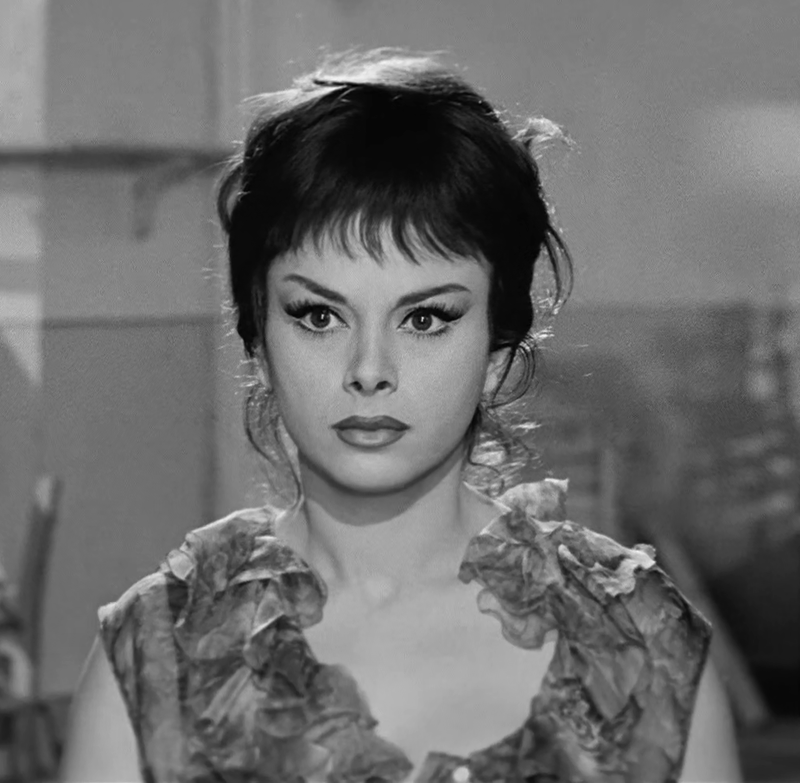
Sandra Milo, born Salvatrice Elena Greco on March 11, 1933, in Tunis, Tunisia, is a name that has been synonymous with the golden age of Italian cinema. Over a career that has spanned nearly seven decades, Milo has become a cultural icon in Italy, celebrated for her beauty, talent, and indomitable spirit. Her life and career are a testament to the resilience and adaptability required to navigate the ever-changing landscape of the entertainment industry. In this article, we explore the life of Sandra Milo, focusing on her age, rise to fame, and the key highlights that have shaped her illustrious career.
Early Life and Entry into Cinema
Born in Tunis to Italian parents, Sandra Milo’s early life was marked by a love for the arts and performance. She moved to Italy at a young age, where she began to cultivate her passion for acting. By the time she was 22, Milo made her film debut in “Lo scapolo” (1955), a film that also starred the legendary Alberto Sordi. Her striking appearance, characterized by voluptuous curves and a distinctive, childlike voice, quickly made her a recognizable figure in the Italian film industry.
Adopting the stage name Sandra Milo, she began to carve out a niche for herself in the world of Italian cinema, often being cast in roles that capitalized on her sensuality and charismatic screen presence. Her early years in the industry were marked by a series of films that showcased her ability to play both comedic and dramatic roles with equal finesse.
The 1950s: A Star is Born
The late 1950s saw Sandra Milo’s career begin to take off in earnest. Her first significant role came in 1959 with the film “Il generale Della Rovere,” directed by Roberto Rossellini. The film, which also starred Vittorio De Sica, was a critical success and established Milo as a serious actress capable of delivering powerful performances. In this film, Milo played the role of a prostitute, a character type she would portray several times throughout her career, often bringing a depth and vulnerability to these roles that resonated with audiences.
Her marriage to producer Moris Ergas, who played a crucial role in her early career, also occurred during this time. The marriage was a pivotal moment in her life, marking the beginning of her ascent in the film industry.
The 1960s: Collaboration with Federico Fellini
The 1960s were a defining decade for Sandra Milo, particularly due to her collaborations with the legendary director Federico Fellini. Her work with Fellini not only cemented her status as a film star but also as a muse to one of the most influential directors in cinematic history.
In 1963, Milo starred in Fellini’s masterpiece “8½,” where she played the role of Carla, the voluptuous and flirtatious mistress of Marcello Mastroianni’s character. The film was a critical and commercial success, winning the Academy Award for Best Foreign Language Film, and Milo’s performance was widely praised. Her portrayal of Carla showcased her ability to embody a character that was both alluring and complex, balancing the comedic elements with a subtle depth that made her performance unforgettable.
Two years later, in 1965, Milo again worked with Fellini in “Giulietta degli spiriti” (Juliet of the Spirits), where she played the role of Suzy, a free-spirited woman who becomes a figure of fascination and envy for the film’s protagonist, played by Giulietta Masina. Milo’s performance in “Giulietta degli spiriti” earned her the Nastro d’Argento for Best Supporting Actress, further solidifying her place in the pantheon of great Italian actresses.
During this period, Milo became known for her playful and sometimes provocative on-screen persona, which contrasted sharply with the more demure and traditional roles often portrayed by her contemporaries. This contrast made her a unique figure in Italian cinema, and she quickly became a symbol of the new, more liberated era of Italian filmmaking.
The Challenges and Triumphs of the 1970s and 1980s
The 1970s brought new challenges for Sandra Milo, both personally and professionally. Her career was momentarily overshadowed by personal controversies, including her romantic relationships, which were often the subject of intense media scrutiny. One of the most notable of these relationships was with Italian political leader Bettino Craxi, a connection that fueled much speculation and gossip in the Italian press.
Despite these challenges, Milo continued to work in film and television, though her career during this period was marked by a few ups and downs. After her marriage to Moris Ergas ended, she married Ottavio De Lollis, with whom she had two children, Ciro and Azzurra. Milo’s decision to focus on her family led to a temporary retreat from the film industry, a period during which she dedicated herself to raising her children.
Her return to the screen in the early 1980s was met with mixed success. However, she managed to reinvent herself, taking on new roles in both film and television. In 1985, Milo began hosting “Piccoli Fans,” a children’s television show on Rai Due, which showcased her ability to connect with a younger audience and revealed another facet of her multifaceted talent.
The Infamous TV Prank
One of the most memorable and controversial moments of Sandra Milo’s career came in 1990 during a live broadcast of the television show “L’amore è una cosa meravigliosa.” During the show, Milo received a phone call informing her that her son, Ciro, had been seriously injured in a car accident. The news caused Milo to break down on live television, a moment that quickly became infamous in Italian media history. The call, however, turned out to be a cruel prank, a fact that only came to light after the broadcast. The incident left a lasting impact on Milo, and it highlighted the often ruthless nature of the entertainment industry.
A Late-Career Renaissance
The 2000s marked a renaissance for Sandra Milo, as she began to receive renewed recognition for her contributions to Italian cinema. In 2001, she became a regular commentator on “La vita in diretta,” a popular television program, and in 2002, she returned to acting in the Canale 5 television series “Ma il portiere non c’è mai?” alongside Giampiero Ingrassia and Cristina Moglia.
In 2003, she starred in Pupi Avati’s film “Il cuore altrove,” further proving her enduring appeal and versatility as an actress. Her performance was well-received, and it marked the beginning of a new phase in her career, where she took on more mature and nuanced roles that showcased her depth as a performer.
Milo also made a successful transition to theater, starring in productions such as “8 donne e un mistero” and “Il letto ovale,” where she shared the stage with other prominent Italian actors like Barbara D’Urso and Maurizio Micheli. Her work in theater during this period was a testament to her adaptability and her ability to captivate audiences across different mediums.
Recognition and Honors
Sandra Milo’s contributions to the arts were officially recognized in 2021 when she received the prestigious David di Donatello Award for Lifetime Achievement. This award was a fitting tribute to a career that had spanned more than six decades and had made a significant impact on Italian cinema.
In 2022, she participated in the docu-reality show “Quelle brave ragazze” alongside Mara Maionchi and Orietta Berti, showcasing her enduring popularity and ability to connect with audiences across generations. The show was well-received and led to a second season in 2023, this time featuring Marisa Laurito as a co-star.
Milo continued to work in the entertainment industry well into her 80s, appearing in the Prime Video comedy series “Gigolò per caso,” which was released in December 2023. Her performance in the series was a reminder of her comedic talent and her ability to stay relevant in an industry that often favors youth over experience.
Personal Life and Relationships
Sandra Milo’s personal life has often been as colorful and dramatic as her on-screen roles. She was married four times and had three children. Her first marriage, at the age of 15, to Cesare Rodighiero, ended in tragedy when their child was stillborn, and the marriage was annulled after just 21 days. Her subsequent marriages, to Moris Ergas and Ottavio De Lollis, were also marked by challenges, including the near-death experience of her daughter Azzurra at birth, an event that was later recognized by the Catholic Church as a miracle.
Milo’s romantic relationships were often the subject of intense public interest, particularly her affair with Bettino Craxi, the leader of the Italian Socialist Party, during the 1980s. Milo later revealed in interviews that their relationship was one of deep affection and mutual respect, and she spoke candidly about the challenges of being in a relationship with such a prominent political figure.
Legacy and Final Years
Sandra Milo passed away on January 29, 2024, at the age of 90, in her home in Rome. Her death marked the end of an era in Italian cinema, but her legacy as one of the most iconic and beloved actresses of her generation remains intact. Her life and career are a testament to the power of resilience, adaptability, and an unyielding passion for the arts.
Milo’s influence on Italian cinema is undeniable. She broke the mold of the traditional Italian actress, bringing a unique blend of sensuality, humor, and emotional depth to her roles. Her collaborations with Federico Fellini, in particular, have left an indelible mark on the history of cinema, and her performances continue to be studied and celebrated by film enthusiasts around the world.
As we reflect on Sandra Milo’s contributions to the arts, it is clear that she was more than just a film star. She was a trailblazer, a muse, and a symbol of the vibrant and dynamic world of Italian cinema. Her work will continue to inspire future generations of actors and filmmakers, ensuring that her legacy endures for many years to come.


