
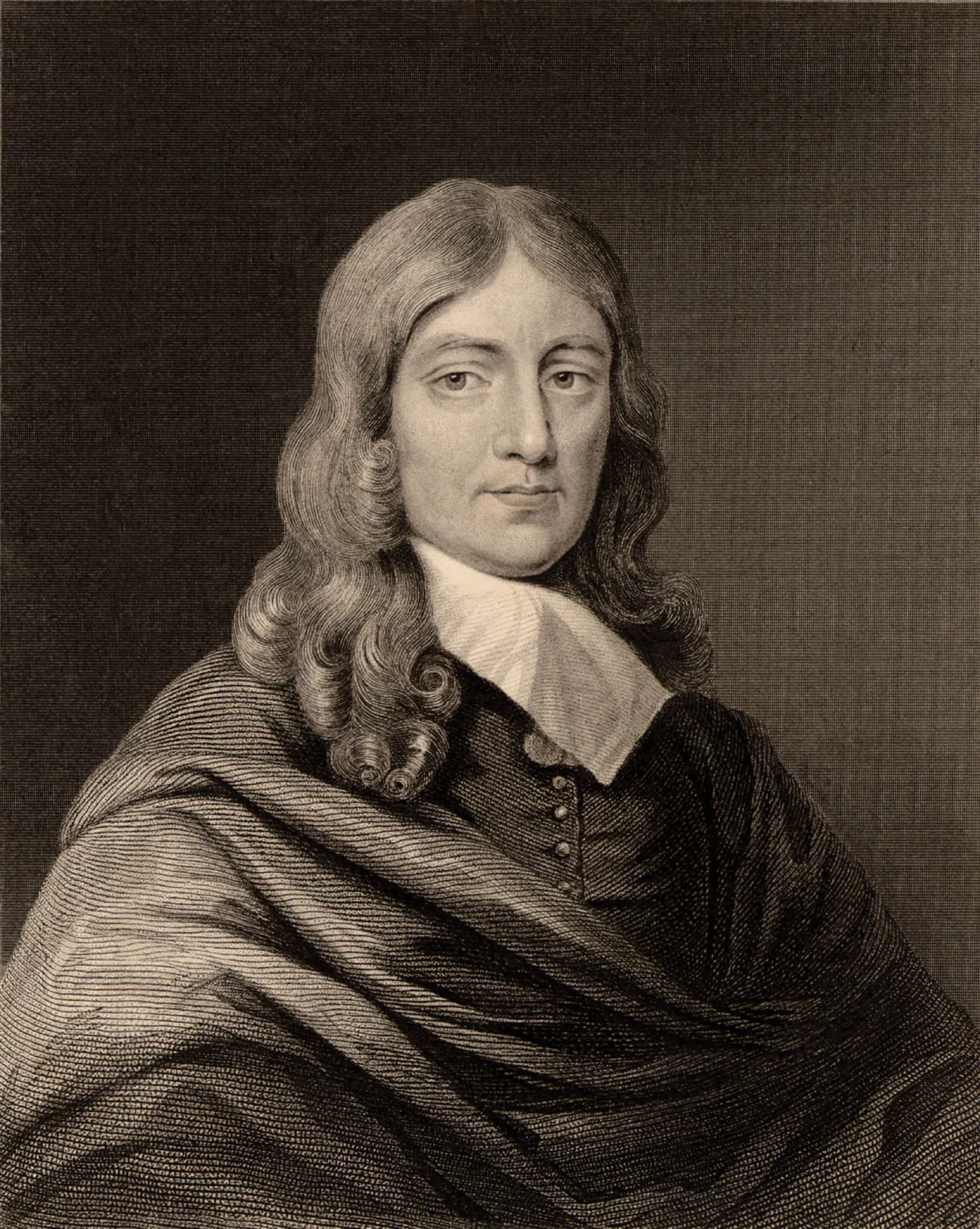
John Milton, born on December 9, 1608, in London, is one of the most celebrated poets and intellectuals in English literature. His work has left an indelible mark on the literary world, influencing countless writers and thinkers throughout history. His life was shaped by significant personal, political, and religious experiences, which are intricately woven into his works. In this detailed exploration, we will delve into Milton’s life, his rise to fame, and the enduring impact of his writings.
Early Life and Education
John Milton was born into a well-to-do family. His father, a scrivener and a composer, provided Milton with a robust education, steeped in Puritan, classical, and humanistic influences. Milton’s early education laid the groundwork for his deep intellectual curiosity and his lifelong engagement with religious and philosophical ideas.
Milton attended St. Paul’s School in London, where he excelled in Latin and Greek. He then proceeded to Christ’s College, Cambridge, where he earned a Bachelor of Arts in 1629 and a Master of Arts in 1632. However, his time at Cambridge was not without controversy. Milton was dissatisfied with the rigid structure of the Anglican Church and the university’s curriculum, which led him to contemplate abandoning his studies. Nonetheless, he persevered, eventually graduating and deciding against a clerical career, choosing instead to pursue his growing passion for poetry.
Milton’s Literary Beginnings
Milton’s early works reflect his classical education and his deep engagement with the themes of human nature, morality, and the divine. Among his early poems, “L’Allegro” and “Il Penseroso” stand out as masterpieces that explore contrasting aspects of human experience. These poems, written in the early 1630s, are meditative and contemplative, revealing Milton’s interest in the balance between joy and melancholy, action and contemplation.
Another significant early work is “Lycidas,” a pastoral elegy written in 1637 to mourn the death of a Cambridge colleague, Edward King. In “Lycidas,” Milton grapples with the themes of mortality, fame, and the role of the poet. The poem is notable for its blend of personal grief and broader reflections on the transient nature of human life and the eternal quest for truth and virtue.
Travels and Encounters
From 1638 to 1639, Milton embarked on a grand tour of Europe, which was a common practice among young English gentlemen of the time. This journey was pivotal in shaping his intellectual and creative development. He visited France, Italy, and Switzerland, where he met some of the most important intellectuals of the age, including the astronomer Galileo Galilei. This encounter, in particular, had a profound impact on Milton, as Galileo’s struggles with the Catholic Church mirrored Milton’s own concerns with authority and freedom of expression.
Milton’s travels also allowed him to immerse himself in the works of Renaissance poets and thinkers, deepening his appreciation for classical literature and reinforcing his belief in the importance of individual liberty and the pursuit of knowledge.
Political and Religious Engagement
Milton’s return to England in 1639 coincided with a period of great political turmoil. The country was on the brink of civil war, and Milton found himself increasingly drawn into the political fray. He became a staunch supporter of the Parliamentarian cause, which opposed the monarchy and advocated for greater religious and political freedoms.
In the 1640s, Milton began to write a series of pamphlets that argued for the reformation of the Church of England and the abolition of episcopacy (the government of the church by bishops). His writings during this period, including “Of Reformation,” “The Reason of Church Government,” and “Areopagitica,” were powerful expressions of his belief in freedom of speech, religious tolerance, and the right to resist tyranny.
“Areopagitica,” published in 1644, is perhaps Milton’s most famous prose work. It is a passionate defense of the freedom of the press, written in response to the Licensing Order of 1643, which required all books to be approved by the government before publication. Milton’s arguments in “Areopagitica” resonate with modern principles of free speech and have earned him a lasting legacy as a champion of civil liberties.
The English Civil War and Its Aftermath
The English Civil War (1642-1651) was a defining period in Milton’s life. As a committed Parliamentarian, he served as the Secretary for Foreign Tongues under Oliver Cromwell’s government, a position that involved translating official documents and drafting government statements in Latin. This role placed Milton at the heart of the revolutionary government, where he had the opportunity to influence the course of events through his writings.
However, Milton’s political fortunes took a dramatic turn with the restoration of the monarchy in 1660. The return of Charles II marked the end of the Commonwealth and the beginning of a period of retribution against those who had supported Cromwell. Milton was briefly imprisoned and narrowly escaped execution, thanks in part to the intercession of his friends and former pupils.
Blindness and Later Works
In the early 1650s, Milton began to lose his sight, a condition that worsened until he became completely blind by 1652. Despite this profound disability, Milton continued to write, dictating his works to a series of assistants. His blindness added a new layer of depth to his writing, as he grappled with themes of darkness, light, and the inner vision of the soul.
Milton’s greatest literary achievement, “Paradise Lost,” was composed during this period of blindness. Published in 1667, “Paradise Lost” is an epic poem that tells the story of the Fall of Man, exploring themes of free will, temptation, and redemption. The poem is a monumental work of literature, notable for its ambitious scope, its complex and nuanced characters, and its profound theological insights.
“Paradise Lost” established Milton as one of the greatest poets in the English language. The poem’s portrayal of Satan as a tragic, almost heroic figure has been the subject of much debate and interpretation, with some readers seeing Satan as a symbol of rebellion against tyranny, while others view him as a cautionary example of the dangers of pride and ambition.
Milton followed “Paradise Lost” with “Paradise Regained” (1671), a shorter epic that focuses on the temptation of Christ in the wilderness. This work is more austere and contemplative than its predecessor, reflecting Milton’s deepening religious convictions and his ongoing exploration of the themes of temptation and redemption.
In addition to his epic poems, Milton also wrote “Samson Agonistes” (1671), a tragic drama based on the biblical story of Samson and Delilah. The play is a meditation on the nature of suffering, the quest for revenge, and the possibility of redemption, themes that resonated deeply with Milton’s own experiences of loss and hardship.
Milton’s Legacy
John Milton died on November 8, 1674, at the age of 65. His influence on English literature and thought cannot be overstated. Milton’s works have been studied, analyzed, and admired for centuries, and his ideas about freedom, justice, and the human condition continue to resonate with readers today.
Milton’s legacy is also evident in the many writers and thinkers he influenced, including the Romantic poets William Blake and Percy Bysshe Shelley, who admired Milton’s poetic genius and his rebellious spirit. Milton’s exploration of the nature of evil, the complexity of human motivation, and the possibility of redemption has inspired countless interpretations and adaptations in literature, art, and popular culture.
Conclusion
John Milton’s life and work are a testament to the power of the written word to shape history and influence generations. From his early poems to his later epic masterpieces, Milton’s writing reflects a deep engagement with the most profound questions of human existence. His unwavering commitment to the principles of liberty, justice, and the pursuit of truth has secured his place as one of the most important figures in English literature.
Milton’s enduring fame is a tribute not only to his literary talent but also to his courage and resilience in the face of personal and political adversity. His works continue to be read and studied around the world, reminding us of the timeless relevance of his ideas and the lasting power of his words.


