
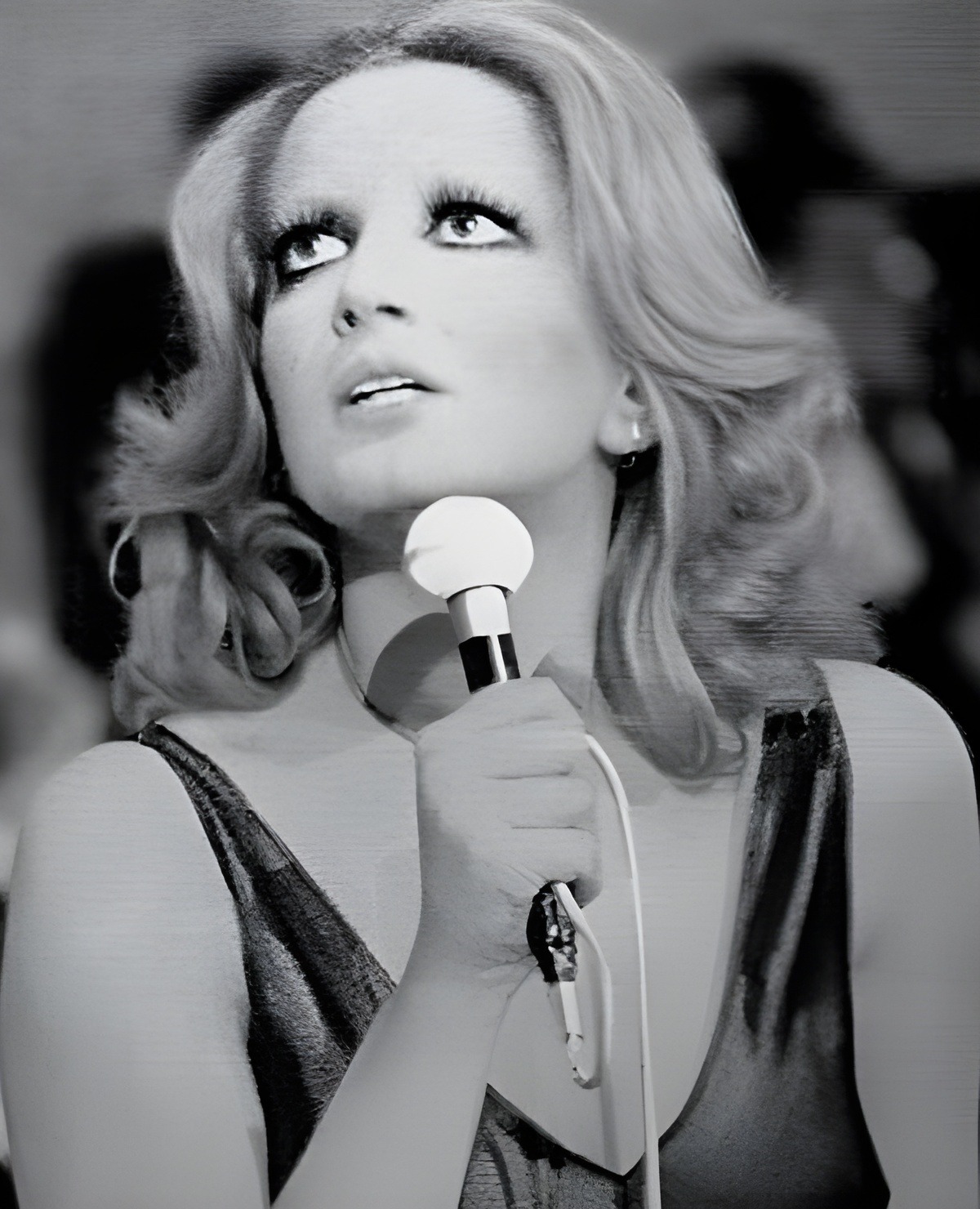
Mina, born Anna Maria Mazzini on March 25, 1940, in Busto Arsizio, Italy, is a legendary figure in the world of music. Known for her powerful voice, charismatic presence, and enduring influence, Mina has captivated audiences for decades. Her career, spanning over six decades, has made her one of the most successful and beloved artists in Italian music history. Often referred to as “La Tigre di Cremona” (The Tiger of Cremona), Mina’s life and career are a testament to her extraordinary talent and resilience.
Early Life and Beginnings in Music
Mina’s early life was marked by a deep connection to music. Shortly after her birth, her family moved to Cremona, a city that would later play a significant role in her identity as an artist. Growing up in a musically inclined family, Mina was exposed to various genres and styles from a young age. This early exposure laid the foundation for her eclectic musical tastes and her ability to seamlessly transition between different genres.
Mina’s first public performance took place in 1958 at the Bussola nightclub in Marina di Pietrasanta, where she sang “Un’anima pura.” This performance marked the beginning of her professional career and set her on a path to stardom. Like many artists, Mina started by performing in local venues and participating in various bands. It was during one of these performances in Castel Didone that she caught the attention of David Matalon, a producer at the Italdisc-Broadway record label.
Recognizing her potential, Matalon signed Mina to his label and had her record four tracks—two in English under the pseudonym Baby Gate (“Be Bop A Lula” and “When”) and two in Italian (“Non Partir” and “Malatia”). These early recordings showcased Mina’s versatility and marked the beginning of her ascent in the music industry.
Rise to Fame and Sanremo Success
Mina’s television debut came in 1959 on the popular Italian music show “Musichiere,” where she performed “Nessuno,” a song originally sung by Wilma De Angelis at the Sanremo Music Festival. Mina’s powerful performance quickly made her a household name, and she became a regular on Italian television.
In 1960, Mina made her first appearance at the Sanremo Music Festival with the song “È vero,” which finished in eighth place. Although she did not win, her performance established her as a formidable talent in the Italian music scene. The following year, she returned to Sanremo with the song “Le mille bolle blu,” which, despite its popularity, did not win the competition. Disheartened by the results, Mina vowed never to compete in Sanremo again, a promise she kept.
However, Mina’s career continued to soar. In 1961, she became the star of “Studio Uno,” one of Italy’s most popular television shows. Her performances on the show solidified her status as the queen of Italian pop music. It was also during this time that Mina’s personal life began to garner public attention, particularly her relationship with actor Corrado Pani.
Controversy and Rebirth
Mina’s relationship with Corrado Pani was a significant chapter in her life. The couple’s romance, which began in the early 1960s, was met with public disapproval because Pani was still married at the time. The scandal reached its peak in 1963 when Mina gave birth to their son, Massimiliano. The Italian public and media, influenced by the conservative morals of the time, harshly criticized Mina for having a child out of wedlock. As a result, she was temporarily banned from Italian television.
Despite the controversy, Mina’s popularity never waned. In fact, her return to television in 1964 was marked by a triumphant performance on “La fiera dei sogni,” where she introduced two of her most iconic songs, “La città vuota” and “L’uomo per me.” These songs showcased Mina’s ability to convey deep emotion and solidified her reputation as one of Italy’s most powerful vocalists.
Mina’s ability to navigate the complexities of fame and personal scandal is a testament to her resilience. While the public and media focused on her personal life, Mina remained dedicated to her craft, continually pushing the boundaries of Italian pop music.
The “Urlatori” and Musical Evolution
During the 1960s, Mina became the leading figure in the “Urlatori” movement, a group of Italian singers known for their energetic and rebellious style. The “Urlatori,” which translates to “shouters,” were a stark contrast to the more subdued and traditional singers of the previous generation. Mina’s powerful voice and dynamic stage presence made her the undisputed queen of this new wave of Italian music.
One of the defining moments of Mina’s early career was her recording of “Il cielo in una stanza,” a song written by Gino Paoli. The song, with its intimate and poetic lyrics, showcased a different side of Mina, one that was capable of conveying profound emotion and vulnerability. “Il cielo in una stanza” became one of Mina’s biggest hits and remains one of her most beloved songs.
Mina’s musical versatility was one of her greatest strengths. Throughout the 1960s, she experimented with various genres, including pop, jazz, rock, and even operatic styles. Her willingness to take risks and explore new musical territories set her apart from her contemporaries and earned her a dedicated fan base that appreciated her artistic evolution.
Tragedy and Triumph
The late 1960s and early 1970s were a period of both professional success and personal tragedy for Mina. In 1965, her brother Alfredo died in a car accident, a loss that deeply affected her. Despite this personal setback, Mina continued to work tirelessly, and in 1968, she celebrated the tenth anniversary of her career with a special concert at the Bussola, the same venue where she had made her debut. The concert was recorded and released as her first live album, a milestone in Italian music history as it was the first live album ever released by an Italian singer.
However, tragedy struck again in 1973 when Mina’s husband, Virgilio Crocco, a journalist for Il Messaggero, died in a car accident. The loss of her husband was a devastating blow to Mina, who had already endured the loss of her brother. Despite these personal tragedies, Mina continued to release music, and her career remained as strong as ever.
In 1974, Mina made what would be her final appearance on television, co-hosting the show “Mille Luci” with Raffaella Carrà. The show’s closing theme, “Non gioco più,” was a fitting farewell, as Mina announced her decision to retire from live performances and television appearances. This decision marked the end of an era in Italian entertainment, but it also solidified Mina’s status as a legendary and enigmatic figure in the music world.
Life in Seclusion and Continued Influence
After retiring from live performances, Mina chose to live a life away from the public eye. She moved to Switzerland, where she continued to record music and release albums, but she no longer appeared in public or gave interviews. Despite her seclusion, Mina’s influence on Italian music and culture remained as strong as ever.
Mina continued to release new music annually, each album eagerly anticipated by her loyal fan base. Her albums from this period are notable not only for their musical content but also for their striking cover art, which was often created by renowned graphic designers and photographers such as Luciano Tallarini and Mauro Balletti. These covers became iconic in their own right, contributing to Mina’s image as a mysterious and ever-evolving artist.
One of the most significant events in Mina’s later life was her marriage to Eugenio Quaini, a cardiologist with whom she had been in a relationship for 25 years. The couple married in Lugano, Switzerland, in 2006, and Mina officially took her husband’s surname, becoming Anna Maria Quaini under Swiss law. This event marked a new chapter in Mina’s life, one characterized by privacy and domestic tranquility.
Legacy and Impact on Italian Music
Mina’s legacy in Italian music is unparalleled. She is widely regarded as one of the greatest Italian singers of all time, and her influence can be seen in the work of countless artists who have followed in her footsteps. Mina’s ability to reinvent herself over the decades, both musically and visually, has kept her relevant and respected in an industry that is constantly changing.
Her voice, often described as one of the most powerful and versatile in music history, has been the cornerstone of her enduring success. Mina’s ability to convey emotion, whether in a tender ballad or a powerful anthem, has made her a beloved figure not only in Italy but around the world.
Mina’s decision to withdraw from public life has only added to her mystique. In an era where celebrity culture often demands constant visibility, Mina’s choice to maintain her privacy has made her a unique and enduring figure in the world of entertainment. Her fans continue to celebrate her music, and each new release is met with the same enthusiasm as her work from the height of her career.
Conclusion
Mina’s life and career are a testament to her extraordinary talent, resilience, and ability to transcend the boundaries of time and genre. From her early days as a rebellious “Urlatori” to her status as an iconic and enigmatic figure, Mina has left an indelible mark on the world of music. Her influence extends far beyond her native Italy, touching the hearts of listeners around the globe.
As Mina continues to release new music and captivate audiences, her legacy as one of the greatest singers of all time remains secure. Her story is one of triumph over adversity, artistic evolution, and the power of music to connect us all. Mina may have retreated from the public eye, but her voice and her music will continue to resonate for generations to come.


