
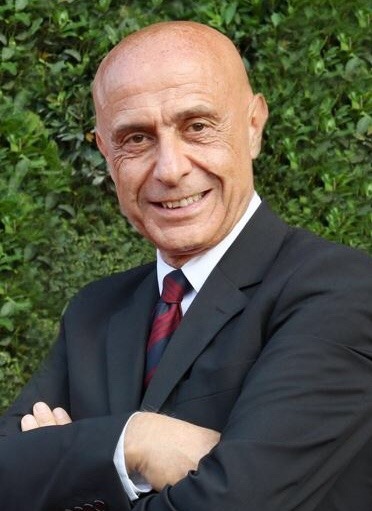
Introduction
Marco Minniti, an influential figure in Italian politics, has carved a distinguished path from his early days in Reggio Calabria to becoming a key player in national security and immigration policy. Born on June 6, 1956, in Reggio Calabria, Italy, Minniti’s journey through politics and public service has been marked by significant achievements and challenges. This detailed exploration delves into his background, career milestones, and the impact he has made on Italian and international politics.
Early Life and Education
Marco Minniti was born into a family with a strong military background. His father, a general in the Italian Air Force, set high expectations for his son. Initially aspiring to become a pilot, Minniti’s dreams were thwarted by his mother, Angela, who was concerned about the dangers associated with such a career. As a form of rebellion, Minniti joined the Italian Communist Youth Federation (Federazione Giovanile Comunista Italiana, FGCI), marking the beginning of his political journey.
Minniti pursued higher education at the University of Messina, where he earned a degree in philosophy with a thesis on Cicero. His academic background, while unconventional for a politician, would later contribute to his analytical approach to political and social issues. During this time, he continued his involvement with the FGCI and developed friendships that would influence his political career.
Political Career Beginnings
In the 1980s, Minniti’s political involvement deepened as he became the secretary of the Communist Party (Partito Comunista Italiano, PCI) for the Piana di Gioia Tauro region. This period was marked by the tragic assassination of Giuseppe Valarioti, the first Calabrian politician killed by organized crime. Minniti’s role in the PCI included working on economic and labor issues, which were crucial as Italy grappled with economic challenges and the rise of the ‘ndrangheta.
In 1986, Minniti joined the PCI’s commission on labor and economic problems but left this position when appointed as the secretary of the PCI in Reggio Calabria. His leadership during this tumultuous time laid the groundwork for his future roles in Italian politics.
Rise in the 1990s
The 1990s saw Minniti’s ascent within the Italian political landscape. In 1992, he became the regional secretary of the Democratic Party of the Left (Partito Democratico della Sinistra, PDS) in Calabria. This role catapulted him into the national arena as he joined the national secretariat and was responsible for party issues.
Despite not being elected in the 1996 general elections, Minniti continued to make strides in his political career. He was appointed as the secretary of the Democratic Left (Democratici di Sinistra) and became a prominent figure in the party’s security and organizational efforts.
Significant Roles in the 2000s
Minniti’s political influence expanded significantly in the 2000s. Elected as a deputy for the first time in 2001, he was re-elected in 2006, serving as the deputy minister of the Interior in Romano Prodi’s government. His work focused on security and immigration, areas that would become central to his political career.
In 2007, Minniti took on a critical role as the head of the national security department within the Democratic Party (Partito Democratico, PD) under Walter Veltroni. His expertise in security and immigration issues was further recognized as he was elected as the regional secretary of the PD in Calabria.
Ministerial Positions and Challenges
In 2012, under the leadership of Pier Luigi Bersani, Minniti was appointed to oversee the implementation of the government’s program. His role as a shadow minister for the Interior in the PD and later as president of the Intelligence Culture and Strategic Analysis Foundation highlighted his expertise in security and strategic matters.
Minniti’s most notable position came when he was appointed as the Minister of the Interior in Paolo Gentiloni’s government in December 2016. His tenure was marked by significant efforts to address immigration and security challenges. He implemented measures to control illegal immigration, including the reopening of Identification and Expulsion Centers (Centri di Identificazione ed Espulsione, CIEs) and negotiating with Libyan authorities to manage migration flows more effectively.
One of Minniti’s significant achievements was the introduction of a code of conduct for NGOs involved in migrant rescue operations in the Mediterranean. His policies aimed to balance humanitarian concerns with national security, reflecting the complexities of managing immigration in a European context.
Personal Life and Legacy
Marco Minniti is married to Mariangela Sera, a musician, and they have two daughters, Bianca and Serena. His personal life, while relatively private, reflects a balance between his demanding public career and family life.
Minniti’s career has been marked by his ability to navigate complex political landscapes and address pressing issues related to security and immigration. His contributions to Italian politics, particularly in managing immigration and strengthening national security, have left a lasting impact on the country’s political discourse.
Historical Context and Impact
Minniti’s career cannot be fully understood without considering the historical and political context in which he operated. Italy’s struggle with organized crime, particularly the ‘ndrangheta, has been a significant backdrop to his work. His early involvement in combating crime and his later focus on immigration reflect the broader challenges faced by Italian policymakers.
His tenure as Minister of the Interior coincided with a period of heightened migration and security concerns in Europe. Minniti’s approach, which combined strict measures with diplomatic efforts, was indicative of the complex and often contentious nature of immigration policy in contemporary Europe.
Conclusion
Marco Minniti’s journey from his early life in Reggio Calabria to becoming a key figure in Italian politics is a testament to his resilience and expertise. His contributions to national security and immigration policy have been significant, reflecting both the challenges and opportunities faced by Italy in the 21st century. As a politician and public servant, Minniti’s legacy is defined by his efforts to balance security concerns with humanitarian considerations, leaving a lasting impact on Italian and European political landscapes.


