
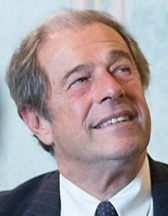
Giovanni Minoli, born on May 26, 1945, in Turin, Italy, is a towering figure in the world of Italian media, with a career spanning over four decades. Minoli has left an indelible mark on Italian television and radio through his innovative programming, journalistic rigor, and leadership roles within RAI, Italy’s national public broadcasting company. This article explores the life, career, and significant contributions of Giovanni Minoli, providing a detailed account of his journey and the impact he has had on Italian media.
Early Life and Education: From Turin to National Recognition
Giovanni Minoli was born into a well-established family in Turin, where he spent his early years. He attended the prestigious Istituto Sociale in Turin, a Jesuit school known for its rigorous academic standards. Minoli’s early education instilled in him a deep appreciation for knowledge and a disciplined approach to work, traits that would serve him well in his future career.
Minoli was also an accomplished skier in his youth, making it to the national university ski team. This competitive spirit, combined with his intellectual prowess, would later characterize his approach to media and journalism. After completing his secondary education, Minoli pursued a degree in law, graduating from the University of Turin. His legal education provided him with a strong foundation in critical thinking and analysis, skills that would prove invaluable in his future endeavors in media.
Entry into the World of Media: Early Career at RAI
Giovanni Minoli’s journey into the world of media began in 1971 when he joined RAI, the Italian public broadcasting company. His entry into RAI was facilitated by his father-in-law, Ettore Bernabei, who was then the Director-General of RAI. This connection provided Minoli with a unique opportunity to start his career in a prominent organization, but it was his talent and determination that propelled him forward.
Minoli quickly established himself as a talented producer and journalist. He was involved in creating a variety of reports, news segments, and documentaries that showcased his ability to tackle complex issues with clarity and insight. In 1978, Minoli was given his first major opportunity to shine when he was entrusted with his own segment, “A come Agricoltura.” This program focused on agricultural issues, a critical topic in Italy at the time, and Minoli’s work was well-received, highlighting his ability to engage with important societal themes.
The 1980s: Revolutionizing Italian Television with “Mixer”
The 1980s marked a significant turning point in Giovanni Minoli’s career. It was during this decade that he launched “Mixer,” a groundbreaking television program that would redefine Italian political and social discourse. “Mixer” was notable for its innovative format, which included American-style confrontations between guests, often involving heated debates and direct questions.
“Mixer” was a departure from the more formal and restrained style of Italian television at the time. Minoli’s approach was to bring issues directly to the public, allowing viewers to witness unfiltered discussions between politicians, intellectuals, and public figures. The program quickly gained a reputation for its boldness and became a staple of Italian television.
Minoli’s success with “Mixer” was not without controversy. His close association with the Italian Socialist Party (PSI) and its leader, Bettino Craxi, led to accusations of political bias. In 1987, Minoli participated in a campaign advertisement for the PSI, interviewing Craxi at a supermarket checkout. This involvement drew criticism, with some accusing Minoli of compromising journalistic integrity. Despite the controversy, Minoli’s work on “Mixer” solidified his reputation as a leading figure in Italian media.
Leadership Roles at RAI: Shaping the Future of Italian Broadcasting
Throughout the 1990s, Giovanni Minoli continued to rise through the ranks at RAI, taking on increasingly influential roles. In 1993, he was appointed the head of programming for Rai 2, one of RAI’s main television channels. During his tenure, Minoli was responsible for overseeing a range of popular and influential programs, including “Piccoli Fans” with Sandra Milo, “Aboccaperta” with Gianfranco Funari, and “Quelli della Notte” with Renzo Arbore.
Minoli’s ability to identify and nurture talent was evident in the success of these programs, many of which became cultural touchstones in Italy. His leadership style was characterized by a willingness to take risks and push boundaries, qualities that helped RAI maintain its relevance in an increasingly competitive media landscape.
In 1996, Minoli was appointed director of the newly formed RAI Format division, a role he held until 1999. This division was responsible for developing and producing new television formats, and under Minoli’s leadership, it became a breeding ground for innovation. One of the most significant projects during this period was the creation of the soap opera “Un Posto al Sole,” which became one of Italy’s most enduring television programs.
Minoli’s influence extended beyond entertainment. He was instrumental in the development of “Report,” a groundbreaking investigative journalism program hosted by Milena Gabanelli. “Report” was known for its in-depth investigations into political corruption, environmental issues, and social justice, and it became one of the most respected news programs in Italy. Minoli’s support for such programming demonstrated his commitment to using television as a tool for social change and public accountability.
The Creation of “La Storia Siamo Noi”: A Legacy in Historical Journalism
One of Giovanni Minoli’s most significant contributions to Italian media was the creation of “La Storia Siamo Noi” (We Are History), a television program that delved into the history of Italy and the world through documentary storytelling. Launched in 2003, the program quickly became a cornerstone of RAI’s educational programming and earned numerous awards, including the prestigious Ilaria Alpi Prize in 2003 and the Regia Televisiva Prize in 2005.
“La Storia Siamo Noi” was praised for its meticulous research, compelling narratives, and ability to connect historical events with contemporary issues. The program covered a wide range of topics, from World War II and the Holocaust to the mafia and political scandals. Minoli’s vision for the program was to create a deeper understanding of history among the Italian public, believing that knowledge of the past was essential for navigating the present and future.
The success of “La Storia Siamo Noi” solidified Minoli’s reputation as a pioneer of historical journalism in Italy. His work on the program demonstrated his ability to blend education with entertainment, making complex historical subjects accessible and engaging for a broad audience.
Like many influential figures in the media, Giovanni Minoli’s career has not been without its challenges and controversies. In 2007, Minoli was proposed as the new director of Rai 2 by RAI’s Director-General Claudio Cappon, but the nomination was blocked by center-right political forces, illustrating the complex relationship between media and politics in Italy.
In 2009, Minoli faced legal challenges when he was accused of undue influence by Luca Josi, the president of the production company behind “Agrodolce,” a soap opera produced by RAI. Josi claimed that Minoli had imposed certain appointments and demands within the company, but the investigation was eventually dismissed due to a lack of evidence.
Despite these setbacks, Minoli continued to be a driving force in Italian media, never shying away from controversy and consistently pushing for innovation and excellence in broadcasting.
Later Career: Transition to Radio and Continuing Influence
After a long and illustrious career at RAI, Giovanni Minoli retired from his official duties in 2010. However, his passion for media and storytelling did not wane. He continued to work as a consultant for RAI, advising on programming and helping to shape the broadcaster’s coverage of Italy’s 150th anniversary of unification.
In 2013, Minoli made a significant transition to radio, joining Radio 24, the radio station owned by the Italian business association Confindustria. There, he launched “Mix 24,” a daily program that combined news, interviews, and in-depth analysis of current events. The program was well-received and allowed Minoli to continue influencing public discourse in Italy.
Minoli’s move to radio demonstrated his adaptability and commitment to staying relevant in a rapidly changing media landscape. His ability to transition from television to radio, while maintaining the quality and depth of his work, further solidified his legacy as one of Italy’s most versatile and respected media figures.
Personal Life and Legacy
Giovanni Minoli is married to Matilde Bernabei, the daughter of Ettore Bernabei, a former Director-General of RAI. The couple has shared a life deeply intertwined with the world of Italian media and culture. Their partnership has been both personal and professional, with Matilde also working in the media industry.
Minoli’s legacy is one of innovation, resilience, and a relentless pursuit of truth. His work has shaped the way Italians consume news, understand history, and engage with the world around them. Whether through groundbreaking programs like “Mixer” and “La Storia Siamo Noi” or his leadership roles at RAI, Minoli has left an indelible mark on Italian media.
His influence can be seen in the countless journalists, producers, and broadcasters who have followed in his footsteps, inspired by his commitment to excellence and his willingness to tackle difficult subjects head-on. Giovanni Minoli’s career is a testament to the power of media to inform, educate, and inspire, and his contributions will continue to resonate for generations to come.
Conclusion
Giovanni Minoli is a giant in the world of Italian media, a visionary who has consistently pushed the boundaries of what television and radio can achieve. From his early days at RAI to his later work on radio, Minoli has demonstrated an unwavering commitment to excellence, innovation, and public service. His work has not only entertained millions but has also played a crucial role in shaping public discourse and understanding in Italy.
As we reflect on his career, it is clear that Giovanni Minoli’s influence extends far beyond the programs he created or the positions he held. His legacy is one of intellectual curiosity, journalistic integrity, and a deep belief in the power of media to effect change. For these reasons, Giovanni Minoli remains a central figure in the history of Italian broadcasting, and his contributions will continue to be celebrated and studied for years to come.


