
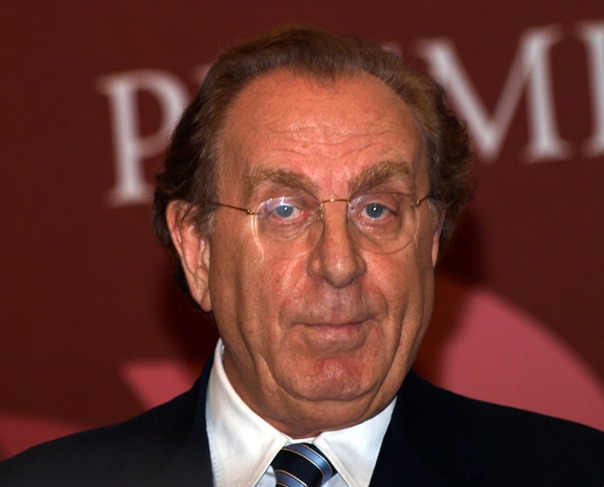
Michele Mirabella, born on July 7, 1943, in Bitonto, a town in the Puglia region of Italy, is a multifaceted personality known for his contributions to television, theater, cinema, and literature. His career spans several decades, during which he has established himself as a beloved figure in Italian media, renowned for his intellectual prowess, wit, and ability to engage with audiences on a wide range of topics. This article delves into the life of Michele Mirabella, tracing his journey from his early years in Puglia to becoming a prominent cultural figure in Italy.
Early Life and Education
Michele Mirabella was born into a family with a strong military background, his father being an officer in the Italian army. This upbringing instilled in him a sense of discipline and commitment that would later reflect in his professional life. He pursued his early education with diligence, obtaining a classical high school diploma (maturità classica) as a private student. Initially, Mirabella enrolled in law school, but his true passion lay elsewhere.
Recognizing his inclination toward the humanities, Mirabella shifted his academic focus to literature and philosophy. He enrolled at the University of Bari, where he excelled in his studies and graduated with honors. His academic background in the arts and humanities provided him with a solid foundation for his future endeavors in the fields of theater, television, and literature.
Theater and Cinema: The Early Years
After completing his studies, Michele Mirabella immersed himself in the world of theater, both as an actor and director. His early works in the theater included performances in plays by some of the most celebrated playwrights in history, including Büchner, Samuel Beckett, Carlo Goldoni, William Shakespeare, Bertolt Brecht, and Ruzante. His ability to interpret and direct these diverse works showcased his versatility and deep understanding of theatrical art.
In 1975, Mirabella made his directorial debut with “Notte di guerra al museo del Prado,” a play that further established his reputation in the Italian theater scene. His talents soon extended to the silver screen, and in 1975, he made his film debut in Romolo Guerrieri’s “Salvo d’Acquisto.” This was followed by a role in Pupi Avati’s “Bordella” in 1976. These early experiences in cinema allowed Mirabella to transition smoothly between different media, enhancing his profile as a versatile artist.
The late 1970s and early 1980s were formative years for Mirabella as he continued to appear in films, including “SuperAndy – Il fratello brutto di Superman” (1979) by Paolo Bianchini and “Odio le bionde” (1980) by Giorgio Capitani. These roles, while varied, helped him hone his craft and expand his repertoire as an actor. During this period, Mirabella also began to explore other avenues of artistic expression, including radio, where he co-hosted the program “La luna nel pozzo” with Ubaldo Lay, further solidifying his presence in Italian media.
The 1980s: Breakthrough in Television
The 1980s marked a significant turning point in Michele Mirabella’s career, particularly in the realm of television. In 1981, he starred in Lucio Fulci’s horror film “… E tu vivrai nel terrore! L’aldilà,” but it was his role in Massimo Troisi’s “Ricomincio da tre” that brought him widespread recognition. In this film, Mirabella played a neurotic character who accompanies the protagonist, Gaetano, on the first part of his journey. The success of “Ricomincio da tre” introduced Mirabella to a broader audience and showcased his ability to portray complex, relatable characters.
Building on this success, Mirabella ventured further into television, where his intellectual approach and charismatic presence made him a natural fit. He began hosting and co-hosting several radio and television programs, including “Luna nuova all’antica italiana” in 1982, where he met Toni Garrani, a collaboration that would lead to several successful programs on Italian radio. Together, they hosted “La luna sul treno,” “Ma che vuoi, la luna?” and “Motonave Selenia” between 1983 and 1985, establishing themselves as a popular duo in Italian media.
During this period, Mirabella also continued to work in cinema, appearing in films by notable directors such as Francesco Laudadio (“Grog”), Carlo Verdone (“Acqua e sapone”), Fabrizio De Angelis (“Thunder”), and Neri Parenti (“Fantozzi subisce ancora”). His versatility as an actor was evident as he took on a wide range of roles, from comedic parts to more serious, dramatic performances.
The 1990s: Establishing a Legacy
As the 1990s dawned, Michele Mirabella’s influence in Italian media continued to grow. He became known not only as an actor and director but also as a writer and television host. He authored and presented “VedRai,” and contributed as a writer to popular shows like “Ricomincio da due” with Raffaella Carrà and “Ciao Week end” with Giancarlo Magalli. His ability to create content that resonated with a wide audience further solidified his standing as a cultural figure in Italy.
Mirabella’s partnership with Toni Garrani continued to thrive during the 1990s. They collaborated on several programs, including “Ventieventi” (1993), “La luna di traverso” (1994), “Divertimento musicale per due corni e orchestra KV 522” (1996), “Mirabella – Garrani 2000 Sciò” (1997), and “Incenso, Mira… Bella e Garrani” (1998). These shows were characterized by their wit, cultural commentary, and ability to engage viewers in meaningful discussions, earning them a dedicated following.
However, it was the launch of the medical-themed television show “Elisir” in 1996 that became one of Mirabella’s most enduring contributions to Italian television. “Elisir” focused on health and wellness topics, providing viewers with valuable information on medical issues, treatments, and healthy living. Mirabella’s ability to present complex medical information in an accessible and engaging manner made the show a success and earned him widespread acclaim.
In recognition of his contributions to Italian culture and media, Michele Mirabella was awarded the title of Commendatore of the Order of Merit of the Italian Republic in June 2000. This prestigious honor highlighted his impact on Italian television and his role in promoting public understanding of health and wellness through “Elisir.”
Honors, Publications, and Continued Influence
Michele Mirabella’s achievements in television were complemented by his work as a writer and public intellectual. In 2001, he was awarded an honorary degree in Pharmacy from the University of Ferrara in recognition of his work on “Elisir.” The university praised him for his ability to use “a simplified and essential language” while maintaining “scientific rigor,” helping to spread “the culture of pharmaceutical science.” During the award ceremony, Mirabella delivered a lecture titled “La più bella del villaggio. Riflessi e riflessioni dello specchio televisivo,” which explored the impact of television on society.
This lecture inspired Mirabella’s book, “La più bella del villaggio,” published in 2003. The book delves into the role of television in shaping public perception and reflects on Mirabella’s own experiences in the industry. It was well-received for its insightful analysis and engaging prose, further establishing Mirabella as a thought leader in Italian media.
In the years that followed, Mirabella continued to be a prominent figure in Italian television. He hosted “Cominciamo bene Estate,” a morning talk show on Raitre in 2010, and later became the presenter of “Buongiorno Elisir,” a daily health program that aired on the same network starting in October 2012. His consistent presence on television, coupled with his ability to adapt to changing media landscapes, ensured that he remained a relevant and respected figure in Italian culture.
In addition to his work in television, Mirabella continued to write, publishing the book “Cantami, o mouse” with Mondadori. This work explored the relationship between technology and culture, offering a humorous yet thoughtful take on the ways in which modern technology has transformed our lives.
Michele Mirabella’s Legacy
Michele Mirabella’s career is a testament to the power of versatility and intellectual curiosity. From his early days in theater and cinema to his long-standing presence on Italian television, Mirabella has demonstrated a remarkable ability to engage with audiences on a wide range of topics. His contributions to cultural discourse, particularly through his work on “Elisir,” have had a lasting impact on public understanding of health and wellness in Italy.
Mirabella’s legacy is one of intellectual rigor, creative innovation, and a deep commitment to educating and entertaining the public. His ability to seamlessly transition between different forms of media—whether it be theater, film, radio, or television—has made him a cultural icon in Italy. His work continues to inspire new generations of media professionals, who look to him as a model of how to balance entertainment with education.
As we reflect on Michele Mirabella’s life and career, it becomes clear that his influence extends far beyond the confines of any single medium. He has shaped Italian television in profound ways, using his platform to inform, entertain, and challenge his audiences. In doing so, he has left an indelible mark on the cultural landscape of Italy, one that will be remembered for years to come.


