
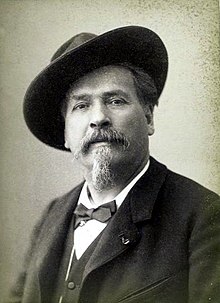
Frédéric Mistral is a name that echoes through the annals of French literature, particularly for his unwavering dedication to the Provençal language and culture. His life and work have had a profound impact on the preservation and celebration of the Occitan language, making him a pivotal figure in the cultural history of France. In this comprehensive article, we explore the life of Frédéric Mistral, delving into his age, rise to fame, and the key highlights that define his legacy. We also provide nuanced insights into the historical context in which he lived and worked, along with an exploration of his influence on literature and culture.
Early Life and Background
Frédéric Mistral was born on September 8, 1830, in Maillane, a small village in the Bouches-du-Rhône department of Provence, France. His family were small-scale farmers, rooted in the rural traditions of the region. The Provence of Mistral’s childhood was a land rich in cultural heritage, with its own language, customs, and identity, all of which would profoundly influence his life and work.
Mistral’s early education took place in Avignon and Nîmes, where he was exposed to both classical education and the enduring legacy of Provençal culture. Despite being educated in French, the dominant language of the nation, Mistral was deeply connected to the Provençal dialect, a connection that would shape his literary career. He later pursued a degree in law at the University of Aix-en-Provence, graduating in 1851. However, his passion for Provençal culture soon led him away from a legal career and toward the literary path that would define his legacy.
The Felibrige Movement and the Revival of Provençal
In the mid-19th century, the Provençal language, a dialect of Occitan, was in decline, marginalized by the dominance of French. Recognizing the cultural importance of this language, Mistral, along with six other poets, founded the Felibrige movement in 1854. The Felibrige aimed to revive and promote the Provençal language and culture, drawing inspiration from the rich literary traditions of the troubadours, who had flourished in the region centuries earlier.
The Felibrige movement was born in the Château de Font-Ségugne, a historic venue in Provence, where Mistral and his fellow poets—Paul Giéra, Joseph Roumanille, Anselme Mathieu, Jean Brunet, Théodore Aubanel, and Alphonse Tavan—gathered with a shared vision. They chose the name “Felibrige” to represent their group, a term Mistral himself coined, which resonated with the spirit of fellowship and cultural preservation that united them.
Mistral emerged as the leading figure of the Felibrige, his passion and literary talent propelling the movement to national and international prominence. His vision was not only to preserve the language but to elevate it, giving it the same literary status as French. The movement quickly gained traction, attracting many followers and supporters across southern France and beyond.
Literary Achievements and “Mireille”
Mistral’s literary career was marked by his dedication to writing in Provençal, a choice that set him apart from many of his contemporaries. His most famous work, “Mireille” (originally titled “Mirèio”), was published in 1859 and is widely regarded as his masterpiece. “Mireille” is an epic poem that weaves together romance, folklore, and the natural beauty of Provence. The poem tells the tragic love story of Mireille, a young Provençal girl, and Vincent, a poor basket-weaver, set against the backdrop of the Provençal countryside.
The publication of “Mireille” was a monumental success, earning Mistral widespread acclaim. The poem not only revitalized the Provençal language but also captured the imagination of readers with its vivid portrayal of rural life, its lyrical beauty, and its deep emotional resonance. The work was so influential that it inspired adaptations, including an opera by Charles Gounod, which further cemented its place in the cultural canon.
Mistral’s use of the Provençal language in “Mireille” was a deliberate and powerful statement, showcasing the language’s potential for literary expression and its ability to convey complex emotions and themes. The poem was more than just a literary work; it was a cultural manifesto, asserting the value and dignity of Provençal culture at a time when it was under threat.
The Nobel Prize and International Recognition
Frédéric Mistral’s contributions to literature and culture were recognized on the world stage in 1904 when he was awarded the Nobel Prize in Literature, sharing the honor with Spanish dramatist José Echegaray. Mistral received the prize “in recognition of the fresh originality and true inspiration of his poetic production, which faithfully reflects the natural scenery and native spirit of his people, and, in addition, his significant work as a Provençal philologist.”
This prestigious award was a testament to Mistral’s impact not only on Provençal culture but on global literature. The Nobel Prize brought Mistral international recognition, highlighting the universal appeal of his work and the importance of preserving regional languages and cultures. It also underscored the literary merit of the Provençal language, validating Mistral’s lifelong efforts to elevate it to the status of a language of high culture.
The “Tresor dóu Félibrige” and Linguistic Contributions
One of Mistral’s most enduring legacies is his work as a lexicographer. Between 1878 and 1886, he compiled the “Tresor dóu Félibrige” (The Treasure of the Félibrige), a comprehensive dictionary of the Provençal language. This monumental work was not just a linguistic resource; it was a cultural treasure, preserving the language for future generations and providing a vital link to the region’s past.
The “Tresor dóu Félibrige” was more than just a dictionary; it was a cultural encyclopedia that captured the essence of Provençal life, including its traditions, folklore, and history. Mistral’s dedication to this project reflected his deep commitment to the Provençal language and his belief in its cultural significance. The dictionary remains a critical resource for scholars and speakers of Provençal to this day.
Mistral’s efforts in compiling this dictionary were driven by his belief in the unity of the Latin peoples and the importance of preserving their languages and cultures. He saw the Provençal language as part of a broader Latin heritage, and his work aimed to strengthen the cultural bonds between the Latin-speaking regions of Europe. This vision was also reflected in his 1879 ode “La Raco Latino,” which celebrated the shared heritage of the Latin peoples.
The Museon Arlaten and Cultural Preservation
In addition to his literary and linguistic work, Frédéric Mistral was also deeply committed to preserving the material culture of Provence. In 1896, he founded the Museon Arlaten in Arles, a museum dedicated to the history, traditions, and everyday life of the Provençal people. The museum was Mistral’s way of ensuring that the cultural heritage of his region would be preserved and celebrated for generations to come.
The Museon Arlaten is more than just a collection of artifacts; it is a reflection of Mistral’s vision of Provençal identity. The museum houses a vast array of items, including traditional costumes, tools, and household objects, as well as exhibits on Provençal folklore, music, and festivals. Through this museum, Mistral sought to create a space where the history and culture of Provence could be experienced and appreciated in all its richness and diversity.
Later Life and Legacy
Frédéric Mistral’s later years were marked by continued literary activity and a deepening commitment to the Provençal cause. He published several more works, including “Calendau” (1867), an epic poem celebrating the maritime traditions of Provence; “Nerto” (1884), a historical novel set in medieval Avignon; and “Lou Pouèmo dóu Rose” (1897), a poetic tribute to the Rhône River.
In 1906, Mistral published “Memòri e Raconte” (Memories and Stories), a collection of autobiographical sketches and folklore. This work offered readers a glimpse into his personal life and the inspirations behind his literary creations. Mistral continued to write and publish until the end of his life, remaining a central figure in the cultural life of Provence.
Mistral passed away on March 25, 1914, in his beloved village of Maillane. His death marked the end of an era, but his legacy has endured. The Felibrige movement he helped to found continues to promote Provençal language and culture, and his works are still celebrated for their linguistic and literary excellence.
Historical Context and Nuances
To fully appreciate Frédéric Mistral’s contributions, it is essential to understand the historical context in which he lived. The 19th century was a period of significant social and political change in France, marked by the rise of nationalism and the centralization of state power. In this context, regional languages like Provençal were increasingly marginalized, as the French state sought to promote a unified national identity centered on the French language.
Mistral’s work can be seen as a response to these pressures, a defense of regional identity and cultural diversity in the face of growing homogenization. His revival of Provençal was not just a literary endeavor but a political and cultural statement, asserting the value of regional cultures in an increasingly centralized world. Mistral’s vision was both local and universal, rooted in the specific traditions of Provence but also connected to broader movements for cultural preservation and linguistic diversity.
Conclusion: Frédéric Mistral’s Enduring Influence
Frédéric Mistral’s life and work continue to resonate, both in his native Provence and beyond. His efforts to preserve and promote the Provençal language have left an indelible mark on the cultural history of France, and his literary works remain classics of French literature. Mistral’s legacy is a testament to the power of language and culture to shape identity and community, and his influence can still be felt in the ongoing efforts to preserve regional languages and cultures around the world.
Mistral’s story is one of dedication, passion, and vision. He saw the beauty and value in the traditions of his homeland and devoted his life to ensuring that they would not be lost to history. His work reminds us of the importance of cultural diversity and the need to cherish and protect the unique traditions that make each community and region special.
As we look back on the life of Frédéric Mistral, we see a man who was not only a great poet and writer but also a cultural visionary. His legacy is a source of inspiration for all who seek to preserve and celebrate their cultural heritage, and his influence will continue to be felt for generations to come.


