
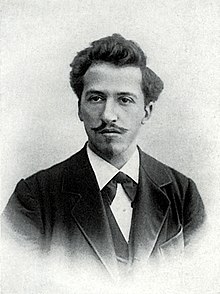
Piet Mondrian, born Pieter Cornelis Mondriaan on March 7, 1872, in Amersfoort, Netherlands, is a name synonymous with the evolution of modern art. As one of the most influential figures in the development of abstract art, Mondrian’s work has left an indelible mark on the art world, influencing not just painting but also architecture, design, and culture at large. This article delves into the life, fame, and key highlights of Mondrian’s artistic journey, exploring his impact on art history and the nuances of his groundbreaking style.
Early Life and Artistic Beginnings
Piet Mondrian was born into a family that valued education and creativity. His father was a respected drawing teacher, and it was under his guidance that Mondrian first began to explore the world of art. Alongside his uncle, Fritz Mondriaan, who was a follower of the Hague School—a movement known for its realist style—Mondrian spent much of his childhood sketching and painting landscapes along the banks of the River Gein.
In 1892, Mondrian enrolled in the Royal Academy of Art in Amsterdam, where he was trained in the traditional techniques of Dutch painting. His early works, heavily influenced by the Hague School, were rooted in naturalism and Impressionism, often depicting serene Dutch landscapes, windmills, and rivers. These early pieces reflect Mondrian’s initial search for a personal style, characterized by a focus on light and color within the boundaries of traditional representational art.
The Evolution Towards Abstraction
Mondrian’s artistic journey took a significant turn in the early 1900s, a period marked by his increasing interest in the spiritual and philosophical dimensions of art. Between 1905 and 1908, Mondrian began to explore abstraction, gradually moving away from realistic depictions to a more simplified and abstract representation of nature. This shift was heavily influenced by his interest in Theosophy, a spiritual movement that sought to explore the deeper, often hidden, aspects of reality.
In 1908, Mondrian became a member of the Dutch branch of the Theosophical Society, founded by Helena Petrovna Blavatsky. The Theosophical belief in the possibility of accessing a higher spiritual truth through art deeply resonated with Mondrian. This philosophical framework guided his artistic evolution, as he sought to express the universal order underlying the visible world through abstraction.
In 1911, Mondrian encountered Cubism during an exhibition in Amsterdam. The works of Georges Braque and Pablo Picasso, with their fragmented forms and exploration of multiple perspectives, had a profound impact on him. Inspired by Cubism, Mondrian began to deconstruct his subjects into geometric forms, further distancing his art from the naturalistic styles of his earlier years. His painting “Stilleven met Gemberpot” (Still Life with Ginger Pot) from 1912 exemplifies this shift, showcasing a reduction of forms into basic geometric shapes while still retaining some connection to the physical world.
Paris and the Birth of Neoplasticism
In 1912, Mondrian moved to Paris, a city that was at the epicenter of the avant-garde movement. It was in Paris that he adopted the simplified version of his surname, changing it from Mondriaan to Mondrian, symbolizing his break with his Dutch roots and his embrace of a new artistic identity.
During his time in Paris, Mondrian fully immersed himself in the Cubist movement, but he also began to push beyond its boundaries. While Cubism fragmented reality, Mondrian sought to transcend it entirely. By 1913, he had begun to fuse his artistic practice with his Theosophical beliefs, leading to the development of a new style that would later be known as Neoplasticism, or De Stijl.
Neoplasticism, which Mondrian formally introduced through his writings in the journal “De Stijl,” co-founded with Theo van Doesburg, was characterized by the use of a grid of vertical and horizontal lines, primary colors (red, blue, yellow), and non-colors (white, black, gray). This style was a visual representation of Mondrian’s philosophical quest for harmony and order, seeking to express a sense of universal balance through the most basic elements of art.
The Impact of World War I and the Development of a Signature Style
The outbreak of World War I in 1914 forced Mondrian to return to the Netherlands, where he remained for the duration of the war. During this period, he continued to refine his Neoplasticist style, collaborating closely with other abstract artists, including Theo van Doesburg and Bart van der Leck. The De Stijl movement, which emerged from these collaborations, sought to create a new universal language of art, architecture, and design, characterized by abstraction and simplification.
After the war, Mondrian returned to Paris in 1918, where he spent the next two decades further developing his signature style. His works from this period are marked by a grid-based composition, with black lines dividing the canvas into rectangles filled with primary colors. These compositions, such as “Composition with Red, Blue, and Yellow” (1930), represent the culmination of Mondrian’s search for purity in form and color, embodying the principles of balance, harmony, and simplicity.
The Move to New York and the Final Years
In the late 1930s, as the threat of fascism loomed over Europe, Mondrian moved to London and then, in 1940, to New York City. This relocation marked the beginning of a new and final chapter in Mondrian’s life and work. The dynamic energy of New York inspired a significant shift in his style. The rigid grids of his earlier works gave way to a more vibrant and rhythmic composition, reflecting the bustling rhythm of the city.
One of Mondrian’s most famous works from this period is “Broadway Boogie-Woogie” (1942-43), a masterpiece that captures the pulsating energy of New York’s streets and the syncopated rhythms of jazz music. In this painting, Mondrian replaced the black lines of his earlier grids with colored lines made up of small squares of red, blue, and yellow, creating a sense of movement and vitality.
“Broadway Boogie-Woogie” and the unfinished “Victory Boogie-Woogie” represent the culmination of Mondrian’s artistic journey. These works are a testament to his ability to continually evolve his style while remaining true to his core principles of harmony and abstraction.
Legacy and Influence
Piet Mondrian passed away on February 1, 1944, in New York City, at the age of 71. His influence on the art world, however, continues to be profound. Mondrian’s exploration of abstraction and his development of Neoplasticism laid the groundwork for many subsequent movements in modern art, including Minimalism and Abstract Expressionism.
Mondrian’s impact extends beyond painting. His ideas about harmony, balance, and the use of primary colors influenced architecture, design, and even fashion. The clean lines and geometric forms of the De Stijl movement can be seen in the work of architects like Gerrit Rietveld and in the design philosophy of the Bauhaus school.
In the world of fashion, designers such as Yves Saint Laurent famously paid homage to Mondrian’s work, most notably in his 1965 “Mondrian” collection, which featured dresses inspired by Mondrian’s iconic grid compositions.
Conclusion
Piet Mondrian’s life and work represent a relentless pursuit of purity in art, a quest to express the underlying harmony of the universe through the simplest of means. His evolution from a landscape painter to a pioneer of abstract art is a testament to his intellectual curiosity and his commitment to pushing the boundaries of artistic expression.
Mondrian’s legacy is not just the body of work he left behind, but also the profound influence he had on the development of modern art. His vision of a universal art form, grounded in abstraction and simplicity, continues to inspire artists, designers, and architects around the world.
In an era where the visual landscape is increasingly complex, Mondrian’s work reminds us of the power of simplicity and the timeless appeal of balance and harmony. His contributions to art are not just historical footnotes; they are living ideas that continue to shape the way we see and interact with the world around us.


