
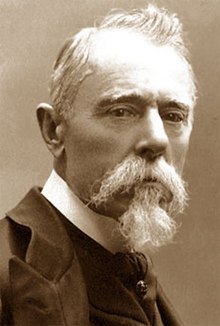
Ernesto Teodoro Moneta is a name that carries significant weight in the annals of history, particularly in the realms of pacifism, journalism, and Italian nationalism. His life’s journey, marked by his transformation from a fervent nationalist and military man to an ardent advocate for peace, offers profound insights into the complexities of the 19th and early 20th centuries. This article explores the age, fame, and life highlights of Ernesto Teodoro Moneta, providing a detailed and nuanced look at his contributions to society, his historical context, and the legacy he left behind.
Early Life and Background
Ernesto Teodoro Moneta was born on September 20, 1833, in Milan, Italy. He hailed from a distinguished and affluent family, deeply rooted in the Milanese nobility. His family’s wealth was primarily derived from the manufacturing and trade of cleaning products, a business that had been established by his grandfather and subsequently expanded by his father, Carlo Moneta. The Moneta household, therefore, provided young Ernesto with a comfortable upbringing, though it was one set against the backdrop of a politically turbulent period in Italian history.
The Italy of Moneta’s youth was a fragmented land, dominated by foreign powers and plagued by internal divisions. The struggle for independence and unification—known as the Risorgimento—was in full swing, and the atmosphere was charged with revolutionary fervor. This environment profoundly influenced Moneta, who from a young age was exposed to the intense patriotism and nationalist sentiments that characterized his family’s worldview.
Early Involvement in the Risorgimento
Moneta’s formative years were marked by his direct involvement in the Risorgimento. At just 15 years old, he witnessed the horrors of the Five Days of Milan in 1848, a pivotal uprising against Austrian rule. This experience left an indelible mark on him, instilling a deep-seated commitment to the cause of Italian independence. The sight of death and suffering during this period would later inform his pacifist ideals, though at the time it fueled his desire to fight for his nation’s freedom.
In 1849, Moneta left the Liceo of Brera in Milan and moved to Turin, eager to enlist as a volunteer in the Piedmontese army, which was preparing for war against the Austrian Empire. However, his youthful enthusiasm was met with disappointment when his enlistment was denied due to his age—he was only 16, and the minimum age for volunteering was 17. Undeterred, Moneta enrolled in the military academy in Ivrea, where he began his formal training as a soldier.
By 1855, at the age of 22, Moneta had become deeply involved in the Italian nationalist movement. He joined the editorial team of “Unitari,” a pro-unification newspaper that supported the Italian National Society, an organization dedicated to the cause of unification under the leadership of Daniele Manin and Giorgio Pallavicini. This period marked the beginning of Moneta’s dual career as both a soldier and a journalist, roles that would define much of his early adult life.
Military Career and Shift to Pacifism
Moneta’s military career reached its zenith during his participation in the campaigns of Giuseppe Garibaldi, one of the most iconic figures of the Italian unification movement. In 1859, Moneta joined the Garibaldini, becoming an aide-de-camp to General Giuseppe Sirtori. He fought valiantly in several key battles, earning a reputation as a courageous and capable officer. However, the brutal realities of war began to take their toll on him.
The turning point in Moneta’s life came after the disastrous Battle of Custoza in 1866, where the Italian forces suffered a crushing defeat at the hands of the Austrians. Disillusioned by the senseless loss of life and the apparent futility of armed conflict, Moneta decided to leave the military. He began to question the very nature of war, eventually concluding that it was not a solution to the world’s problems but rather a source of endless suffering.
This epiphany marked the beginning of Moneta’s transition from a soldier to a staunch advocate for peace. He shifted his focus from the battlefield to the world of journalism, using his platform to promote pacifist ideas. In 1867, he joined the editorial team of “Il Secolo,” a Milanese newspaper known for its liberal and anti-clerical stance. Within a year, Moneta was appointed the paper’s editor-in-chief, a position he held for nearly three decades. Under his leadership, “Il Secolo” became one of the most influential newspapers in Italy, known for its incisive critiques of militarism and its advocacy for social reform.
Advocate for Peace and International Arbitration
Moneta’s transformation into a leading pacifist figure was not immediate; it was the result of years of reflection and growing disillusionment with nationalist militarism. In the 1880s, he began to engage with the burgeoning international peace movement, which was gaining momentum across Europe. He became particularly interested in the idea of resolving international conflicts through arbitration rather than warfare.
In 1887, Moneta played a crucial role in the establishment of the Lombard Union for Peace and Arbitration, an organization dedicated to promoting peaceful conflict resolution. This group later evolved into the Italian Society for Peace and International Justice, with Moneta serving as one of its most prominent members. Through his writing and activism, Moneta championed the cause of disarmament and the establishment of international courts to mediate disputes between nations.
Moneta’s commitment to peace was unwavering, even in the face of rising nationalism and militarism in Europe. He was a vocal critic of Italy’s colonial ambitions under Prime Minister Francesco Crispi, particularly the ill-fated campaign in Africa. Moneta argued that such imperialistic endeavors were not only morally wrong but also detrimental to Italy’s national interests. His opposition to the Triplice Alliance—an agreement that aligned Italy with Germany and Austria against France—was another testament to his belief in diplomacy over conflict. He foresaw the dangers of alienating France, a prediction that proved prescient when tensions between the two nations nearly led to war.
Moneta’s efforts to prevent war between Italy and France were instrumental in the eventual signing of the Franco-Italian Agreement of 1903, which helped to stabilize relations between the two countries. His activism during this period earned him recognition from both Italian and French officials, who acknowledged his role in averting a potentially disastrous conflict.
The Nobel Peace Prize and Later Years
Moneta’s tireless work for peace was internationally recognized in 1907 when he was awarded the Nobel Peace Prize, sharing the honor with French pacifist Louis Renault. The Nobel Committee praised Moneta for his lifelong dedication to the cause of peace and his efforts to promote international arbitration as a means of resolving disputes. The prize came with a substantial monetary award, which Moneta, true to his principles, donated entirely to the Lombard Union for Peace and Arbitration.
The Nobel Peace Prize was the crowning achievement of Moneta’s life, solidifying his legacy as one of the leading pacifists of his time. However, his later years were marked by controversy, particularly regarding his stance on Italy’s involvement in World War I. Despite his lifelong opposition to war, Moneta supported Italy’s entry into the conflict, believing that it was necessary to secure a lasting peace in Europe. This position alienated many of his fellow pacifists and led to a rift within the international peace movement. Moneta defended his stance by arguing that the war would pave the way for a new, more just international order, but this justification did little to assuage his critics.
Historical Context and Nuances
Understanding Moneta’s life requires a nuanced appreciation of the historical context in which he lived. The 19th century was a time of immense change in Europe, marked by the rise of nationalism, the spread of liberal democratic ideals, and the increasing influence of the industrial revolution. These forces shaped Moneta’s early life and influenced his initial embrace of militarism and nationalism. However, as he matured and witnessed the devastating consequences of war, Moneta’s views evolved, leading him to become one of the foremost advocates for peace in his era.
Moneta’s pacifism was not absolute, nor was it naive. He recognized that achieving peace often required difficult compromises and pragmatic solutions. His support for international arbitration and disarmament was rooted in a belief that these measures could prevent the kind of catastrophic conflicts that had plagued Europe for centuries. At the same time, Moneta was a realist who understood that peace could not be achieved overnight and that it might, paradoxically, require temporary recourse to war to secure a more stable and just world order.
Legacy and Influence
Ernesto Teodoro Moneta’s legacy is a complex one, shaped by his dual identity as both a nationalist and a pacifist. He remains the only Italian to have been awarded the Nobel Peace Prize, a distinction that underscores his significant contributions to the cause of peace. However, his support for Italy’s involvement in World War I has led to a more ambivalent assessment of his legacy, particularly among those who view his later actions as a betrayal of his earlier pacifist ideals.
Despite these controversies, Moneta’s influence on the peace movement cannot be understated. His advocacy for disarmament and international arbitration laid the groundwork for many of the institutions and ideas that continue to shape global efforts towards peace today. Moneta’s life serves as a reminder of the complexities of the human condition and the challenges inherent in pursuing a principled yet pragmatic approach to global issues.
In the years following his death in 1918, Moneta was honored with numerous memorials, including a bust in Milan’s Indro Montanelli Gardens. His writings, particularly those published in “La Vita Internazionale” and his multi-volume work on 19th-century wars, continue to be studied by historians and peace scholars alike.
Conclusion
Ernesto Teodoro Moneta’s life is a testament to the power of conviction, the importance of evolving one’s beliefs in the face of new evidence, and the enduring struggle to reconcile nationalism with the pursuit of global peace. His journey from a young nationalist soldier to a Nobel Peace Prize-winning pacifist reflects the broader tensions and transformations of his time. As we continue to grapple with issues of war and peace in the 21st century, Moneta’s life offers valuable lessons on the potential for change, the complexities of human motivation, and the enduring importance of striving for a more peaceful world.


