
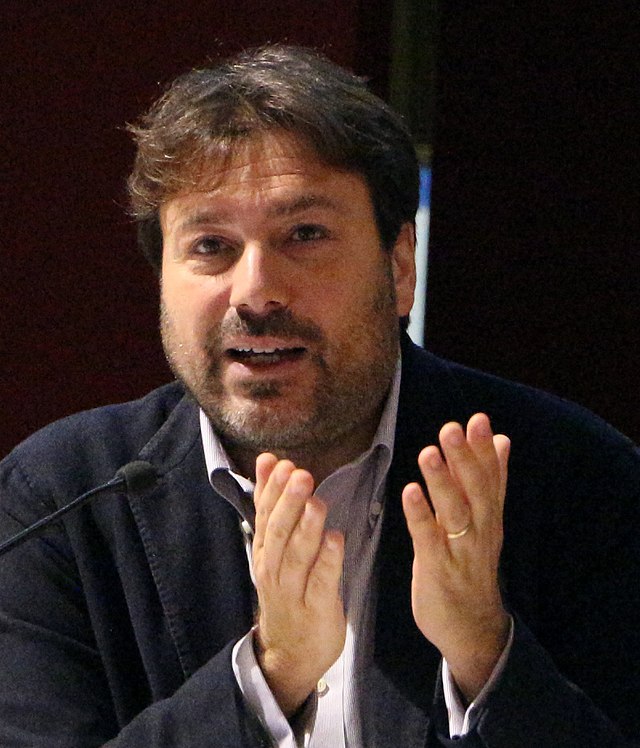
Tomaso Montanari, born on October 15, 1971, in Florence, Italy, is a prominent figure in the realms of academia, journalism, and art history. Known for his deep expertise in European Baroque art, Montanari’s career has been marked by significant contributions to both the scholarly world and public discourse. As the current Rector of the University for Foreigners of Siena, his influence extends beyond the classroom, making him a pivotal voice in contemporary cultural and political debates.
Early Life and Academic Foundations
From a young age, Tomaso Montanari demonstrated a strong inclination toward the humanities, a passion that he nurtured throughout his formative years. He attended a classical high school in his hometown, Florence, named after the illustrious poet Dante Alighieri. This educational foundation set the stage for his subsequent academic pursuits.
Montanari’s academic journey led him to the prestigious Scuola Normale Superiore in Pisa, an institution renowned for its rigorous intellectual environment. Here, he had the opportunity to study under Paola Barocchi, a distinguished art historian, further honing his expertise in the field. In 1994, Montanari graduated with a degree in Modern Literature, followed by a specialization in Historical-Artistic Disciplines, which cemented his path as a scholar of art history.
Academic Career and Contributions
Montanari’s academic career has been characterized by a steadfast commitment to the study and teaching of European Baroque art. Over the years, he has held various teaching positions at several esteemed Italian universities, including the University of Naples Federico II, the University of Rome Tor Vergata, and the University of Tuscia. His reputation as a leading expert in Baroque art grew, earning him recognition both within academic circles and in broader cultural discussions.
In addition to his teaching roles, Montanari has made significant contributions to the academic community through his prolific writing. His name is associated with numerous articles, essays, and scholarly journals, where he explores the intricacies of Baroque art and its broader cultural implications. His expertise is so highly regarded that an excerpt from one of his books was included in the Italian high school final exam (maturità) in 2019, though it sparked controversy due to his critical remarks about notable figures such as Oriana Fallaci and Franco Zeffirelli.
Montanari’s Political Engagement
Tomaso Montanari’s influence extends beyond academia, as he has become increasingly involved in political and social issues. His political views align with traditional left-wing ideologies, coupled with a populist approach that resonates with the values of the Five Star Movement (Movimento 5 Stelle). This alignment has made him a sought-after figure in political circles, though he has carefully navigated his involvement.
In June 2016, Montanari was appointed as a special advisor to Lorenzo Falchi, the newly elected mayor of Sesto Fiorentino, representing the Italian Left (Sinistra Italiana). Around the same time, Virginia Raggi, the mayor of Rome, invited him to join her administration as a civic representative, offering him the position of Culture Assessor. Montanari declined this role but expressed his willingness to serve on a cultural commission, an initiative that ultimately did not come to fruition.
Montanari’s political activism is also evident in his opposition to the high-speed rail project in the Apuan Alps, a stance that aligns him with the No TAV movement. This position attracted the attention of Beppe Grillo, the founder of the Five Star Movement, who invited Montanari to join the party’s list of potential ministers in February 2018. However, Montanari declined the offer, citing concerns about the party’s evolving political direction and his opposition to certain key policies, such as the mandate binding concept.
His political antagonism is perhaps most pronounced in his criticism of Matteo Renzi, the former mayor of Florence and leader of Italia Viva. Montanari has been a vocal critic of Renzi’s policies, particularly regarding the 2016 constitutional referendum, and his broader approach to governance.
Journalism and Public Discourse
Montanari’s role as a public intellectual is further amplified by his work as a journalist. He has contributed to several major Italian newspapers, including Il Fatto Quotidiano, where he manages a weekly column titled “Le pietre e il popolo” (“The Stones and the People”). From 2015 to 2018, he also collaborated with the Huffington Post, using these platforms to engage in cultural and political debates.
In June 2021, Montanari was elected Rector of the University for Foreigners of Siena with an overwhelming 87% of the vote. His election marked a significant milestone in his career, further solidifying his influence in both academic and public spheres. However, shortly after his appointment, he resigned from the Superior Council of Cultural Heritage in protest against the policies of then-Minister of Culture Dario Franceschini, demonstrating his commitment to his principles.
Personal Life and Beliefs
Despite his public persona, Montanari maintains a private life that is largely shielded from the public eye. However, his personal beliefs, particularly his religious views, have occasionally come to light. He identifies as a “radical Catholic,” a stance that reflects his admiration for figures like Don Lorenzo Milani, an Italian priest known for his progressive social views.
Montanari’s intellectual pursuits are not limited to the written word. He has also curated and narrated a series on art history for Rai 5, the Italian public broadcasting network, where he brings to life the stories of various artists and their works. This endeavor reflects his deep commitment to making art history accessible to a broader audience, a goal that is also evident in his numerous publications.
Selected Publications
Tomaso Montanari is the author of several influential books, both as a sole author and in collaboration with others. His works often explore the intersection of art, politics, and society, offering readers a nuanced perspective on these topics. Some of his notable publications from the 2020s include:
- “Perdersi in Toscana: Luoghi, Opere, Persone” (Getting Lost in Tuscany: Places, Works, People)
- “Dalla Parte del Torto: Per la Sinistra che Non C’è” (On the Side of the Wrong: For the Left that Doesn’t Exist)
- “L’aria della Libertà: L’Italia di Piero Calamandrei” (The Air of Freedom: The Italy of Piero Calamandrei)
- “Arte è Liberazione” (Art is Liberation)
- “Patrimonio e Coscienza Civile: Dialogo con l’Associazione ‘Mi Riconosci? Sono un Professionista dei Beni Culturali'” (Heritage and Civil Conscience: A Dialogue with the ‘Do You Recognize Me? I am a Cultural Heritage Professional’ Association)
- “Pietro da Cortona: Il Ritratto di Mazzarino” (Pietro da Cortona: The Portrait of Mazarin)
- “A Cosa Serve Leonardo? La Ragion di Stato e l’Uomo Vitruviano” (What is Leonardo For? The Reason of State and the Vitruvian Man)
- “Eretici” (Heretics)
- “Chiese Chiuse” (Closed Churches)
Legacy and Ongoing Influence
Tomaso Montanari’s life and career are a testament to his unwavering dedication to the study of art, his commitment to social justice, and his willingness to engage in political discourse. His work continues to inspire students, scholars, and the general public alike, as he challenges conventional thinking and encourages a deeper understanding of the cultural forces that shape our world.
In conclusion, Tomaso Montanari is not just an art historian; he is a public intellectual whose influence extends far beyond the confines of academia. His life is a reflection of his belief that art is not only a subject of study but also a powerful tool for social and political change.


