
Introduction
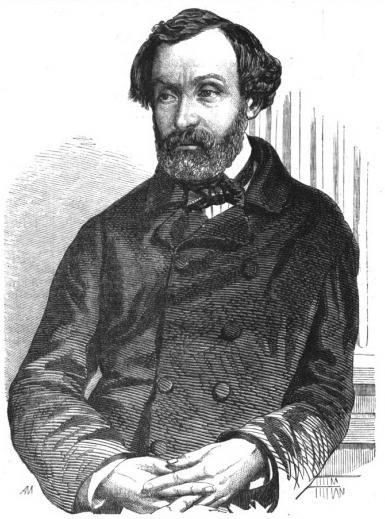
Giuseppe Montanelli, a prominent figure in 19th-century Italian history, is a name often associated with the fervent patriotic movements that sought to unify Italy. Born on January 1, 1813, in Fucecchio, a small town in the province of Florence, Montanelli’s life was characterized by his passionate commitment to the Italian cause, both as a politician and as a writer. His contributions to the Italian unification process, although often overshadowed by more famous contemporaries like Giuseppe Garibaldi and Camillo Benso di Cavour, were nonetheless significant in shaping the political landscape of the time.
Early Life and Education
Giuseppe Montanelli’s early life was marked by a strong intellectual curiosity. He pursued legal studies at the University of Pisa, where he quickly became involved in the intellectual circles of the time. His collaboration with the magazine Antologia, founded by Giovan Pietro Viesseux, exposed him to the progressive ideas that were spreading across Europe. This period was crucial in shaping Montanelli’s political ideals, particularly his belief in the need for Italian unification and the establishment of a federal republic.
Academic and Political Career
In 1840, Montanelli secured a position as a professor of national and commercial law at the University of Pisa. His academic career, however, was soon intertwined with his political ambitions. Montanelli was deeply influenced by the ideas of Vincenzo Gioberti, a leading figure in the Italian Risorgimento who advocated for a federal Italy under the leadership of the Pope. Montanelli’s writings, many of which were published clandestinely due to the restrictive political environment, reflect his commitment to these ideals.
The year 1847 marked a turning point in Montanelli’s life. With the introduction of freedom of the press in Tuscany, he founded the newspaper L’Italia, which became a platform for promoting political reforms in the Grand Duchy of Tuscany. His editorial work not only increased his influence but also brought him into the limelight as a significant political figure.
Role in the First War of Independence
Montanelli’s involvement in the Italian unification process reached its peak during the First Italian War of Independence in 1848. As the commander of the Pisan volunteers, he participated in the Battle of Curtatone, where he was wounded and captured by Austrian forces. His disappearance led many to believe he was dead, but Montanelli eventually returned to Tuscany, where he was elected to parliament.
In parliament, Montanelli advocated for the creation of a Constituent Assembly to outline the institutional framework of a unified, federal, and free Italy. His political career advanced rapidly, and in 1848, he was appointed Governor of Livorno and later served as a Minister. He also became a member of the triumvirate of the Tuscan Constituent Assembly, alongside Francesco Domenico Guerrazzi and Giuseppe Mazzoni.
The Dream of a Tuscan Republic
Montanelli’s vision for Italy was rooted in the establishment of a federal republic, with Tuscany playing a central role. His ideas, however, often put him at odds with other political leaders, particularly Guerrazzi. The conflict between the two men became so intense that Montanelli decided to step aside, opting to leave for France on a diplomatic mission. During his time in France, Montanelli attempted to gain the favor of the French nobility, hoping that Napoleon III would support the cause of Italian unification.
Return to Italy and the Second War of Independence
After spending nearly a decade in France, Montanelli returned to Italy in 1859 to participate in the Second War of Independence. He joined Garibaldi’s “Cacciatori degli Appennini” and met with Napoleon III in Alessandria, where he presented his vision for a unified Italy. However, the unfolding events led Montanelli to realize that his dream of a republican and federal Italy was unlikely to materialize. This realization prompted him to shift his focus to Tuscany, where he sought to establish an autonomous republic.
Later Life and Legacy
Giuseppe Montanelli’s later years were marked by a gradual withdrawal from the national political scene. He was elected as a deputy in the national parliament in Turin in 1862 but died shortly thereafter on June 17, 1862, in his hometown of Fucecchio.
Despite his relatively short life, Montanelli left a lasting impact on Italian history. He was the paternal grandfather of Indro Montanelli, one of Italy’s most renowned journalists and writers, who continued the family’s tradition of intellectual and political engagement.
Montanelli’s literary works, written primarily during his exile in France, are a testament to his enduring commitment to the causes he believed in. These works include Memorie sull’Italia e specialmente sulla Toscana dal 1814 al 1850 (published in 1853), Il Partito nazionale italiano (1856), L’Impero, il papato e la democrazia in Italia (1859), and Dell’ordinamento nazionale in Italia (1862). His last works, including the poem La tentazione and the tragedy Camma, reflect his deep philosophical reflections on the political and social issues of his time.
Historical Context and Nuances
To fully understand Giuseppe Montanelli’s contributions, it’s essential to place him within the broader context of the Italian Risorgimento—a complex and multifaceted movement that sought to unify Italy under a single national identity. Montanelli’s federalist ideas were part of a larger debate within the movement, which included various factions with differing visions for Italy’s future.
Montanelli’s support for a federal republic, as opposed to a centralized monarchy, was influenced by the political developments in Europe, particularly the success of federal systems in countries like the United States and Switzerland. However, the dominant narrative of the Risorgimento eventually favored a centralized state under the House of Savoy, leading to the establishment of the Kingdom of Italy in 1861. Montanelli’s vision, although not realized, highlights the diversity of thought within the movement and the various paths that Italy’s unification could have taken.
Montanelli’s Influence on Modern Italy
Giuseppe Montanelli’s legacy is not only preserved in his writings but also in the broader narrative of Italian history. His commitment to the ideals of liberty, federalism, and republicanism continue to resonate in contemporary discussions about Italy’s political system. Montanelli’s life and work remind us of the importance of intellectual diversity in political movements and the need to consider multiple perspectives when shaping a nation’s future.
Conclusion
Giuseppe Montanelli was a man of ideals and action, whose life and work significantly contributed to the Italian unification process. His dedication to the cause of a federal, republican Italy, although ultimately unsuccessful, left a profound impact on the political discourse of his time. Montanelli’s story is one of passion, struggle, and an unwavering commitment to the dream of a united Italy—an inspiration for future generations of Italians who continue to strive for a just and equitable society.


