
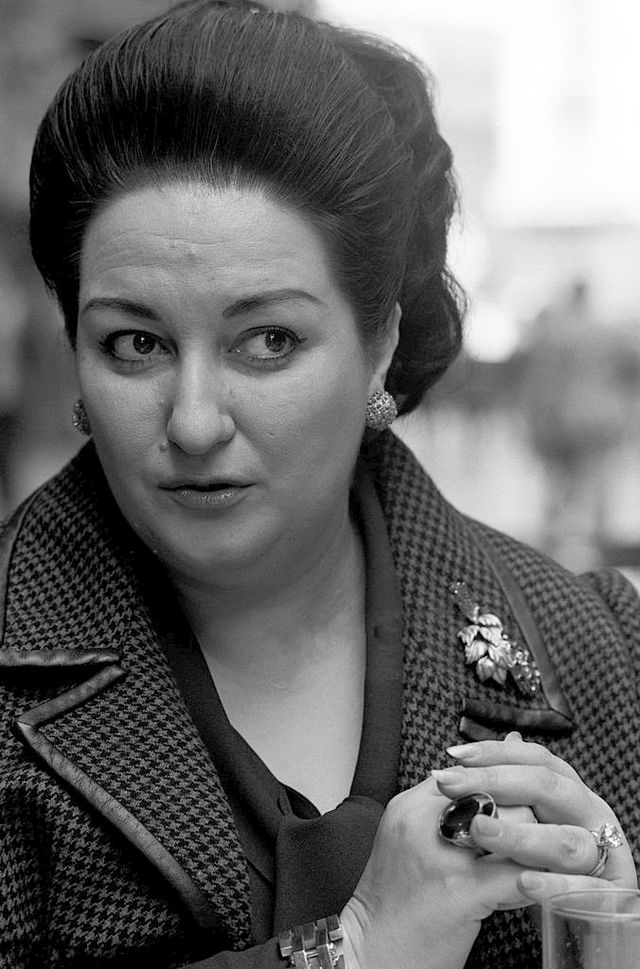
Montserrat Caballé, born María de Montserrat Viviana Concepción Caballé y Folch on April 12, 1933, in Barcelona, Spain, was one of the most iconic operatic sopranos of the 20th century. Renowned for her extraordinary vocal range, technical skill, and emotive performances, Caballé’s career spanned over five decades, during which she became a symbol of Spanish cultural pride and a global ambassador for the art of opera. This article delves into the life, achievements, and legacy of Montserrat Caballé, providing detailed insights into her journey to fame, her most significant accomplishments, and the enduring impact she left on the world of music.
Early Life and Musical Training
Born into a humble family in Barcelona, Montserrat Caballé’s early life was marked by financial hardship. However, her prodigious talent for music was evident from a young age. Recognizing her potential, her parents enrolled her at the prestigious Liceu Conservatory in Barcelona, where she began her formal training in music. Caballé’s studies at the conservatory were intensive, lasting for over a decade and honing her skills under the guidance of some of the most respected music teachers of the time.
During her years at the Liceu, Caballé developed a deep appreciation for the operatic repertoire, particularly the works of Italian composers such as Giuseppe Verdi, Giacomo Puccini, and Vincenzo Bellini. Her voice, characterized by its purity, power, and flexibility, quickly set her apart from her peers. By the time she graduated in 1956, Caballé was already recognized as a rising star in the world of opera.
Early Career and Breakthrough
Montserrat Caballé’s professional debut came in 1957 when she performed the role of Mimì in Puccini’s “La Bohème” at the Basel Opera in Switzerland. This performance marked the beginning of a successful career in Europe, where she performed in various opera houses across the continent. Caballé’s early career was characterized by her versatility, as she took on a wide range of roles in operas by composers such as Verdi, Richard Strauss, and Richard Wagner.
In 1965, Caballé achieved her first major international breakthrough when she stepped in for an indisposed Marilyn Horne to perform the title role in Donizetti’s “Lucrezia Borgia” at Carnegie Hall in New York City. Her performance was met with critical acclaim, and it instantly catapulted her to global fame. The New York Times praised her as “the miracle of bel canto,” and from that moment on, Caballé was in demand at the world’s most prestigious opera houses.
The Pinnacle of Success: La Scala, Metropolitan Opera, and Beyond
Following her triumphant performance at Carnegie Hall, Montserrat Caballé’s career soared to new heights. She made her debut at La Scala in Milan in 1970, performing the role of Lucrezia Borgia—a role that had become one of her signatures. Her performances at La Scala, widely regarded as one of the most important opera houses in the world, solidified her status as a leading soprano.
Caballé’s debut at the Metropolitan Opera in New York came in 1965, the same year as her Carnegie Hall breakthrough. At the Met, she performed the role of Marguerite in Gounod’s “Faust,” further establishing her reputation as one of the most gifted sopranos of her generation. Over the years, Caballé became a regular presence at the Met, where she delivered numerous unforgettable performances in roles such as Violetta in Verdi’s “La Traviata” and Norma in Bellini’s “Norma.”
Caballé’s success was not limited to Europe and the United States. She also became a beloved figure in Latin America, where she performed extensively, particularly in her native Spain. Her ability to connect with audiences around the world was a testament to her extraordinary talent and the emotional depth she brought to every role she portrayed.
Repertoire and Vocal Mastery
One of the most remarkable aspects of Montserrat Caballé’s career was the sheer breadth of her repertoire. She performed over 80 different roles, ranging from the Baroque period to the late Romantic era. Caballé was particularly renowned for her interpretations of the bel canto repertoire, which requires a high degree of vocal agility, precision, and expressiveness. Her performances in operas by Bellini, Donizetti, and Rossini were considered definitive, and her ability to produce effortless, beautifully controlled pianissimos became her trademark.
Caballé’s voice was noted for its purity and clarity, combined with an impressive range that allowed her to tackle some of the most demanding roles in the operatic canon. Her technical mastery was complemented by her deep understanding of the characters she portrayed, making her performances both technically flawless and emotionally resonant. This combination of technical skill and emotional depth earned her the admiration of audiences and critics alike, as well as the respect of her peers in the opera world.
Collaboration with Freddie Mercury and Pop Culture Impact
While Montserrat Caballé was primarily known for her work in opera, she also made significant contributions to the world of popular music. Perhaps her most famous collaboration outside of opera was with Freddie Mercury, the legendary frontman of the rock band Queen. In 1987, Mercury and Caballé recorded the album “Barcelona,” which featured a blend of rock and operatic music. The title track, “Barcelona,” became an international hit and was later chosen as the official anthem for the 1992 Summer Olympics held in Barcelona.
The collaboration between Mercury and Caballé was groundbreaking, as it brought together two seemingly disparate musical worlds. Caballé’s powerful soprano voice blended seamlessly with Mercury’s rock tenor, creating a unique sound that appealed to a broad audience. The success of “Barcelona” introduced Caballé to a new generation of fans and demonstrated her willingness to experiment with different musical genres.
Later Years and Humanitarian Work
As Montserrat Caballé’s career progressed into the 1990s and 2000s, she continued to perform at the highest levels, though she began to focus more on humanitarian efforts. Caballé was a passionate advocate for various charitable causes, particularly those related to children’s welfare and education. In recognition of her contributions, she was named a UNESCO Goodwill Ambassador, a role in which she worked to promote peace and cultural understanding through music.
Caballé also established a foundation in Barcelona dedicated to helping underprivileged children, reflecting her deep commitment to giving back to her community. Her work as a philanthropist was an extension of the generosity and compassion she displayed throughout her life, both on and off the stage.
In 2004, Caballé performed alongside her daughter, Montserrat Martí, in a concert version of Massenet’s “Cleopatra” at the Teatro Real in Madrid. This performance was particularly significant as it marked one of the few times Caballé and her daughter shared the stage, highlighting the continuation of a musical legacy that had spanned generations.
The Final Curtain: Legacy and Death
Montserrat Caballé passed away on October 6, 2018, at the age of 85 in her hometown of Barcelona. Her death marked the end of an era in the world of opera, as she was one of the last great sopranos of her generation. The global outpouring of grief and tributes from fellow musicians, fans, and world leaders underscored the profound impact she had on the world of music.
Caballé’s legacy is one of unparalleled excellence in opera. Her voice, characterized by its beauty, strength, and emotional expressiveness, set a standard that few have matched. She left behind a vast discography of recordings that continue to inspire and educate new generations of singers and opera enthusiasts.
In addition to her musical accomplishments, Caballé’s humanitarian work and her efforts to bridge the gap between classical and popular music have left a lasting impact on the cultural landscape. Her collaboration with Freddie Mercury, in particular, remains a powerful symbol of the unifying power of music, transcending genres and bringing people together.
Conclusion: The Enduring Legacy of Montserrat Caballé
Montserrat Caballé was more than just an opera singer; she was a cultural icon whose influence extended far beyond the opera stage. Her extraordinary voice, combined with her technical skill and deep emotional insight, made her one of the greatest sopranos of all time. Her contributions to music, both classical and popular, as well as her dedication to humanitarian causes, have left an indelible mark on the world.
Caballé’s legacy continues to resonate with audiences around the globe. Her recordings remain essential listening for anyone interested in opera, and her life story serves as an inspiration for aspiring musicians and philanthropists alike. As we reflect on her life and career, it is clear that Montserrat Caballé’s influence will endure for many years to come, a testament to her remarkable talent and her unwavering commitment to the art of music.


