
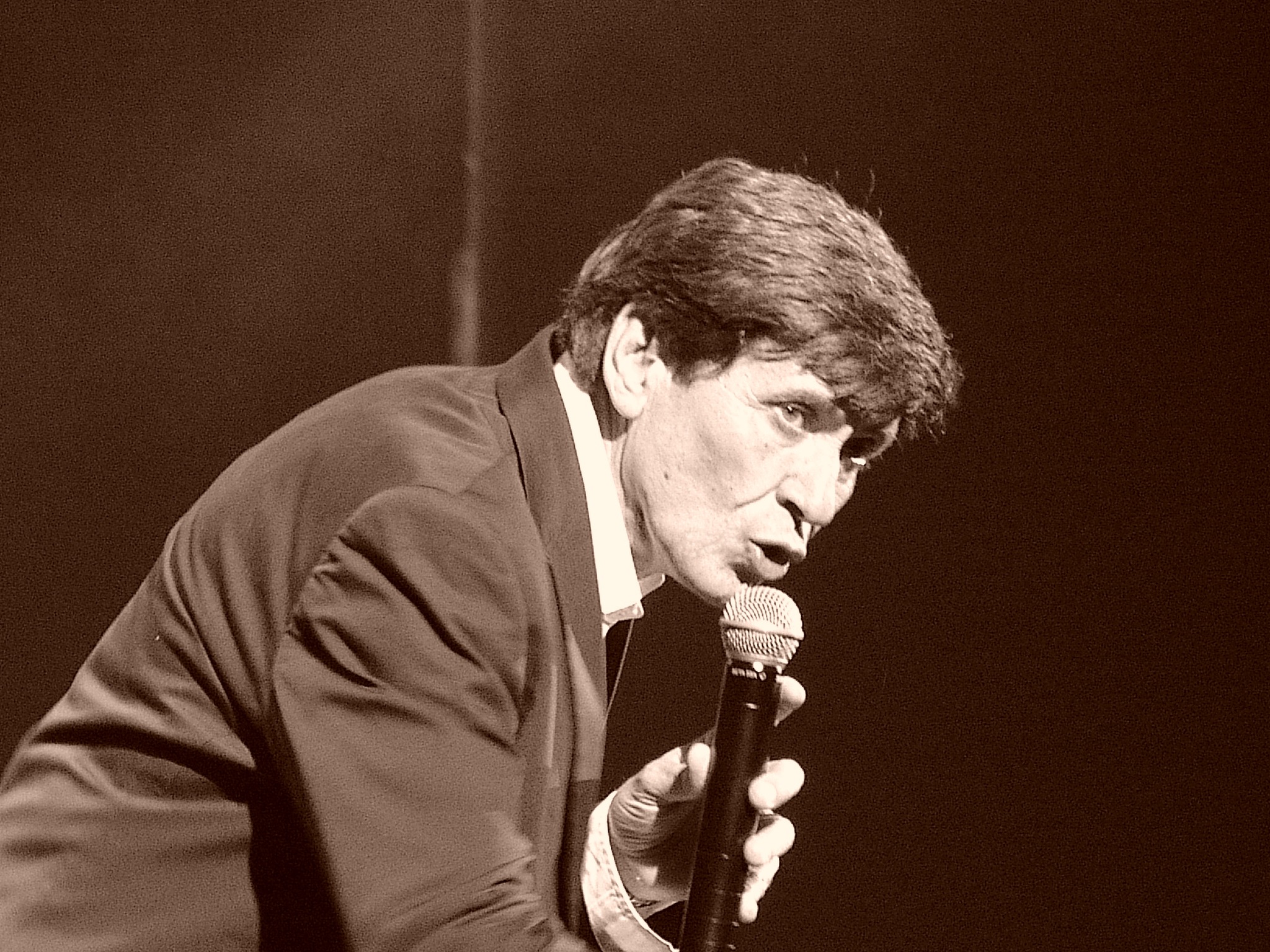
Gianni Morandi is a name that resonates with the essence of Italian popular culture. Born on December 11, 1944, in Monghidoro, a small town near Bologna, Italy, Morandi has become a symbol of optimism and enduring charm in the Italian music industry. Over the decades, his infectious smile and wholesome image have made him one of Italy’s most beloved entertainers. But who exactly is Gianni Morandi, and what has made him such an enduring figure in the world of music and entertainment?
Early Life and Introduction to Music
Gianni Morandi’s journey to fame began early. From a young age, he displayed a natural talent for music, which quickly made him a local celebrity in his hometown. By the age of 12, he was already well-known in his community, capturing the hearts of both the older and younger generations with his clean-cut appearance and melodic voice. The decision to leave school and fully commit to music was a pivotal moment in his life, marking the beginning of a career that would span decades.
In 1961, Morandi made the bold move to form his own music group, which led to his first major breakthrough the following year when he won the Festival of Bellaria. This success was followed by a contract with RCA, one of the most prestigious music labels of the time. His first singles, including “Andavo a cento all’ora” and “Fatti mandare dalla mamma,” became instant hits and are still considered classics in the Italian music scene today.
The 1960s: A Decade of Pop Success
The 1960s were a transformative period for Gianni Morandi. His rise to fame was solidified in 1964 when he won the Cantagiro, a popular Italian music competition, with the song “In ginocchio da te.” This victory not only propelled him to national stardom but also led to the production of a film of the same name, which was part of the “musicarelli” genre—musical films that were popular in Italy during that era.
In 1966, Morandi married Laura Efrikian, an accomplished actress and daughter of a famous Armenian orchestra conductor. Their marriage was a significant media event, especially since Morandi had to leave for military service shortly after their wedding. This period was heavily covered by the press, as the image of the wholesome, patriotic singer in uniform captivated the public’s imagination.
The late 1960s also saw Morandi’s career continue to flourish with a series of successful songs and appearances. His popularity was so immense that his life and career were often seen as a reflection of the broader social and cultural changes occurring in Italy at the time.
Challenges and Comebacks: The 1970s and 1980s
Despite his early success, Gianni Morandi’s career faced challenges in the 1970s. The socio-political climate of the time, marked by widespread protests and a growing demand for more politically engaged art, made it difficult for his brand of optimistic, apolitical music to resonate with the public. This period of relative decline in his career coincided with personal struggles, including his eventual separation from Laura Efrikian in 1979. The couple had three children, though their first child, Serena, tragically died shortly after birth. Their daughter Marianna was born in 1969 and later became known for her long-term relationship with the famous singer Biagio Antonacci. Their son, Marco, born in 1974, followed in his father’s footsteps by pursuing a career in music and acting.
However, the 1980s marked a resurgence for Morandi. He returned to the spotlight with a series of successful appearances at the Sanremo Music Festival, Italy’s most prestigious music competition. His 1987 collaboration with Umberto Tozzi and Enrico Ruggeri on the song “Si può dare di più” was particularly notable, winning the festival and re-establishing Morandi as a significant figure in the Italian music industry.
During this time, Morandi also made significant contributions to Italian culture beyond music. He became involved in sports, co-founding the Italian Singers’ National Football Team in 1981, which engaged in charity matches. He served as the team’s president from 1987 to 1992 and again from 2004 to 2006. Additionally, along with other prominent Bolognese musicians like Lucio Dalla and Luca Carboni, Morandi composed the anthem for their beloved Bologna football club.
The 1990s and Beyond: A Continued Legacy
Gianni Morandi’s career continued to evolve in the 1990s and into the new millennium. During this period, he released several successful albums and embarked on innovative tours that brought him even closer to his fans. These tours were characterized by their intimate settings, with Morandi often performing on a stage surrounded by the audience, creating a unique and immersive experience for concertgoers.
In addition to his music career, Morandi also explored other facets of the entertainment industry. He returned to acting, appearing in various television shows and films, and even took on the role of a television host. His versatility and ability to adapt to changing trends in the entertainment world kept him relevant and beloved by audiences of all ages.
In 2004, Morandi married his second wife, Anna Dan, who is 13 years his junior. They had a son, Pietro, born in 1997, who is also known in the music world by his stage name, Tredici Pietro. This new chapter in his personal life coincided with continued professional success, as Morandi remained a constant presence on Italian television and radio.
Gianni Morandi in the 21st Century
As the years have passed, Gianni Morandi has managed to maintain his popularity, adapting to new media and remaining relevant in an ever-changing entertainment landscape. In the 2020s, Morandi has embraced social media, where he has garnered a substantial following. His presence on platforms like Instagram and Facebook has allowed him to connect with a new generation of fans, proving that his appeal transcends age and time.
Morandi’s collaborations with younger artists, such as Fabio Rovazzi and Jovanotti, have further solidified his status as a timeless icon in the Italian music scene. In 2021, Jovanotti wrote the song “L’allegria” for Morandi, followed by “Apri tutte le porte,” which Morandi performed at the 2022 Sanremo Music Festival. These collaborations not only highlight Morandi’s continued relevance but also his willingness to experiment with new musical styles and trends.
A Legacy of Optimism and Resilience
Throughout his career, Gianni Morandi has embodied a spirit of optimism and resilience. His music, characterized by its joyful melodies and heartfelt lyrics, has provided comfort and joy to generations of listeners. Whether through his early hits that captured the spirit of the 1960s or his more recent collaborations that bridge the gap between old and new, Morandi’s work has always been marked by a deep connection to his audience.
Morandi’s legacy is not just one of musical success but also of personal perseverance. He has weathered the ups and downs of a long career, emerging each time with renewed energy and enthusiasm. His ability to remain relevant across different eras of Italian music and culture is a testament to his talent, adaptability, and genuine love for what he does.
In conclusion, Gianni Morandi is much more than just a singer; he is a cultural icon whose influence has spanned decades. His life story is one of passion, dedication, and an unwavering commitment to bringing joy to his audience. As he continues to perform and connect with fans both old and new, Morandi’s place in the pantheon of Italian music history is secure, and his legacy will undoubtedly continue to inspire future generations.


