
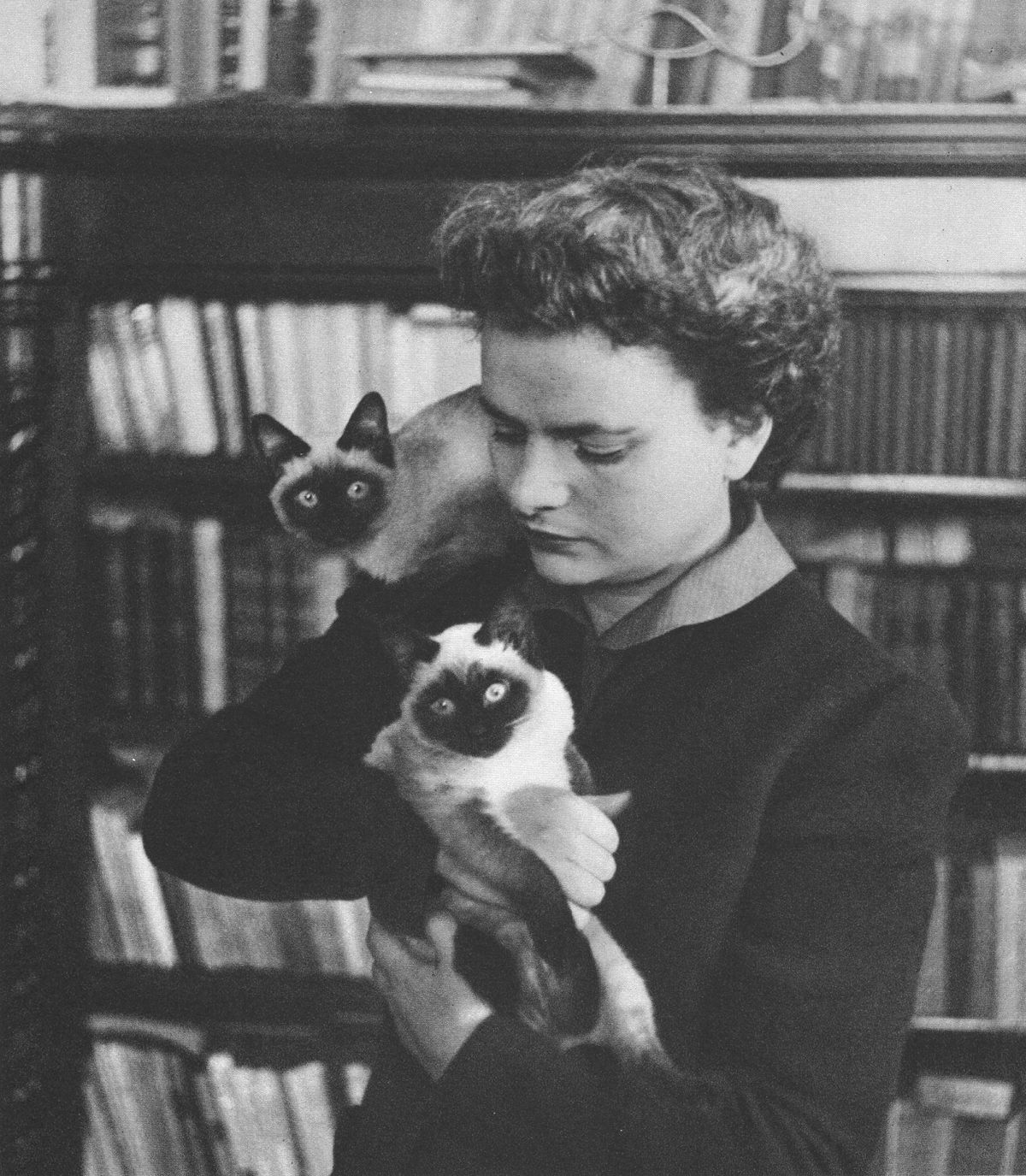
Elsa Morante, born on August 18, 1912, in Rome, stands as a towering figure in Italian literature, especially recognized for her profound influence during the post-World War II era. A multifaceted talent, Morante was not just a writer but also a poet, essayist, and translator. Her literary contributions, notably through works like “La Storia” and “L’isola di Arturo,” have cemented her place in the annals of literary history.
Early Life and Influences
Elsa Morante was born into a complex family situation. Her mother, Irma Poggibonsi, was a Jewish schoolteacher from Modena, and her father, Francesco Lo Monaco, worked as a postal clerk. However, Morante was recognized by Augusto Morante, her mother’s husband and a juvenile correctional facility supervisor, who gave her his surname. Growing up in the working-class district of Testaccio, Rome, Morante was the eldest of four siblings, excluding her older brother Mario, who died in infancy before she was born.
From a young age, Morante displayed a passion for writing. During her adolescence, she began crafting fairy tales, stories for children, and poetry. This early exposure to literature laid the groundwork for her future as a prolific writer. By 1933, under the mentorship of the literary critic Francesco Bruno, Morante began publishing her works in various magazines and newspapers, including “Corriere dei Piccoli,” “Meridiano,” and “I diritti della scuola.”
A Struggling Young Writer
After completing high school, Morante decided to pursue a degree in Literature at the university. However, financial constraints forced her to abandon her studies. By 1935, Morante was living on her own, supporting herself by writing thesis papers, giving private lessons in Italian and Latin, and contributing to periodicals. These years of struggle and perseverance were crucial in shaping her as a writer and thinker.
Her experience working at the weekly magazine “Oggi,” starting in 1939, was particularly significant. Directed by Mario Pannunzio and Arrigo Benedetti, the magazine provided her with a platform to develop her voice. She even wrote under pseudonyms such as Antonio Carrera and Renzo or Lorenzo Diodati, a practice that was not uncommon for writers of her time seeking to explore different literary styles or avoid censorship.
Meeting Alberto Moravia and the Path to Literary Success
In 1936, thanks to the painter Capogrossi, Morante met Alberto Moravia, a significant figure in Italian literature known for his novels “Gli indifferenti” and “La noia.” Their relationship, which culminated in marriage in 1941, was both a source of inspiration and turmoil for Morante. Despite the challenges, including numerous crises and a tumultuous emotional dynamic, their partnership was instrumental in Morante’s development as a writer. Moravia introduced her to the leading intellectuals and artists of the time, including Pier Paolo Pasolini, Umberto Saba, and Giorgio Bassani.
Morante’s first book, “Il gioco segreto,” a collection of her early stories, was published in 1941 by Garzanti. The following year, she delved into children’s literature with “Le bellissime avventure di Caterì dalla trecciolina,” a work she also illustrated. This book was later republished in 1959 under the title “Le straordinarie avventure di Caterina.”
The War Years and Literary Breakthrough
World War II brought significant upheaval to Morante’s life. In 1943, while living with Moravia in Rome, she began writing what would become her first major novel, “Menzogna e sortilegio.” However, their work was abruptly interrupted when Moravia was accused of anti-fascism, forcing the couple to flee to the mountains of Fondi in Ciociaria. They returned to Rome in the summer of 1944, but the strain on their relationship persisted. Morante, who had a complicated relationship with motherhood, ultimately decided not to have children, a choice she later regretted deeply.
In 1948, after years of painstaking work, “Menzogna e sortilegio” was published by Einaudi, with significant support from Natalia Ginzburg. The novel was a critical success, winning the prestigious Viareggio Prize and being translated into English as “House of Liars” in 1951. This work marked the beginning of Morante’s recognition as a master storyteller, known for her intricate narratives and vivid characterizations.
L’isola di Arturo and International Acclaim
Morante’s second novel, “L’isola di Arturo,” published in 1957, was a turning point in her career. The book won the Strega Prize, Italy’s most prestigious literary award, and was later adapted into a film by Damiano Damiani. The story, set on the island of Procida, reflects Morante’s deep understanding of human emotions and her ability to create a rich, immersive world. The success of “L’isola di Arturo” solidified Morante’s reputation as one of Italy’s leading novelists.
The 1960s were a period of both artistic exploration and personal crisis for Morante. She appeared in a small role in Pier Paolo Pasolini’s film “Accattone” and published a collection of poems titled “Alibi” in 1958. However, this decade was also marked by a creative crisis, during which Morante struggled with self-doubt and the pressures of literary success.
Personal Turmoil and Later Works
Morante’s marriage to Moravia officially ended in 1961, although their relationship had been strained for years. She moved into her own apartment on Via del Babuino in Rome but maintained her studio in the Parioli district. Despite their separation, Morante and Moravia continued to have a complex, intertwined relationship, both personally and professionally.
The 1970s saw the publication of what is often considered Morante’s magnum opus, “La Storia.” This novel, set against the backdrop of World War II, explores the lives of ordinary people caught in the turmoil of history. Morante insisted that the book be published in an affordable edition, making it accessible to a wide audience. “La Storia” was a commercial success and further established Morante as a major literary figure.
In 1982, Morante published her final novel, “Aracoeli,” which dealt with themes of memory, loss, and the passage of time. The novel was well-received, but by this time, Morante’s health was in decline. She suffered a fractured femur in 1980, which left her bedridden for an extended period. The loss of mobility deeply affected her mental health, leading to a suicide attempt in 1983. Although she survived, her health continued to deteriorate, and she passed away from a heart attack on November 25, 1985, at the age of 73.
Legacy and Posthumous Recognition
After her death, Morante’s work continued to receive recognition. Posthumous publications include “Opere” and “Racconti dimenticati,” which collected some of her lesser-known works. Morante’s legacy endures through her novels, which are still widely read and studied today. Her ability to capture the complexities of human experience, coupled with her innovative narrative techniques, ensures her place among the greats of Italian literature.
Conclusion
Elsa Morante’s life and work offer a profound exploration of the human condition. Her novels, rooted in personal experience yet universal in their themes, continue to resonate with readers around the world. From her early struggles as a young writer to her rise as one of Italy’s most celebrated novelists, Morante’s story is one of resilience, creativity, and an unwavering commitment to the art of storytelling. Her work remains a testament to the power of literature to reflect and shape our understanding of the world.


