
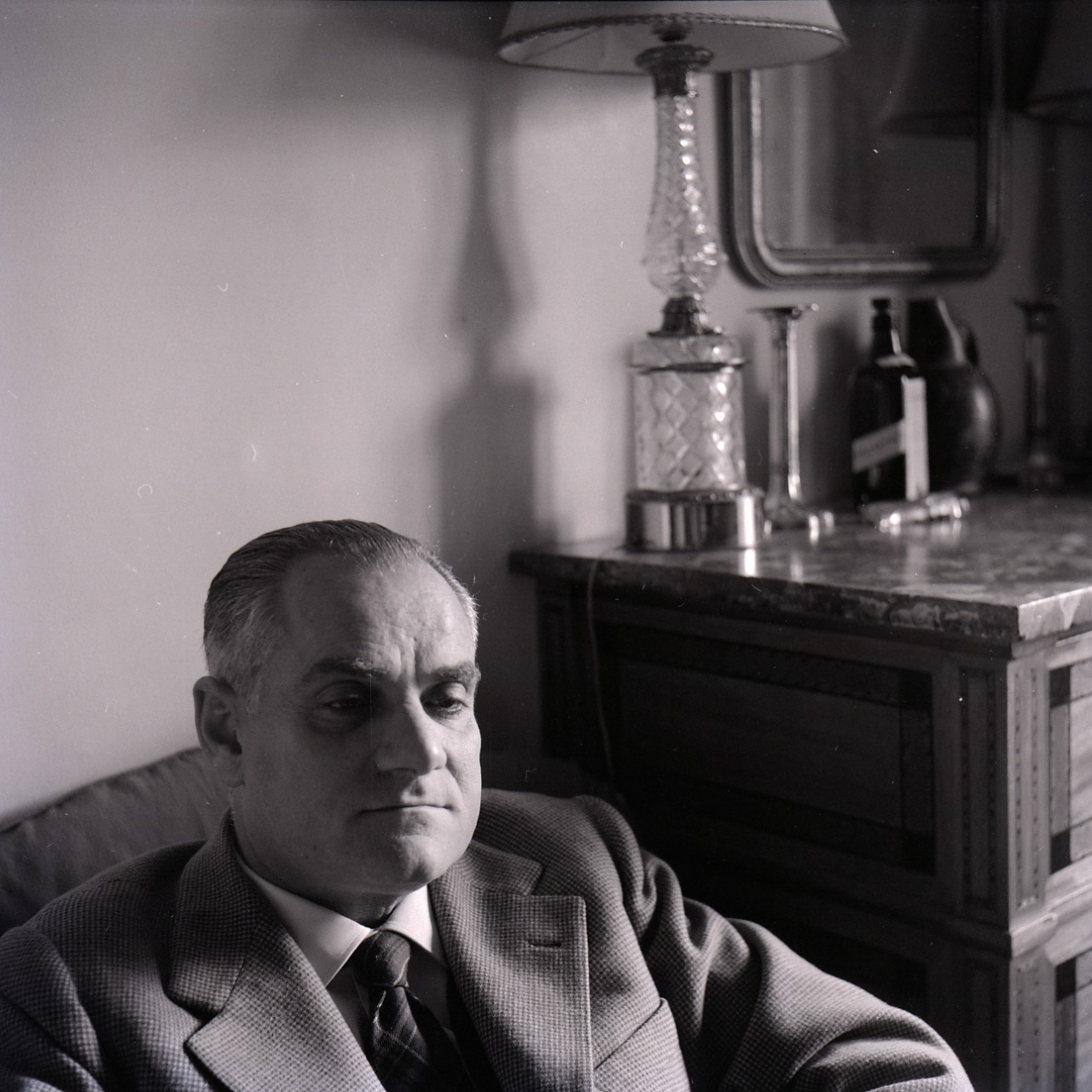
Alberto Moravia, born Alberto Pincherle on November 28, 1907, in Rome, is a towering figure in 20th-century Italian literature. His influence spans various genres, including novels, short stories, and essays, leaving an indelible mark on both Italian and global literary landscapes.
Early Life and Health Challenges
Moravia’s early life was marked by significant health challenges. He was diagnosed with bone tuberculosis in 1916, which led to frequent interruptions in his schooling and a lengthy period of convalescence. This condition profoundly impacted his childhood and education, leading him to spend considerable time in sanatoria and affecting his academic progress. Despite these setbacks, Moravia channeled his experiences into writing, producing his first literary works during these formative years.
Literary Beginnings
Moravia’s literary journey began with his debut novel, “Gli Indifferenti” (“The Indifferent Ones”), published in 1929. This work, which he labored over for three years, is a critical examination of the moral and social decay of Italian society. It was initially self-published due to the lack of acceptance from major publishers, reflecting the difficulties early in his career.
In the early 1930s, Moravia’s works, including “Inverno di Malato” (“Winter of the Sick”) and “L’imbroglio” (“The Deception”), began to gain attention. However, his career was intermittently affected by political and social upheavals, particularly under Mussolini’s fascist regime, which was hostile to his work.
Impact of Fascism and World War II
During the fascist period, Moravia faced significant challenges. His works were often censored or banned, and he was forced to use pseudonyms to publish. Despite this, he continued to produce notable works such as “L’Amante Infelice” (“The Unhappy Lover”) and “Agostino,” a semi-autobiographical novel published in 1944. The latter was particularly influential, offering a stark portrayal of adolescent alienation and social inequality.
World War II had a profound impact on Moravia’s life. He was forced into hiding with his wife, Elsa Morante, to avoid arrest by the Nazis. This period of his life was marked by uncertainty and danger but also led to significant literary output. His wartime experiences and his work during this period reflect the turmoil and complexity of the era.
Post-War Success and Literary Contributions
The post-war period marked a turning point for Moravia. He gained widespread acclaim with novels such as “La Roma” (1947) and “Il Conformista” (1951), which explored themes of conformity, morality, and the human condition. These works cemented his reputation as a major literary figure and showcased his ability to capture the essence of post-war Italian society.
Moravia’s success continued into the 1950s and 1960s. He founded the literary magazine “Nuovi Argomenti” with fellow writer and critic Alberto Carocci, which became a platform for contemporary Italian literature. His works from this period, including “La Ciociara” (1957) and “Un Mese in URSS” (1958), demonstrate his engagement with both Italian and international political and social issues.
Later Years and Legacy
In the later stages of his career, Moravia’s literary output remained robust. He published a series of influential books, including “La Vita Interiore” (1978) and “L’Uomo Che Guarda” (1985), exploring themes of human psychology and societal change. His involvement in public and political life, including his role as a Member of the European Parliament from 1984 to 1989, further demonstrated his commitment to social and political issues.
Moravia’s impact on literature and culture is profound. His exploration of themes such as alienation, moral decay, and existential despair resonated deeply with readers and critics alike. His ability to blend personal experiences with broader societal critiques helped establish him as a significant figure in modern literature.
Alberto Moravia passed away on September 26, 1990, in Rome, leaving behind a rich legacy of literary works and a profound influence on Italian and international literature. His contributions continue to be celebrated, and his works remain relevant in contemporary discussions of literature and society.


