
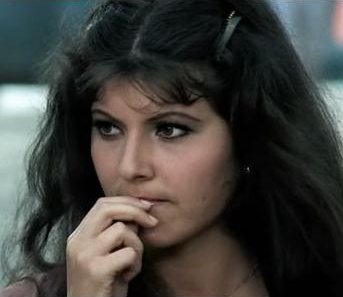
Claudia Mori, born Claudia Moroni on February 12, 1944, in Rome, Italy, is an iconic figure in the Italian entertainment industry. She has worn many hats throughout her illustrious career: actress, singer, music producer, and television personality. Best known for her enduring partnership with her husband, Adriano Celentano, Mori has left an indelible mark on Italian culture, both as an artist in her own right and as a pivotal figure behind the scenes. Her life and career offer a compelling story of talent, versatility, and resilience.
Early Life and Entry into Entertainment
Claudia Mori was born into a family steeped in the arts; her father was involved in amateur dramatics, a passion that no doubt influenced her own career choices. Her entry into the world of entertainment came somewhat serendipitously. In 1958, at the tender age of 14, a photograph of her was published in the Italian newspaper Paese Sera, catching the eye of industry professionals. This opportunity led to her debut in the film “Cerasella” directed by Raffaello Matarazzo, where she starred alongside a young Massimo Girotti, later known as Terence Hill. The film was inspired by a popular Neapolitan song and marked the beginning of Mori’s acting career.
Following her debut, Mori appeared in several notable films, including “Rocco e i suoi fratelli” directed by Luchino Visconti and “Sodoma e Gomorra” directed by Robert Aldrich. These roles helped establish her as a promising young actress in the Italian cinema landscape.
Meeting Adriano Celentano and the Shift to Music
In 1963, Claudia Mori’s life took a significant turn when she met Adriano Celentano on the set of Lucio Fulci’s film “Uno Strano tipo.” At the time, Celentano was already a well-known singer and actor. Their chemistry was undeniable, and their romance quickly blossomed. In a move that surprised many, Celentano ended his relationship with his then-fiancée Milena Cantù and married Claudia Mori in a secret ceremony at night in the Church of San Francesco in Grosseto in 1964. This marked the beginning of one of the most famous and enduring marriages in Italian show business. The couple would go on to have three children: Rosita (born in 1965), Giacomo (born in 1966), and Rosalinda (born in 1968).
Following her marriage, Mori’s career trajectory shifted. While she continued to act, her focus began to gravitate more toward music. In 1964, she recorded her first single, “Non guardarmi,” with the B-side featuring a cover of Little Eva’s “The Locomotion” titled “Quello che ti dico.” This marked the beginning of her music career, which would become increasingly intertwined with that of her husband.
The duo achieved significant success in 1967 with the duet “La coppia più bella del mondo,” which became a major hit in Italy. Their collaboration continued with the song “Chi non lavora non fa l’amore,” which won the prestigious Sanremo Music Festival in 1970. This victory cemented Mori’s status as a singer and solidified her place alongside Celentano in the Italian music scene.
A Return to Acting and Continued Success in Music
Although Claudia Mori had stepped back from her acting career to focus on music and her family, she returned to the silver screen in 1971 with “Er più – Storia d’amore e coltello,” directed by Sergio Corbucci and co-starring Adriano Celentano. This film, a romantic drama set in the historical context of Rome, allowed Mori to showcase her acting talent once again.
In 1973, Mori starred in the film adaptation of the popular Italian play “Rugantino,” directed by Pasquale Festa Campanile, once again alongside Celentano. She also played the role of Rosita Flores in “L’emigrante,” another Festa Campanile film, for which she recorded the soundtrack. These roles highlighted Mori’s versatility as an actress, capable of handling both comedic and dramatic roles with ease.
Mori’s musical career continued to flourish in parallel with her acting. In 1974, she released the album “Fuori tempo” under the CGD label, featuring the song “Buonasera dottore,” written by Paolo Limiti. Originally intended for the legendary Italian singer Mina, the song became a hit for Mori, reaching the top of the Italian charts in 1975 and becoming her most successful solo performance.
In 1975, Mori played a small part in the critically acclaimed film “Yuppi du,” directed by Celentano. The same year, she starred in “Come una Cenerentola” alongside Marcello Mastroianni, and in 1976, she appeared in “Culastrisce nobile veneziano,” directed by Flavio Mogherini. These films further demonstrated her ability to take on a variety of roles, from light-hearted comedies to more serious dramas.
Mori returned to music in 1977 with the album “È amore,” which included the hit singles “Ehi, ehi, ehi,” written by Roberto Vecchioni, and “Mi vuoi,” written by Ivano Fossati. These songs showcased her vocal range and established her as a prominent figure in the Italian music industry.
Continued Artistic Pursuits and Business Ventures
In the late 1970s and 1980s, Claudia Mori’s career continued to evolve. She starred as Marcella in the film “Geppo il folle,” directed by Celentano, and in 1979, she appeared in “Linea di sangue,” a film directed by Terence Young that featured an international cast including Audrey Hepburn, Ben Gazzara, Irene Papas, Omar Sharif, and Romy Schneider.
In 1980, Mori took on the role of Mirandolina in the film adaptation of Carlo Goldoni’s play “La locandiera,” directed by Paolo Cavara. The film also starred Adriano Celentano, Paolo Villaggio, and Milena Vukotic. This role allowed Mori to delve into classical Italian theater, further broadening her acting repertoire.
Mori made a triumphant return to the Sanremo Music Festival in 1982 as a guest performer, presenting the song “Non succederà più.” The song became one of her most well-known hits, achieving success not only in Italy but also in Spain and Germany. The following year, she released the single “Il principe,” co-written with Giancarlo Bigazzi and Raf, which became the theme song for the popular Italian TV show “Hit Parade.”
In 1984, Mori released the album “Claudia canta Adriano,” a tribute to her husband’s music. This album featured her renditions of some of Celentano’s most famous songs, further showcasing the deep artistic connection between the couple.
Mori’s final collaboration with Celentano as a director came in 1985 with the film “Joan Lui – Ma un giorno nel paese arrivo io di lunedì.” That same year, she returned to the Sanremo stage to present the song “Chiudi la porta,” a reworking of Celentano’s “Un’altra volta chiudi la porta,” originally released a decade earlier. The film’s soundtrack, released in 1986, featured Mori’s performance of “La prima stella.”
In 1989, Mori transitioned to television, co-hosting the RAI Due program “Du du du” alongside Pino Caruso. This venture into television marked another successful chapter in her career, demonstrating her versatility as a performer and presenter.
Business Leadership and Legacy
In 1991, Claudia Mori took on a new role as the CEO of Clan Celentano Srl, the record label founded by her husband. Under her leadership, the label continued to produce some of the most successful albums in Italian music history, including the highly acclaimed “Mina Celentano” album in 1998, a collaboration between Adriano Celentano and the legendary Italian singer Mina. Mori’s business acumen and artistic vision played a crucial role in the label’s continued success, cementing her reputation as a formidable force in the Italian music industry.
Mori’s final appearance as a contestant at the Sanremo Music Festival came in 1994, where she competed with the song “Se mi ami,” written by Toto Cutugno. Although this marked the end of her competitive singing career, Mori remained an influential figure in the music world, overseeing various projects and continuing to manage Clan Celentano.
In 2009, Mori released “Claudia Mori Collection,” a comprehensive compilation that included a CD of her greatest hits and B-sides from old 45 RPM records, as well as a DVD featuring rare footage of the Celentano family, authorized by Mori herself. This collection offered fans a retrospective look at her career and her contributions to Italian music and cinema.
That same year, Mori made a return to television as a judge on the popular talent show “X Factor,” airing on RAI Due. Her presence on the show introduced her to a new generation of fans and reaffirmed her status as an enduring icon in Italian popular culture.
In addition to her work in music and television, Mori has also produced several successful television dramas through her production company, Ciao Ragazzi!, further expanding her influence in the entertainment industry.
Legacy and Cultural Impact
Claudia Mori’s contributions to Italian entertainment span over six decades, making her one of the most enduring and versatile figures in the industry. As an actress, singer, and producer, she has consistently demonstrated her talent, creativity, and resilience. Her partnership with Adriano Celentano is one of the most celebrated in Italian show business, and together they have shaped the landscape of Italian music and cinema.
Mori’s legacy extends beyond her artistic achievements. As a business leader, she has played a crucial role in the success of Clan Celentano, ensuring that the label continues to thrive in a rapidly changing industry. Her influence can be seen in the careers of countless artists and in the enduring popularity of the music and films she helped create.
As Claudia Mori continues to be an active presence in Italian culture, her legacy as a pioneering woman in entertainment remains as strong as ever. Her life’s work serves as an inspiration to future generations of artists, demonstrating the power of talent, determination, and the ability to adapt to new challenges.


