
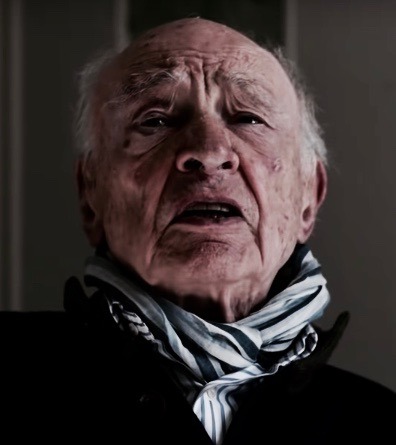
Edgar Morin, born Edgar Nahoum on July 8, 1921, in Paris, France, is a renowned French philosopher and sociologist. He is one of the most influential thinkers of the 20th and 21st centuries, particularly known for his work in developing the concept of “complex thought,” which integrates various disciplines to better understand the complexity of human and social systems. With a career that spans over seven decades, Morin’s contributions to philosophy, sociology, and interdisciplinary studies have left an indelible mark on intellectual thought worldwide.
Early Life and Intellectual Beginnings
Edgar Morin was born into a Sephardic Jewish family with roots in Tuscany, Italy. His father, a secular businessman from Salonica (now Thessaloniki, Greece), raised him in a culturally rich environment, despite the early loss of his mother when Morin was only ten years old. This personal tragedy profoundly impacted him, fostering a deep introspection that would later be reflected in his philosophical work.
From a young age, Morin displayed an avid interest in literature, cinema, aviation, and cycling. However, it was his passion for reading and philosophical inquiry that truly defined his early years. He pursued studies in philosophy, focusing on the diverse illustrative styles of the 17th century. His intellectual journey led him to embrace socialism and Marxist thought, which would influence his later work, though not without critical reflection.
The War Years and the Resistance
The outbreak of World War II and the Nazi occupation of France in 1940 were pivotal in shaping Morin’s life and career. Fleeing to Toulouse, he immersed himself in Marxist studies and became actively involved in aiding refugees. By 1942, Morin had joined the French Communist Party and obtained a law degree, marking the beginning of his involvement in the French Resistance.
During his time in the Resistance, Morin adopted the pseudonym “Morin,” which he would later use as his professional surname. He served as a lieutenant in the combat forces, participating in the liberation of Paris in 1944. This period also brought him into contact with future French President François Mitterrand, forging a connection that would influence his later political and intellectual activities.
In 1945, following the liberation of France, Morin married Violette Chapellaubeau and moved to Landau, where he was appointed head of the propaganda office for the French military government. His experiences during the war and his work in post-war Germany profoundly shaped his understanding of human behavior, politics, and society.
Post-War Intellectual Contributions
After the war, Edgar Morin shifted his focus to writing and intellectual pursuits. His first major work, “L’an zéro de l’Allemagne” (Germany Year Zero), examined the condition of the German people in the aftermath of the war. The book attracted the attention of Maurice Thorez, the Secretary-General of the French Communist Party, who encouraged Morin to contribute to the journal “Lettres Françaises.”
However, Morin’s relationship with the Communist Party began to deteriorate by 1949 due to his anti-Stalinist views. His growing disillusionment with the party’s dogmatic stance culminated in his expulsion in 1951 after he published an article in “France-Observateur” critical of Stalinism. This break from the Communist Party marked a significant turning point in his career, freeing him to explore new intellectual territories.
In the early 1950s, Morin joined the Centre National de Recherche Scientifique (CNRS), where he began his work in social anthropology. His interdisciplinary approach, influenced by thinkers like Pierre Georges, Maurice Merleau-Ponty, Georges Friedmann, and Vladimir Jankélévitch, set the stage for his later contributions to the theory of complexity.
The 1950s and 1960s: Surrealism and Social Engagement
In 1954, Edgar Morin founded the journal “Arguments,” inspired by the Italian publication “Argomenti” and the ideas of Franco Fortini. “Arguments” became a platform for exploring Marxism, existentialism, and surrealism, reflecting Morin’s evolving intellectual interests. During this period, he became involved in the Surrealist movement and was a vocal opponent of the Algerian War, co-founding a committee in 1955 to protest the conflict.
Morin’s social activism was paralleled by his scholarly work. In 1959, he published “Autocritique,” a reflection on his intellectual journey and the limitations of Marxism. The book marked the beginning of Morin’s departure from orthodox Marxist thought and his embrace of a more nuanced, interdisciplinary approach to understanding society.
The early 1960s were a period of intense intellectual activity for Morin. He embarked on a journey to Latin America, visiting Brazil, Bolivia, Peru, Chile, and Mexico. This experience had a profound impact on him, particularly his encounters with indigenous Brazilian cultures. Upon returning to France, he published “L’Esprit du Temps” (The Spirit of the Times), a work that examined the cultural dynamics of modern society.
Morin’s journal “Arguments” ceased publication in 1962, but his academic career continued to flourish. In 1965, he became involved in a large-scale multidisciplinary project funded by the Délégation Générale à la Recherche Scientifique et Technologique (DGRST), focusing on the community of Plozevet in Brittany. This research led to the publication of “La Métamorphose de Plozevet” in 1967, one of the first ethnological studies of contemporary France.
The 1960s and 1970s: From Academia to the World Stage
Despite his growing reputation as a scholar, Edgar Morin faced criticism and resistance from the academic establishment in Paris. His unconventional methods and interdisciplinary focus led to accusations of heresy within the DGRST. In response, Morin distanced himself from the Parisian academic scene, choosing to work in more diverse and international contexts.
In 1968, Morin replaced Henri Lefebvre at the University of Nanterre, a position that placed him at the center of the student revolts that shook France that year. He closely observed and documented the events of May 1968, publishing a series of articles in “Le Monde” that analyzed the student movement. These articles were later compiled into the book “Mai 68: La Breche” (May 68: The Breach), co-authored with Cornelius Castoriadis and Claude Lefort.
The following year, Morin traveled to California, where he collaborated with the Salk Institute in La Jolla. This experience brought him into contact with cutting-edge research in genetics and the revolutionary discovery of DNA. The intersection of genetics, systems theory, information theory, and cybernetics profoundly influenced Morin’s worldview, leading him to develop the concept of “complex thought.”
The 1980s: Expanding Intellectual Horizons
The 1980s were a period of prolific output for Edgar Morin. In 1981, he published “Pour sortir du XXe siècle” (To Exit the 20th Century), a critical reflection on the political and cultural crises of the 20th century. This was followed by “Science avec conscience” (Science with Conscience) in 1982, which emphasized the ethical implications of scientific inquiry, and “De la nature de l’URSS” (On the Nature of the USSR) in 1983, a detailed analysis of Soviet communism.
Morin’s work during this decade reflected his commitment to understanding and addressing the complexities of the modern world. In 1984, he published “Sociologie,” a comprehensive examination of sociology as a discipline, and in the late 1980s, he wrote “Penser l’Europe” (Thinking Europe), which explored the cultural and historical identity of Europe in the context of globalization.
The 1990s: The Complexity of Thought
In the 1990s, Edgar Morin’s focus shifted towards the development and application of his theory of complexity. In 1990, he published “Introduction à la pensée complexe” (Introduction to Complex Thought), a foundational text that laid out the principles of his interdisciplinary approach. This was followed by a series of works that expanded on his ideas, including “Terre-Patrie” (Homeland Earth), “Mes Démons” (My Demons), and “La Complexité Humaine” (Human Complexity).
Despite his advancing age, Morin remained a prolific writer and thinker. His work during this period addressed the challenges of understanding complex systems, whether in biology, society, or global politics. He argued for a holistic approach to knowledge that transcended traditional disciplinary boundaries, advocating for the integration of diverse perspectives to address the complexities of the modern world.
The 2000s: A Legacy of Thought
As the new millennium began, Edgar Morin continued to contribute to intellectual discourse with works like “Les Sept Savoirs nécessaires à l’éducation du futur” (The Seven Necessary Knowledges for the Future of Education) and “Dialogue sur la nature humaine” (Dialogue on Human Nature). These texts emphasized the importance of education in fostering a new generation capable of understanding and addressing the complex challenges of the future.
Morin’s influence extended beyond the written word. In December 2008, he was awarded an honorary degree in Education Sciences by the University of Naples “L’Orientale,” where he delivered a lecture inspired by his work on the seven knowledges. In 2011, he received another honorary degree from the University of Macerata, where he gave a lecture on the challenges of knowledge for a planetary humanism.
In 2012, Morin published “La France est une et multiculturelle” (France is One and Multicultural), a reflection on the multicultural identity of France, and in 2014, he wrote “Enseigner à vivre” (Teaching to Live), a manifesto for changing education. These works underscored his ongoing commitment to addressing the social, cultural, and intellectual issues of the day.
Legacy and Impact
Edgar Morin’s contributions to philosophy, sociology, and interdisciplinary studies have left an enduring legacy. His concept of “complex thought” has influenced countless scholars and thinkers across the globe, challenging the traditional boundaries of academic disciplines and advocating for a more holistic understanding of the world.
Morin’s work has been recognized with numerous awards and honors, including multiple honorary degrees and the prestigious Scanno Prize for Sociology. His ideas have shaped the way we think about complexity, education, and global challenges, making him one of the most significant intellectual figures of the modern era.
As Edgar Morin continues to inspire new generations of thinkers, his legacy as a pioneer of complex thought and interdisciplinary inquiry remains as relevant as ever. His life’s work serves as a reminder of the importance of intellectual curiosity, critical thinking, and the courage to challenge conventional wisdom in the pursuit of deeper understanding.


